
Before Memmo my notes were scattered across PDFs. Now a workspace pulls everything into one place — I see exactly what's still left to study.
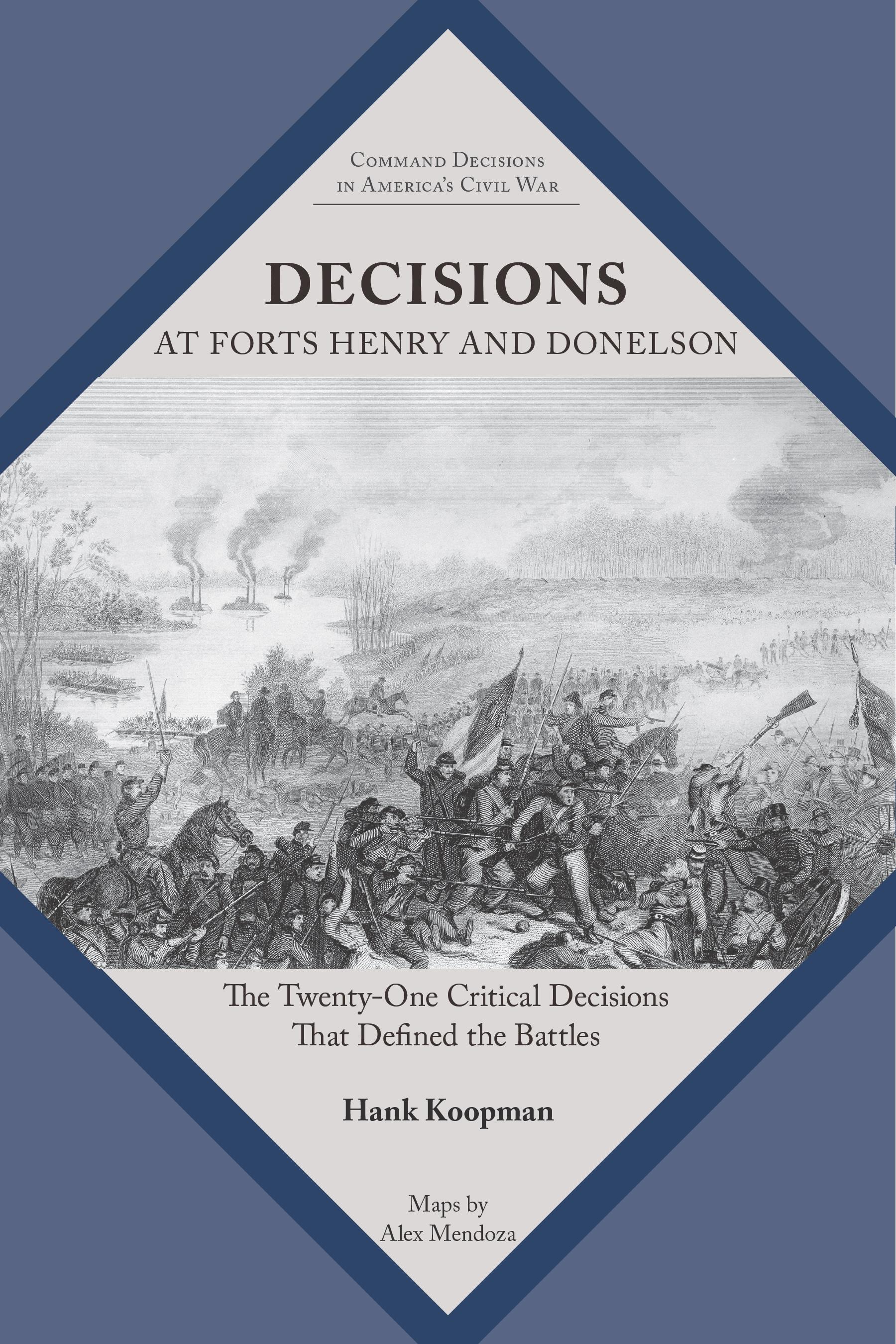
The Battles of Forts Henry and Donelson took place in February of 1862 and were early indicators of the success the US would have in the Civil War’s Western Theater. Due to Kentucky’s neutrality at the time, Brig. Gen. Daniel S. Donelson was instructed to find suitable sites for fortification along the Tennessee River but just inside the state boundaries of Tennessee. Forts Henry and Donelson were constructed in the summer of 1861 and were quickly identified by Gen. Ulysses S. Grant as strategic fortifications that, if conquered, would open the Federal Army’s path to Alabama and Mississippi. Fort Henry fell to Federal control on February 6, 1862, and Fort Donelson fell six days later. With the Tennessee and Mississippi Rivers now open to Federal gunboats, Grant and his army would head southwest to Memphis and on to Vicksburg.
Decisions at Forts Henry and Donelson explores the critical decisions made by Confederate and Federal commanders during the battle and how these decisions shaped its outcome. Rather than offering a history of the battle, Hank Koopman hones in on a sequence of critical decisions made by commanders on both sides of the conflict to provide a blueprint of the Battles of Forts Henry and Donelson at their tactical core. Identifying and exploring the critical decisions in this way allows students of the battles to progress from a knowledge of what happened to a mature grasp of why events happened.
Complete with maps and a driving tour, Decisions at Forts Henry and Donelson is an indispensable primer, and readers looking for a concise introduction to these battles can tour this sacred ground—or read about it at their leisure—with key insights into the campaigns and a deeper understanding of the Civil War itself.
Decisions at Forts Henry and Donelson is the twenty-second in a series of books that will explore the critical decisions of major campaigns and battles of the Civil War.
Before Memmo my notes were scattered across PDFs. Now a workspace pulls everything into one place — I see exactly what's still left to study.
Memmo's summaries are gold before exams. I don't have to re-read 800 pages two weeks before — just the important parts.
The AI chat has saved me the night before an exam more than once. I just keep asking until I get it — no waiting on a study group to reply.
The quizzes hit exactly what I need to know. Memmo tracks what I get stuck on — so I only practice what's worth it.
Flashcards with spaced repetition are magic. Memmo knows when I'm about to forget something and brings it back.
The AI podcasts are my favorite. I listen on my way to school and get a recap without sitting at a computer.

Handbok i kvalitativa metoder
281 kr

Hållbar utveckling: en introduktion för ingenjörer och andra problemlösare
334 kr

Brymans Samhällsvetenskapliga metoder
390 kr

Projektledning
491 kr

Den orättvisa hälsan: om socioekonomiska skillnader i hälsa och livslängd
326 kr

Organizational Leadership
429 kr

Vetenskapsteori för nybörjare
196 kr

På väg mot läraryrket
172 kr

Det sociala livet i skolan: Socialpsykologiska perspektiv
253 kr

Betygsättningens didaktik
151 kr

Personality
402 kr

Studying Leadership
404 kr

Managing Innovation
477 kr

Introduktion till samhällsvetenskaplig metod
347 kr

The Psychology of Sex and Gender
698 kr

Evidens och kunskap för socialt arbete
207 kr

Introduction to Leadership
605 kr