
Before Memmo my notes were scattered across PDFs. Now a workspace pulls everything into one place — I see exactly what's still left to study.
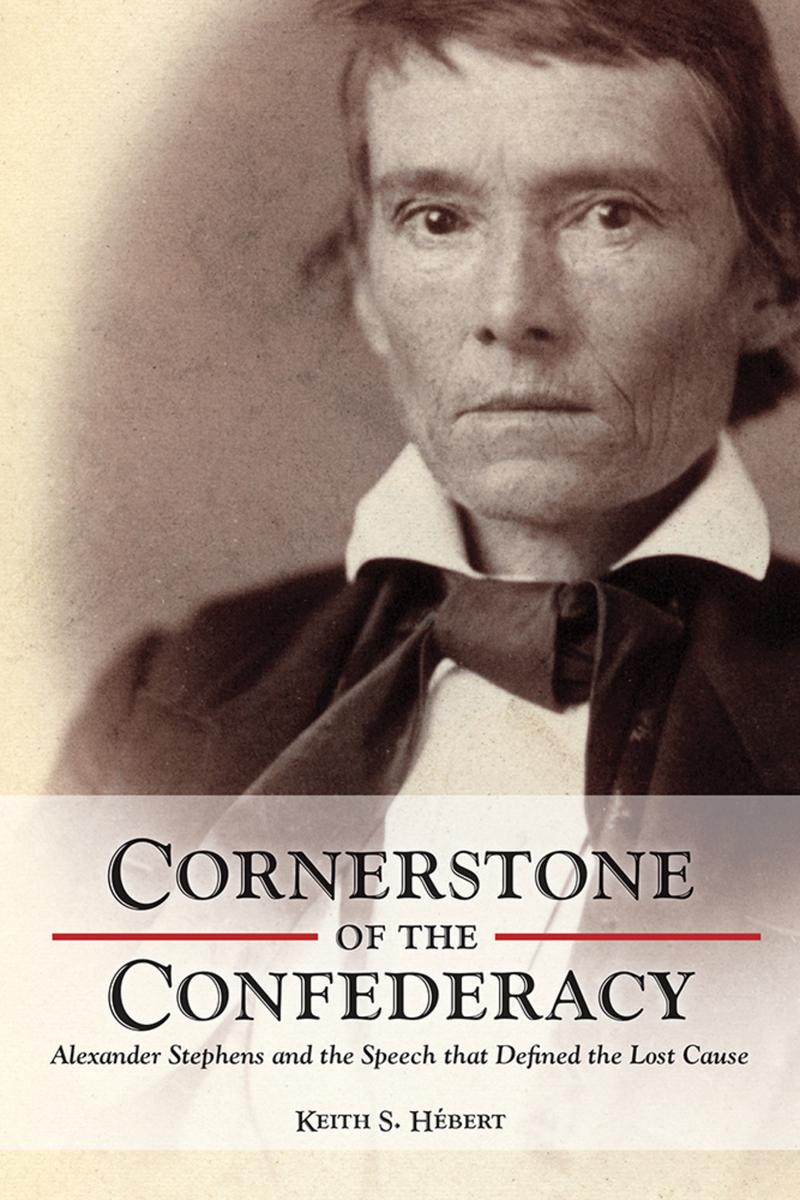
Born in early 1812 in Crawfordville, Georgia, Alexander Stephens grew up in an antebellum South that would one day inform the themes of his famous Cornerstone Speech. While Stephens made many speeches throughout his lifetime, the Cornerstone Speech is the discourse for which he is best remembered. Stephens delivered it on March 21, 1861—one month after his appointment as vice president of the Confederacy—asserting that slavery and white supremacy comprised the cornerstone of the Confederate States of America. Within a few short weeks, more than two hundred newspapers worldwide had reprinted Stephens’s words.
Following the war and the defeat of the Confederacy, Stephens claimed that his assertions in the Cornerstone Speech had been misrepresented, his meaning misunderstood, as he sought to breathe new and different life into an oration that may have otherwise been forgotten. His intentionally ambiguous rhetoric throughout the postwar years obscured his true antebellum position on slavery and its centrality to the Confederate Nation and lent itself to early constructions of Lost Cause mythology.
In Cornerstone of the Confederacy, Keith Hébert examines how Alexander Stephens originally constructed, and then reinterpreted, his well-known Cornerstone Speech. Hébert illustrates the complexity of Stephens’s legacy across eight chronological chapters, meticulously tracing how this speech, still widely cited in the age of Black Lives Matter, reverberated in the nation’s consciousness during Reconstruction, through the early twentieth century, and in debates about commemoration of the Civil War that live on in the headlines today.
Audiences both inside and outside of academia will quickly discover that the book’s implications span far beyond the memorialization of Confederate symbols, grappling with the animating ideas of the past and discovering how these ideas continue to inform the present.
Before Memmo my notes were scattered across PDFs. Now a workspace pulls everything into one place — I see exactly what's still left to study.
Memmo's summaries are gold before exams. I don't have to re-read 800 pages two weeks before — just the important parts.
The AI chat has saved me the night before an exam more than once. I just keep asking until I get it — no waiting on a study group to reply.
The quizzes hit exactly what I need to know. Memmo tracks what I get stuck on — so I only practice what's worth it.
Flashcards with spaced repetition are magic. Memmo knows when I'm about to forget something and brings it back.
The AI podcasts are my favorite. I listen on my way to school and get a recap without sitting at a computer.

Handbok i kvalitativa metoder
281 kr

Hållbar utveckling: en introduktion för ingenjörer och andra problemlösare
334 kr

Brymans Samhällsvetenskapliga metoder
390 kr

Projektledning
491 kr

Den orättvisa hälsan: om socioekonomiska skillnader i hälsa och livslängd
326 kr

Organizational Leadership
429 kr

Vetenskapsteori för nybörjare
196 kr

På väg mot läraryrket
172 kr

Det sociala livet i skolan: Socialpsykologiska perspektiv
253 kr

Betygsättningens didaktik
151 kr

Personality
402 kr

Studying Leadership
404 kr

Managing Innovation
477 kr

Introduktion till samhällsvetenskaplig metod
347 kr

The Psychology of Sex and Gender
698 kr

Evidens och kunskap för socialt arbete
207 kr

Introduction to Leadership
605 kr