
Before Memmo my notes were scattered across PDFs. Now a workspace pulls everything into one place — I see exactly what's still left to study.
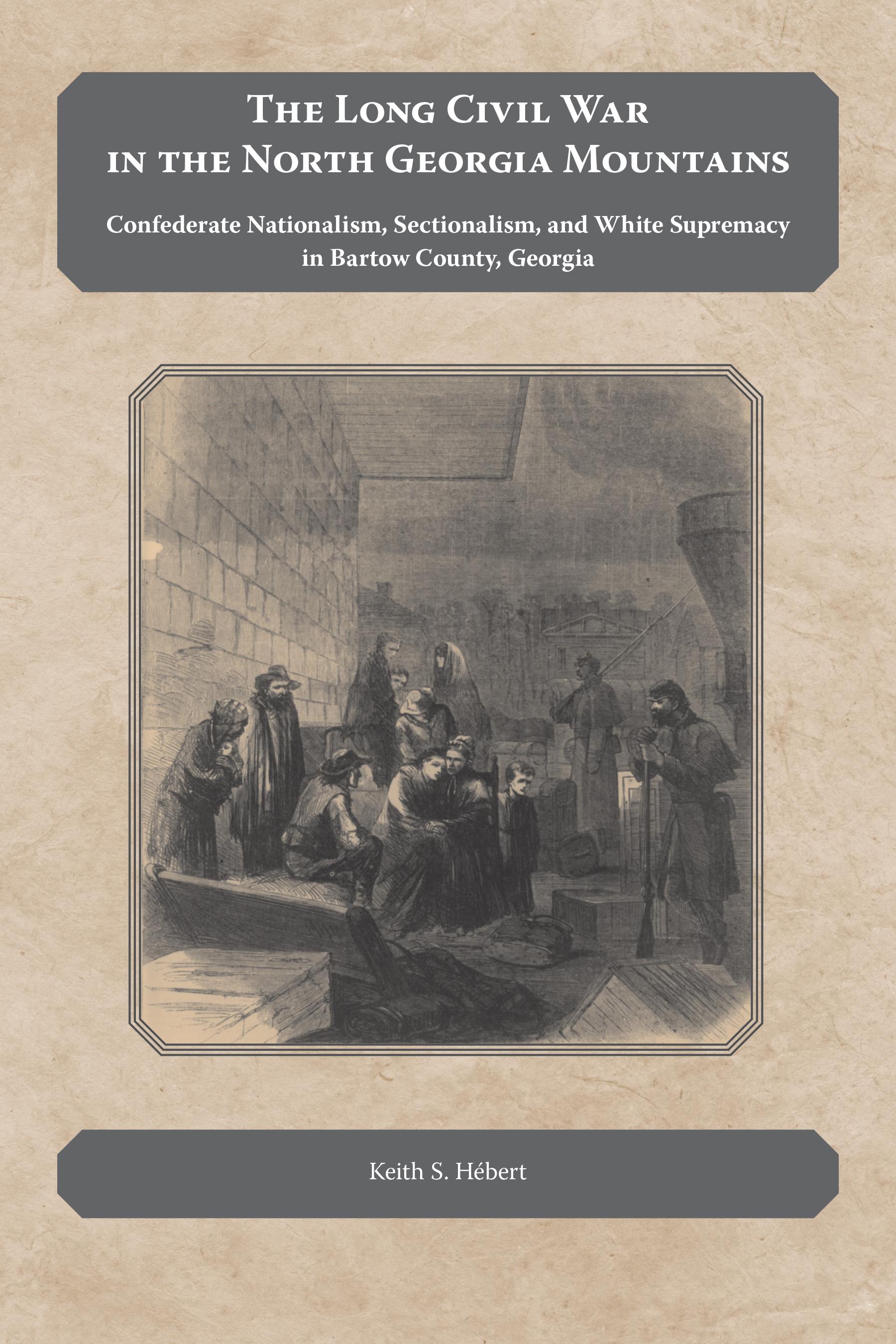
“Keith Hebert has thoroughly mined the primary source record in one Georgia county to uncover a complex story of divided community identities, shifting economic tides, wartime destruction, and deep social change. Even more, Hebert has helped clarify the differences between the Appalachian and Southern Civil War experiences.”—Aaron Astor, author of Rebels on the Border: Civil War, Emancipation, and the Reconstruction of Kentucky and Missouri
Civil War historians have long noted that support for the Confederacy in the antebellum South tended to align with geography: those who lived in towns, along railroads, and on land suited for large-scale farming tended to side with the Confederacy, while those who lived a more isolated existence and made their livings by subsistence farming and bartering usually remained Unionist. Bartow County in northwest Georgia, with its distinctive terrain of valley, piedmont, and Appalachian hill country, is an ideal microcosm to examine these issues.
Keith S. Hébert examines the rise and precipitous fall of Confederate nationalism in Bartow County, a shared experience among many counties in the upland South. Hébert’s story tells us much about the war’s origins, Confederate defeat, and the enduring legacy of white supremacy in these rural areas. Although no major battles were fought in Bartow County, Sherman’s Atlanta Campaign saw Federal troops occupying the area, testing the loyalties of Bartow County soldiers serving in the Army of Tennessee and elsewhere. As the home front collapsed, they had to decide if they should remain in the army and fight or return home to protect their families and property. Locals hardly knew whom to trust as Unionists and Confederates—from both home and afar—engaged in guerilla warfare, stole resources from citizens, and made the war a confusing trap rather than a struggle for an emergent nation.
Drawing on the primary source record of newspapers, letters, diaries, and official documents from the county, Hébert compellingly works personalized vignettes into a scholarly study of developments from the advent of war through Reconstruction and the decades following. The Long Civil War in the North Georgia Mountains solidifies recent scholarship about the war in southern Appalachia and opens a window into a community deeply divided by civil war.
Before Memmo my notes were scattered across PDFs. Now a workspace pulls everything into one place — I see exactly what's still left to study.
Memmo's summaries are gold before exams. I don't have to re-read 800 pages two weeks before — just the important parts.
The AI chat has saved me the night before an exam more than once. I just keep asking until I get it — no waiting on a study group to reply.
The quizzes hit exactly what I need to know. Memmo tracks what I get stuck on — so I only practice what's worth it.
Flashcards with spaced repetition are magic. Memmo knows when I'm about to forget something and brings it back.
The AI podcasts are my favorite. I listen on my way to school and get a recap without sitting at a computer.

Handbok i kvalitativa metoder
281 kr

Hållbar utveckling: en introduktion för ingenjörer och andra problemlösare
334 kr

Brymans Samhällsvetenskapliga metoder
390 kr

Projektledning
491 kr

Den orättvisa hälsan: om socioekonomiska skillnader i hälsa och livslängd
326 kr

Vetenskapsteori för nybörjare
196 kr

Organizational Leadership
429 kr

På väg mot läraryrket
172 kr

Det sociala livet i skolan: Socialpsykologiska perspektiv
253 kr

Betygsättningens didaktik
151 kr

Personality
402 kr

Studying Leadership
404 kr

Managing Innovation
477 kr

Introduktion till samhällsvetenskaplig metod
347 kr

The Psychology of Sex and Gender
698 kr

Evidens och kunskap för socialt arbete
207 kr

Introduction to Leadership
605 kr