
Before Memmo my notes were scattered across PDFs. Now a workspace pulls everything into one place — I see exactly what's still left to study.
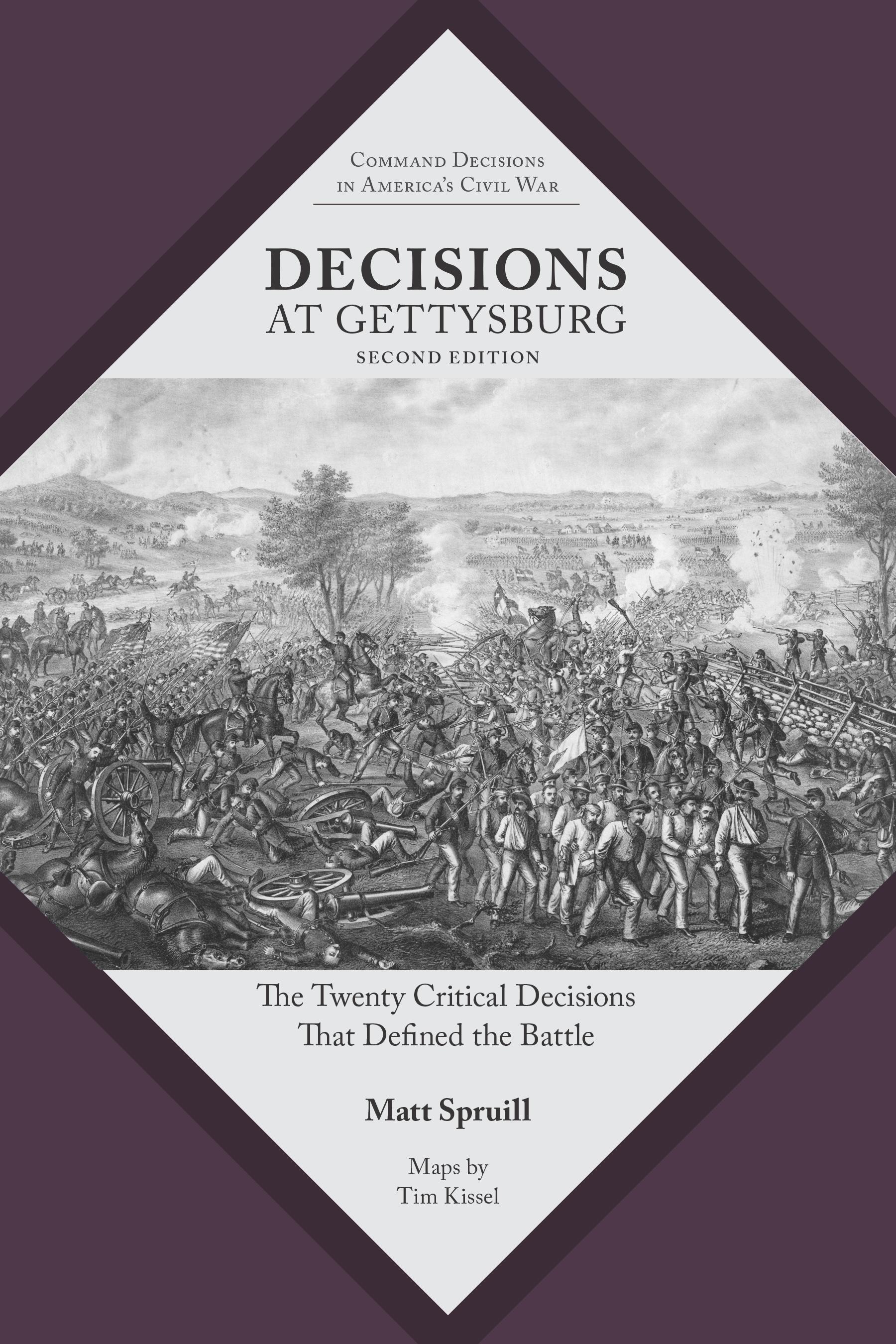
The Campaign and Battle of Gettysburg have inspired scrutiny from virtually every angle. Standing out amid the voluminous scholarship, this book is not merely one more narrative history of the events that transpired before, during, and after those three momentous July days in southern Pennsylvania. Rather, it focuses on and analyzes nineteen critical decisions by Union and Confederate commanders that determined the particular ways in which those events unfolded.
Matt Spruill, a retired U.S. Army colonel who studied and taught at the U. S. Army War College in Carlisle, Pennsylvania, contends that, among the many decisions made during any military campaign, a limited number—strategic, operational, tactical, organizational—make the difference, with subsequent decisions and circumstances proceeding from those defining moments. At Gettysburg, he contends, had any of the nineteen decisions he identifies not been made and/or another decision made in its stead, all sorts of events from those decision points on would have been different and the campaign and battle as we know it today would appear differently. The battle might have lasted two days or four days instead of three. The orientation of opposing forces might have been different. The battle could well have occurred away from Gettysburg rather than around the town. Whether Lee would have emerged the victor and Meade the vanquished remains an open question, but whatever the outcome, it was the particular decision-making delineated here that shaped the campaign that went into the history books.
Along with his insightful analysis of the nineteen decisions, Spruill includes a valuable appendix that takes the battlefield visitor to the actual locations where the decisions were made or executed. This guide features excerpts from primary documents that further illuminate the ways in which the commanders saw situations on the ground and made their decisions accordingly.
Before Memmo my notes were scattered across PDFs. Now a workspace pulls everything into one place — I see exactly what's still left to study.
Memmo's summaries are gold before exams. I don't have to re-read 800 pages two weeks before — just the important parts.
The AI chat has saved me the night before an exam more than once. I just keep asking until I get it — no waiting on a study group to reply.
The quizzes hit exactly what I need to know. Memmo tracks what I get stuck on — so I only practice what's worth it.
Flashcards with spaced repetition are magic. Memmo knows when I'm about to forget something and brings it back.
The AI podcasts are my favorite. I listen on my way to school and get a recap without sitting at a computer.

Handbok i kvalitativa metoder
281 kr

Hållbar utveckling: en introduktion för ingenjörer och andra problemlösare
334 kr

Brymans Samhällsvetenskapliga metoder
390 kr

Projektledning
491 kr

Den orättvisa hälsan: om socioekonomiska skillnader i hälsa och livslängd
326 kr

Vetenskapsteori för nybörjare
196 kr

Organizational Leadership
429 kr

På väg mot läraryrket
172 kr

Det sociala livet i skolan: Socialpsykologiska perspektiv
253 kr

Betygsättningens didaktik
151 kr

Personality
402 kr

Studying Leadership
404 kr

Managing Innovation
477 kr

Introduktion till samhällsvetenskaplig metod
347 kr

The Psychology of Sex and Gender
698 kr

Evidens och kunskap för socialt arbete
207 kr

Introduction to Leadership
605 kr