
Before Memmo my notes were scattered across PDFs. Now a workspace pulls everything into one place — I see exactly what's still left to study.
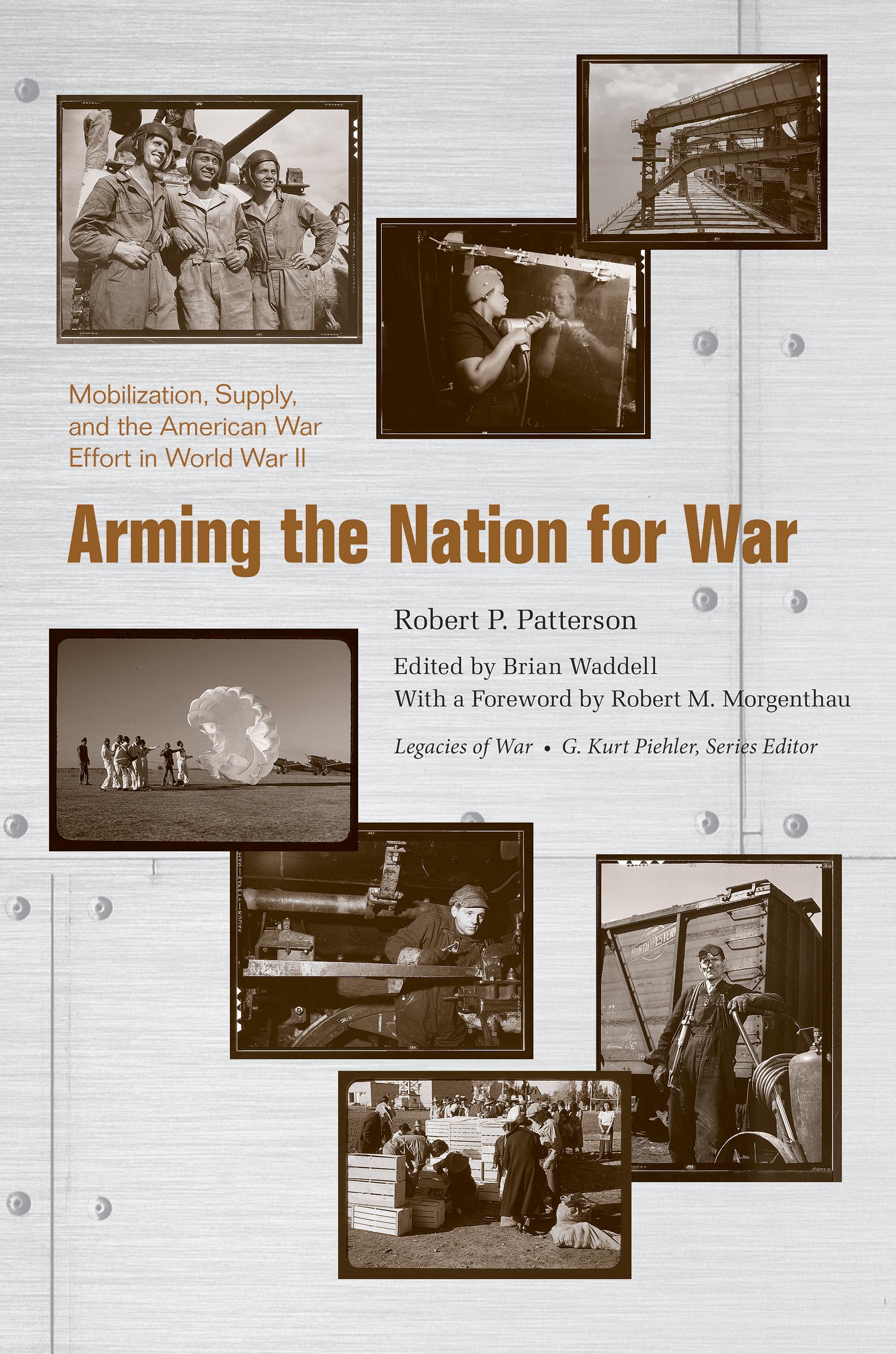
A decorated World War I veteran, Federal Judge Robert P. Patterson knew all too well the needs of soldiers on the battlefield. He was thus dismayed by America’s lack of military preparedness when a second great war engulfed Europe in 1939–40. With the international crisis worsening, Patterson even resumed military training—as a forty-nine-year-old private—before being named assistant secretary of war in July 1940. That appointment set the stage for Patterson’s central role in the country’s massive mobilization and supply effort, which helped the Allies win World War II.
In Arming the Nation for War, a previously unpublished account long buried among the late author’s papers and originally marked confidential, Patterson describes the vast challenges the United States faced as it had to equip, in a desperately short time, a fighting force capable of confronting a formidable enemy. Brimming with data and detail, the book also abounds with deep insights into the myriad problems encountered on the domestic mobilization front—including the sometimes divergent interests of wartime planners and industrial leaders—along with the logistical difficulties of supplying far-flung theaters of war with everything from ships, planes, and tanks to food and medicine. Determined to remind his contemporaries of how narrow the Allied margin of victory was and that the war’s lessons not be forgotten, Patterson clearly intended the manuscript (which he wrote between 1945 and ’47, when he was President Truman’s secretary of war) to contribute to the postwar debates on the future of the military establishment. The fact that passage of the National Security Act of 1947, to which Patterson was a key contributor, answered many of his concerns may explain why he never published the book during his lifetime.
A unique document offering an insider’s view of a watershed historical moment, Patterson’s text is complemented by editor Brian Waddell’s extensive introduction and notes. In addition, Robert M. Morgenthau, former Manhattan district attorney and a protégé of Patterson’s for four years prior to the latter’s death in a 1952 plane crash, offers a heartfelt remembrance of a man the New York Herald-Tribune called “an example of the public-spirited citizen.”
Before Memmo my notes were scattered across PDFs. Now a workspace pulls everything into one place — I see exactly what's still left to study.
Memmo's summaries are gold before exams. I don't have to re-read 800 pages two weeks before — just the important parts.
The AI chat has saved me the night before an exam more than once. I just keep asking until I get it — no waiting on a study group to reply.
The quizzes hit exactly what I need to know. Memmo tracks what I get stuck on — so I only practice what's worth it.
Flashcards with spaced repetition are magic. Memmo knows when I'm about to forget something and brings it back.
The AI podcasts are my favorite. I listen on my way to school and get a recap without sitting at a computer.

Handbok i kvalitativa metoder
281 kr

Hållbar utveckling: en introduktion för ingenjörer och andra problemlösare
334 kr

Brymans Samhällsvetenskapliga metoder
390 kr

Projektledning
491 kr

Den orättvisa hälsan: om socioekonomiska skillnader i hälsa och livslängd
326 kr

Organizational Leadership
429 kr

Vetenskapsteori för nybörjare
196 kr

På väg mot läraryrket
172 kr

Det sociala livet i skolan: Socialpsykologiska perspektiv
253 kr

Betygsättningens didaktik
151 kr

Personality
402 kr

Studying Leadership
404 kr

Managing Innovation
477 kr

Introduktion till samhällsvetenskaplig metod
347 kr

The Psychology of Sex and Gender
698 kr

Evidens och kunskap för socialt arbete
207 kr

Introduction to Leadership
605 kr