
Before Memmo my notes were scattered across PDFs. Now a workspace pulls everything into one place — I see exactly what's still left to study.
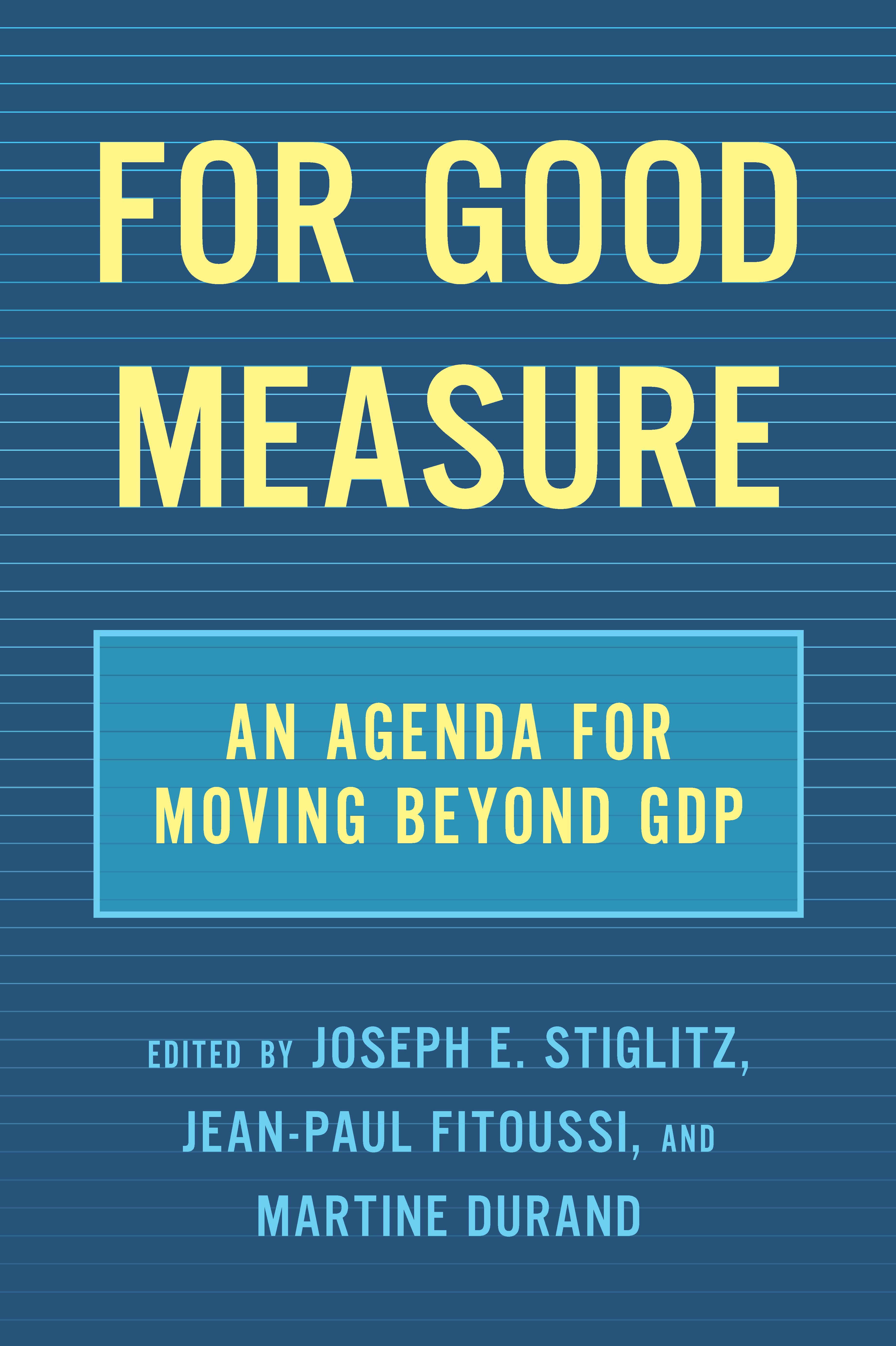
Today's leading economists weigh in with a new "dashboard" of metrics for measuring our economic and social health
"What we measure affects what we do. If we focus only on material well-being—on, say, the production of goods, rather than on health, education, and the environment—we become distorted in the same way that these measures are distorted."
—Joseph E. Stiglitz
A consensus has emerged among key experts that our conventional economic measures are out of sync with how most people live their lives. GDP, they argue, is a poor and outmoded measure of our well-being.
The global movement to move beyond GDP has attracted some of the world's leading economists, statisticians, and social thinkers who have worked collectively to articulate new approaches to measuring economic well-being and social progress. In the decade since the 2008 economic crisis, these experts have come together to determine what indicators can actually tell us about people's lives.
In the first book of its kind, leading economists from around the world, including Thomas Piketty, Emmanuel Saez, Elizabeth Beasely, Jacob Hacker, François Bourguignon, Nora Lustig, Alan B. Krueger, and Joseph E. Stiglitz, describe a range of fascinating metrics—from economic insecurity and environmental sustainability to inequality of opportunity and levels of trust and resilience—that can be used to supplement the simplistic measure of gross domestic product, providing a far more nuanced and accurate account of societal health and well-being.
This groundbreaking volume is sure to provide a major source of ideas and inspiration for one of the most important intellectual movements of our time.
Before Memmo my notes were scattered across PDFs. Now a workspace pulls everything into one place — I see exactly what's still left to study.
Memmo's summaries are gold before exams. I don't have to re-read 800 pages two weeks before — just the important parts.
The AI chat has saved me the night before an exam more than once. I just keep asking until I get it — no waiting on a study group to reply.
The quizzes hit exactly what I need to know. Memmo tracks what I get stuck on — so I only practice what's worth it.
Flashcards with spaced repetition are magic. Memmo knows when I'm about to forget something and brings it back.
The AI podcasts are my favorite. I listen on my way to school and get a recap without sitting at a computer.

Handbok i kvalitativa metoder
281 kr

Hållbar utveckling: en introduktion för ingenjörer och andra problemlösare
334 kr

Brymans Samhällsvetenskapliga metoder
390 kr

Projektledning
491 kr

Den orättvisa hälsan: om socioekonomiska skillnader i hälsa och livslängd
326 kr

Vetenskapsteori för nybörjare
196 kr

Organizational Leadership
429 kr

På väg mot läraryrket
172 kr

Det sociala livet i skolan: Socialpsykologiska perspektiv
253 kr

Betygsättningens didaktik
151 kr

Personality
402 kr

Studying Leadership
404 kr

Managing Innovation
477 kr

Introduktion till samhällsvetenskaplig metod
347 kr

The Psychology of Sex and Gender
698 kr

Evidens och kunskap för socialt arbete
207 kr

Introduction to Leadership
605 kr