
Always with you
Your book, on every device. Pick up right where you left off.
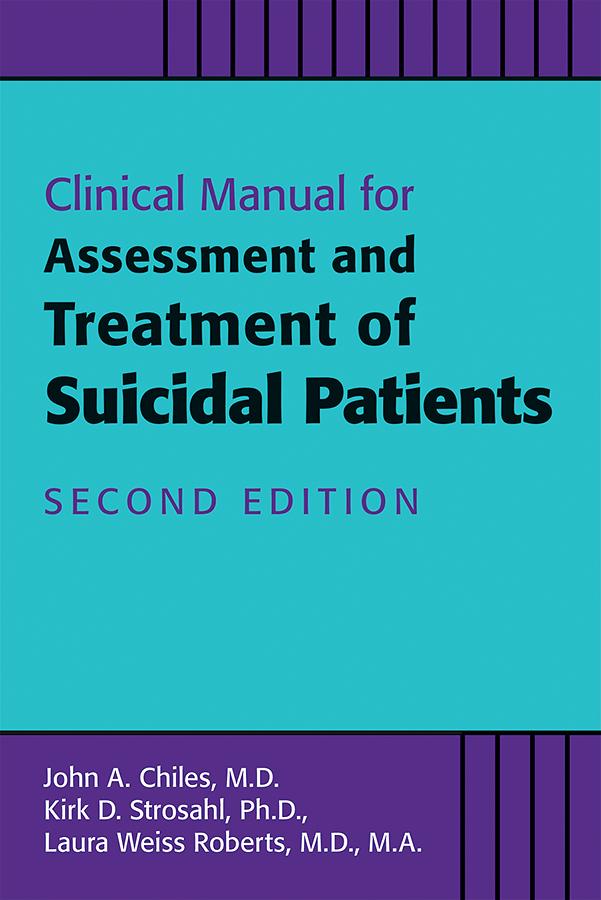
Since the first edition of Clinical Manual for Assessment and Treatment of Suicidal Patients was published in 2005, advances have been made that increase our understanding of suicidal and self-destructive behavior. Although clinicians cannot unerringly predict which patients will die by suicide, they can focus more successfully on early identification of suicidal behavior and effective intervention, and this new edition of the clinical manual thoroughly explores not only assessment of suicidality but what comes after an at-risk patient has been identified. The authors argue that treating specific psychiatric disorders is not enough to prevent suicide, and they offer clinicians the necessary information and strategies to bridge that gap. The authors' main premise is that suicide is a dangerous and short-term problem-solving behavior designed to regulate or eliminate intense emotional pain -- a quick fix where a long-term effective solution is needed -- and this understanding is the underpinning of the assessment and treatment strategies the authors recommend.
The content of this new edition has been thoroughly reviewed and revised, and substantive changes have been made to specific chapters to ensure that the book represents the most current thinking and research, while retaining the strengths of the previous edition. The chapter on assessment has been revised to put the fundamental components of effective treatment in a clinical, case-oriented context and includes an easy-to-use assessment protocol that allows clinicians to determine where individual patients stand on seven dimensions (cognitive rigidity, problem-solving deficits, heightened mental pain, emotionally avoidant coping style, interpersonal deficits, self-control deficits, and environmental stress and social support deficits). The many issues involved in the use of psychotropic medications in suicidal patients are addressed in a new chapter, which includes information on the relevant classes of drugs (such as antidepressants and antianxiety agents) and the issues that may arise with their use, including side effects, degree of lethality, and tendency to aggravate suicidality on introduction and withdrawal of the medication. The chapter on special populations has been expanded to include adolescents, elders, and patients with co-occurring substance abuse or psychosis. Because of additional vulnerabilities, treating these groups may call for the use of added or special techniques to ensure the best therapeutic outcomes. Primary care physicians are the first point of contact for many patients, and they may require additional preparation in order to assess and respond to those experiencing suicidal thoughts. The chapter "Suicidal Patients in Primary Care" explores strategies for screening, recognizing, and assessing risk; treating the initial crisis; and developing a crisis management plan. "Tips for Success" appear at intervals, and "The Essentials" are included at the end of each chapter, highlighting the most important concepts. In addition, there are scores of helpful charts and exercises.
Practical, accessible, and reader-friendly, the Clinical Manual for Assessment and Treatment of Suicidal Patients is not an academic book but rather is one designed to become an indispensable part of clinicians' working libraries.
Your book, on every device. Pick up right where you left off.
Search the whole book. No more flipping through chapters.
Highlight and scribble in the margin. It's all saved and searchable.
Rent by the semester. Skip the hunt for second-hand copies.

I found all the books I needed for my course on Memmo

A few people in my class recommended renting the book from you – so I gave it a try. Reading it digitally was super convenient, and way cheaper than buying a physical copy.

I just uploaded my documents and created AI-quizzes in minutes. It's amazing.

I like the flashcards the most, perfect for learning concepts or formulas.

Memmo is my go-to for all my study needs.

It's crazy that the AI tools are free!
I found all the books I needed for my course on Memmo
A few people in my class recommended renting the book from you – so I gave it a try. Reading it digitally was super convenient, and way cheaper than buying a physical copy.
I just uploaded my documents and created AI-quizzes in minutes. It's amazing.
I like the flashcards the most, perfect for learning concepts or formulas.
Memmo is my go-to for all my study needs.
It's crazy that the AI tools are free!
Go digital. Study anywhere, save money, and skip the heavy lifting.

Handbok i kvalitativa metoder
281 kr

Hållbar utveckling: en introduktion för ingenjörer och andra problemlösare
334 kr

Brymans Samhällsvetenskapliga metoder
390 kr

Projektledning
491 kr

Den orättvisa hälsan: om socioekonomiska skillnader i hälsa och livslängd
326 kr

Organizational Leadership
429 kr

Vetenskapsteori för nybörjare
196 kr

Det sociala livet i skolan: Socialpsykologiska perspektiv
253 kr

På väg mot läraryrket
172 kr

Betygsättningens didaktik
151 kr

Personality
402 kr

Studying Leadership
404 kr

Managing Innovation
477 kr

Introduktion till samhällsvetenskaplig metod
347 kr

The Psychology of Sex and Gender
698 kr

Introduction to Leadership
605 kr
Strategic Market Management
635 kr