
Before Memmo my notes were scattered across PDFs. Now a workspace pulls everything into one place — I see exactly what's still left to study.
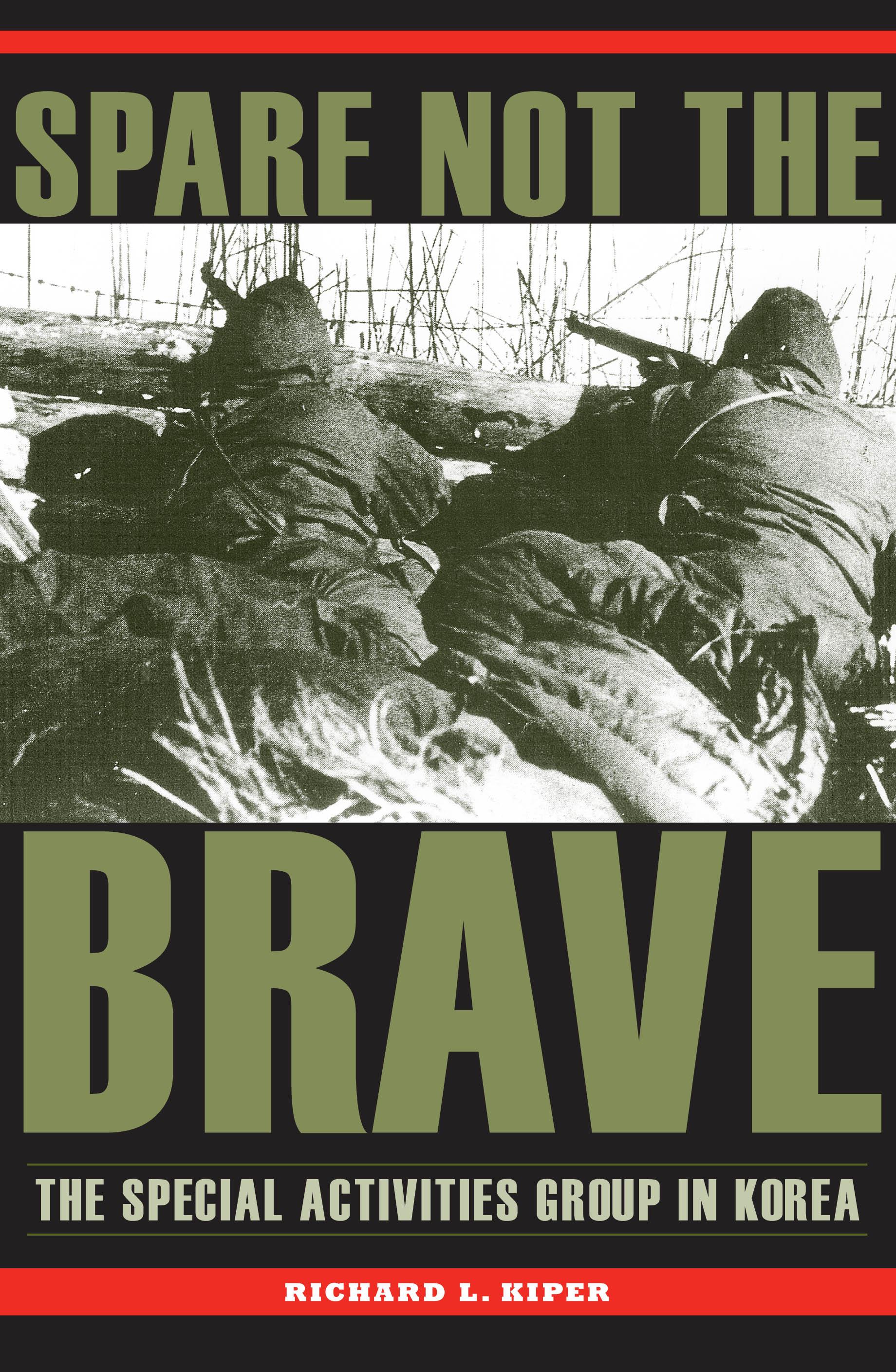
The Special Activities Group (SAG) and its subordinate companies have received little attention from historians, despite being an elite combat unit and participating in highly classified and dangerous missions in Korea. Rarely receiving more attention than a footnote, their story usually begins and ends on the night of September 12, 1950, with an amphibious raid near Kunsan. Until their inactivation on March 31, 1951, SAG simply disappears from most Korean War histories. Spare Not the Brave corrects this omission.
Spare Not the Brave tells the story of the extraordinary missions carried out by this group of extraordinary soldiers. Recruited primarily from the Far East Command headquarters, these men received six weeks of training and then were thrust into combat in Korea. Boarding rubber boats in the Yellow Sea and paddling to shore far behind enemy lines, they conducted a diversionary landing near Kunsan, then landed at Inchon, and sailed to the Wonsan area of North Korea. There, SAG was augmented with a battalion of South Korean soldiers. Together they conducted counter-guerrilla operations until overwhelming Chinese intervention forced all Allied units to withdraw from the North. Those critical missions continued into the difficult fighting of early 1951.
Much of this volume is based upon the words of the participants themselves. Using previously obscure primary sources, oral histories, and official records, author Richard L. Kiper tells this unit’s riveting tale. Wherever possible, first-person accounts have been verified and supplemented with official reports, maps, and documents. Drawing on his twenty-six years of infantry and special forces experience, Kiper brings critical analysis and insight to this previously untold story. Spare Not the Brave fills a gap in the historiography of the Korean War and adds a valuable chapter to the history of U.S. Army special operations.
Before Memmo my notes were scattered across PDFs. Now a workspace pulls everything into one place — I see exactly what's still left to study.
Memmo's summaries are gold before exams. I don't have to re-read 800 pages two weeks before — just the important parts.
The AI chat has saved me the night before an exam more than once. I just keep asking until I get it — no waiting on a study group to reply.
The quizzes hit exactly what I need to know. Memmo tracks what I get stuck on — so I only practice what's worth it.
Flashcards with spaced repetition are magic. Memmo knows when I'm about to forget something and brings it back.
The AI podcasts are my favorite. I listen on my way to school and get a recap without sitting at a computer.

Handbok i kvalitativa metoder
281 kr

Hållbar utveckling: en introduktion för ingenjörer och andra problemlösare
334 kr

Brymans Samhällsvetenskapliga metoder
390 kr

Projektledning
491 kr

Den orättvisa hälsan: om socioekonomiska skillnader i hälsa och livslängd
326 kr

Vetenskapsteori för nybörjare
196 kr

Organizational Leadership
429 kr

På väg mot läraryrket
172 kr

Det sociala livet i skolan: Socialpsykologiska perspektiv
253 kr

Betygsättningens didaktik
151 kr

Personality
402 kr

Studying Leadership
404 kr

Managing Innovation
477 kr

Introduktion till samhällsvetenskaplig metod
347 kr

The Psychology of Sex and Gender
698 kr

Evidens och kunskap för socialt arbete
207 kr

Introduction to Leadership
605 kr