
Before Memmo my notes were scattered across PDFs. Now a workspace pulls everything into one place — I see exactly what's still left to study.
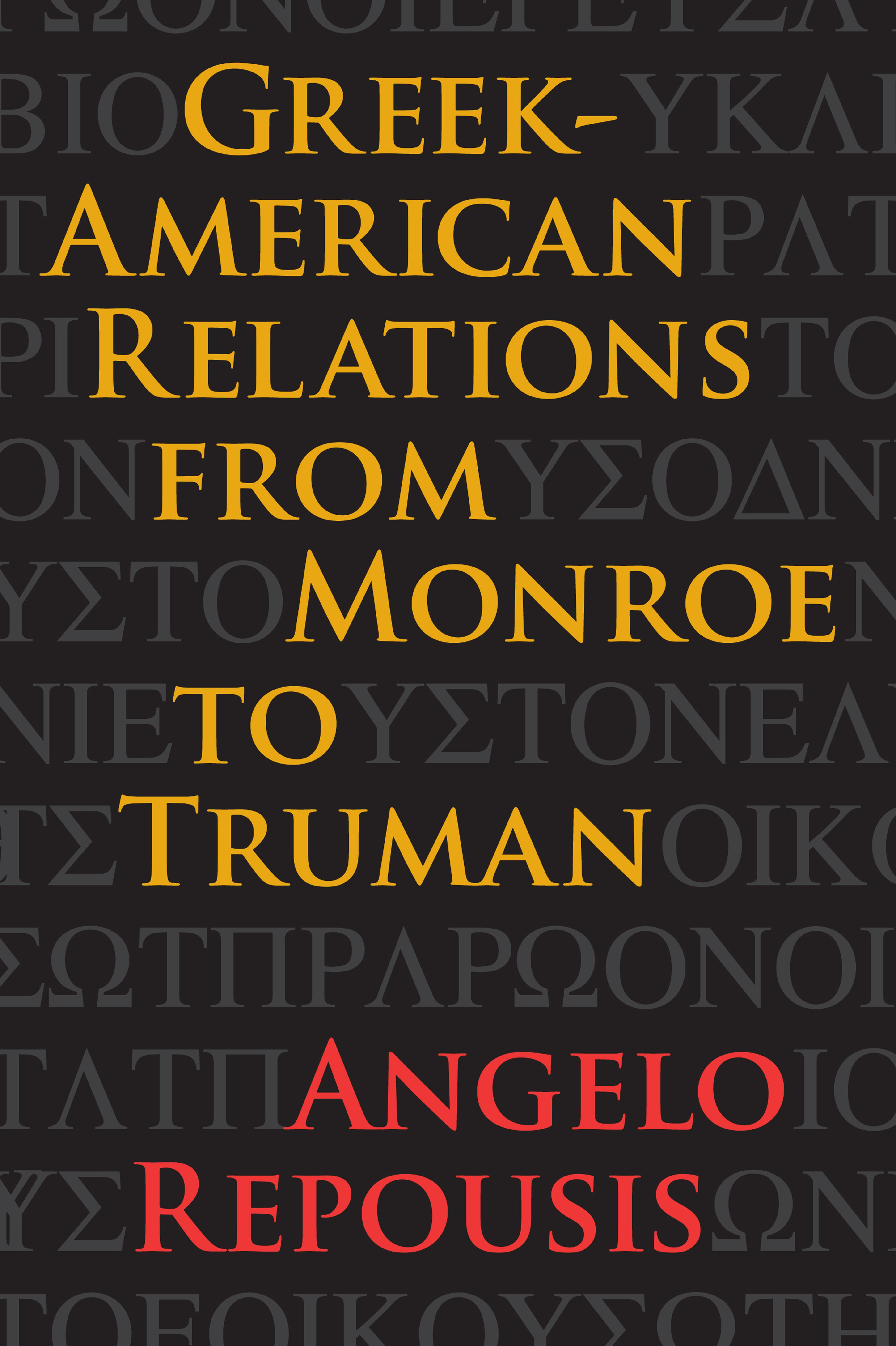
The pre–Cold War motives of American intervention in Greece
Most studies of U.S. relations with Greece focus on the Cold War period, beginning with the enunciation of the Truman Doctrine in 1947. There is little substance in the extant literature about American policy toward or interaction with Greece prior to World War II. This overlooks the important intersections between the two countries and their peoples that predated the Second World War.
U.S. interest in Greece and its people has been long-standing, albeit primarily on an informal or unofficial level. Author Angelo Repousis explores a variety of resonant themes in the field of U.S. foreign relations, including the role of nongovernment individuals and groups in influencing foreign policymaking, the way cultural influences transfer across societies (in this particular case the role of philhellenism), and how public opinion shapes policy—or not.
Repousis chronicles American public attitudes and government policies toward modern Greece from its war for independence (1821–1829) to the Truman Doctrine (1947) when Washington intervened to keep Greece from coming under communist domination. Until then, although the U.S. government was not actively in support of Greek efforts, American philhellenes had supported the attempt to achieve and protect Greek independence. They saw modern Greece as the embodiment of the virtues of its classical counterpart (human dignity, freedom of thought, knowledge, love of beauty and the arts, republicanism, etc.) and worked diligently, albeit not always successfully, to push U.S. policymakers toward greater official interest in and concern for Greece.
Pre–Cold War American intervention in Greek affairs was motivated in part by a perceived association among American and Greek political cultures. Indebted to ancient Greece for their democratic institutions, philhellenes believed they had an obligation to impart the blessings of free and liberal institutions to Greece, a land where those ideals had first been conceived.
Before Memmo my notes were scattered across PDFs. Now a workspace pulls everything into one place — I see exactly what's still left to study.
Memmo's summaries are gold before exams. I don't have to re-read 800 pages two weeks before — just the important parts.
The AI chat has saved me the night before an exam more than once. I just keep asking until I get it — no waiting on a study group to reply.
The quizzes hit exactly what I need to know. Memmo tracks what I get stuck on — so I only practice what's worth it.
Flashcards with spaced repetition are magic. Memmo knows when I'm about to forget something and brings it back.
The AI podcasts are my favorite. I listen on my way to school and get a recap without sitting at a computer.

Handbok i kvalitativa metoder
281 kr

Hållbar utveckling: en introduktion för ingenjörer och andra problemlösare
334 kr

Brymans Samhällsvetenskapliga metoder
390 kr

Projektledning
491 kr

Den orättvisa hälsan: om socioekonomiska skillnader i hälsa och livslängd
326 kr

Organizational Leadership
429 kr

Vetenskapsteori för nybörjare
196 kr

På väg mot läraryrket
172 kr

Det sociala livet i skolan: Socialpsykologiska perspektiv
253 kr

Betygsättningens didaktik
151 kr

Personality
402 kr

Studying Leadership
404 kr

Managing Innovation
477 kr

Introduktion till samhällsvetenskaplig metod
347 kr

The Psychology of Sex and Gender
698 kr

Evidens och kunskap för socialt arbete
207 kr

Introduction to Leadership
605 kr