
Before Memmo my notes were scattered across PDFs. Now a workspace pulls everything into one place — I see exactly what's still left to study.
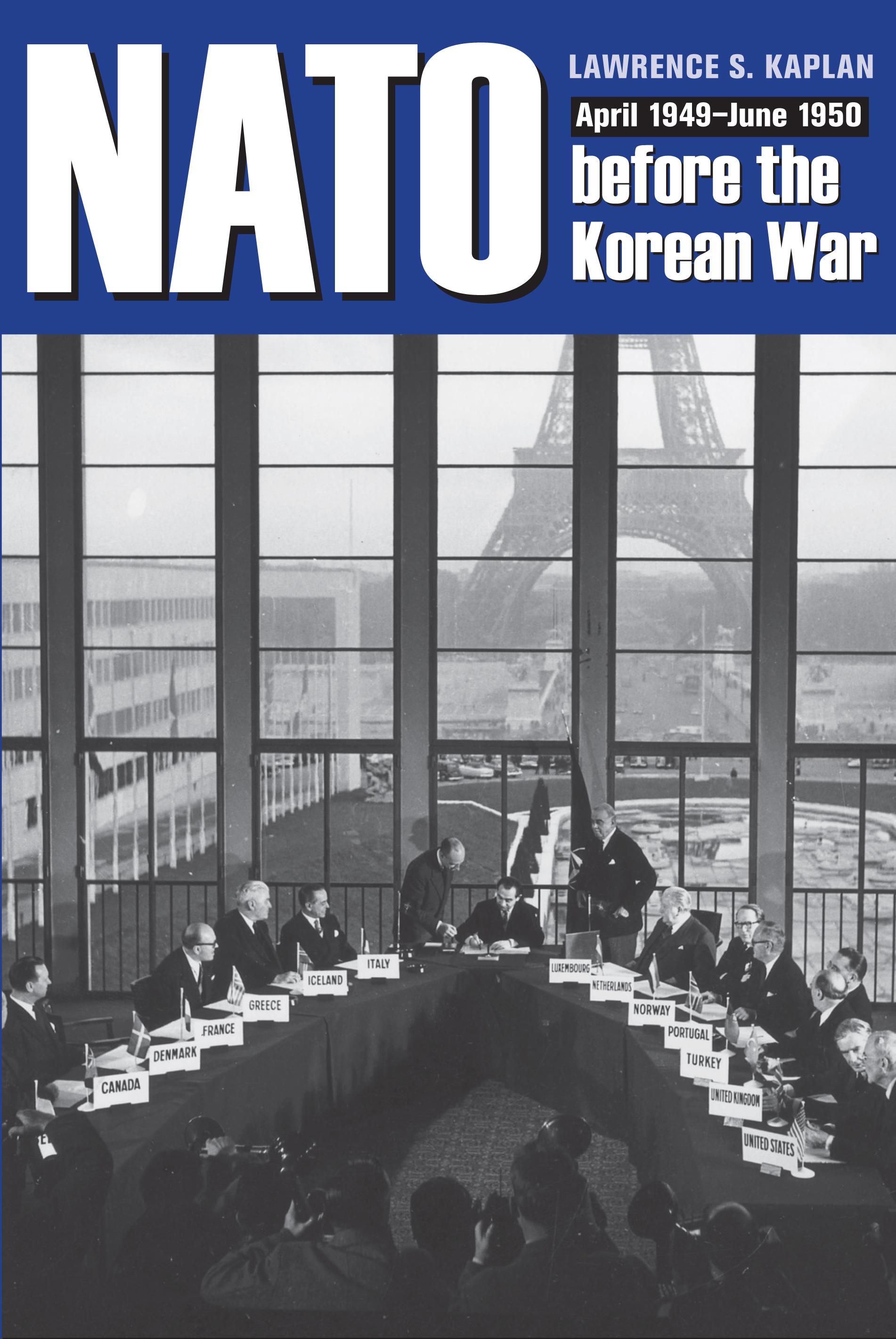
A reexamination of the formative years of the North Atlantic Treaty Organization
Conventional wisdom has the Korean War putting the “O” in NATO. Prior to that time, from the signing of the North Atlantic Treaty on April 4, 1949, to the North Korean invasion of South Korea on June 25, 1950, the Treaty allies were just going through the motions of establishing an organization. Historian Lawrence Kaplan argues that this is a mistaken view, and he fills significant blanks in the record of 1949 and 1950, which NATO officials and analysts alike have largely ignored.
When the Treaty was signed, the United States hailed the end of its isolationist tradition, as it recognized the necessity of devising new means to cope with the menace of Soviet-led Communism. It was interested in creating a new order in the Old World that would open the way to a united Europe. Toward this end, the allies crafted a transatlantic bargain. In its simplest form, the bargain involved a
U.S. commitment to rebuild, economically and militarily, a Western Europe devastated by World War II. In exchange for America’s abandonment of its customary abstention from Europe, the Western allies would take steps to end Europe’s traditional divisions and integrate its resources on every level. The sheer magnitude of the mutual obligations received widespread attention on both sides of the Atlantic as well as within the Communist bloc. The Korean War’s impact on the development of the organization marginalized the prewar history of NATO.
Kaplan asserts that the Korean War was not needed to convert the alliance into an organization, as it was already in place on June 25, 1950. The progress of NATO’s development was often improvised and untidy, and “the first crude tools of the organization,” as Dean Acheson noted, had been cast by the end of the London meeting of the North Atlantic Council in May 1950. The seeds of major changes took the form of the supreme allied commanders, and a civilian coordinating body could be found in negotiations conducted during the winter and spring of 1950. The origins of the “O” in NATO are found in the text of the North Atlantic Treaty, in Article 9, under whose auspices new responsibilities were justified.
Before Memmo my notes were scattered across PDFs. Now a workspace pulls everything into one place — I see exactly what's still left to study.
Memmo's summaries are gold before exams. I don't have to re-read 800 pages two weeks before — just the important parts.
The AI chat has saved me the night before an exam more than once. I just keep asking until I get it — no waiting on a study group to reply.
The quizzes hit exactly what I need to know. Memmo tracks what I get stuck on — so I only practice what's worth it.
Flashcards with spaced repetition are magic. Memmo knows when I'm about to forget something and brings it back.
The AI podcasts are my favorite. I listen on my way to school and get a recap without sitting at a computer.

Handbok i kvalitativa metoder
281 kr

Hållbar utveckling: en introduktion för ingenjörer och andra problemlösare
334 kr

Brymans Samhällsvetenskapliga metoder
390 kr

Projektledning
491 kr

Den orättvisa hälsan: om socioekonomiska skillnader i hälsa och livslängd
326 kr

Organizational Leadership
429 kr

Vetenskapsteori för nybörjare
196 kr

På väg mot läraryrket
172 kr

Det sociala livet i skolan: Socialpsykologiska perspektiv
253 kr

Betygsättningens didaktik
151 kr

Personality
402 kr

Studying Leadership
404 kr

Managing Innovation
477 kr

Introduktion till samhällsvetenskaplig metod
347 kr

The Psychology of Sex and Gender
698 kr

Evidens och kunskap för socialt arbete
207 kr

Introduction to Leadership
605 kr