
Before Memmo my notes were scattered across PDFs. Now a workspace pulls everything into one place — I see exactly what's still left to study.
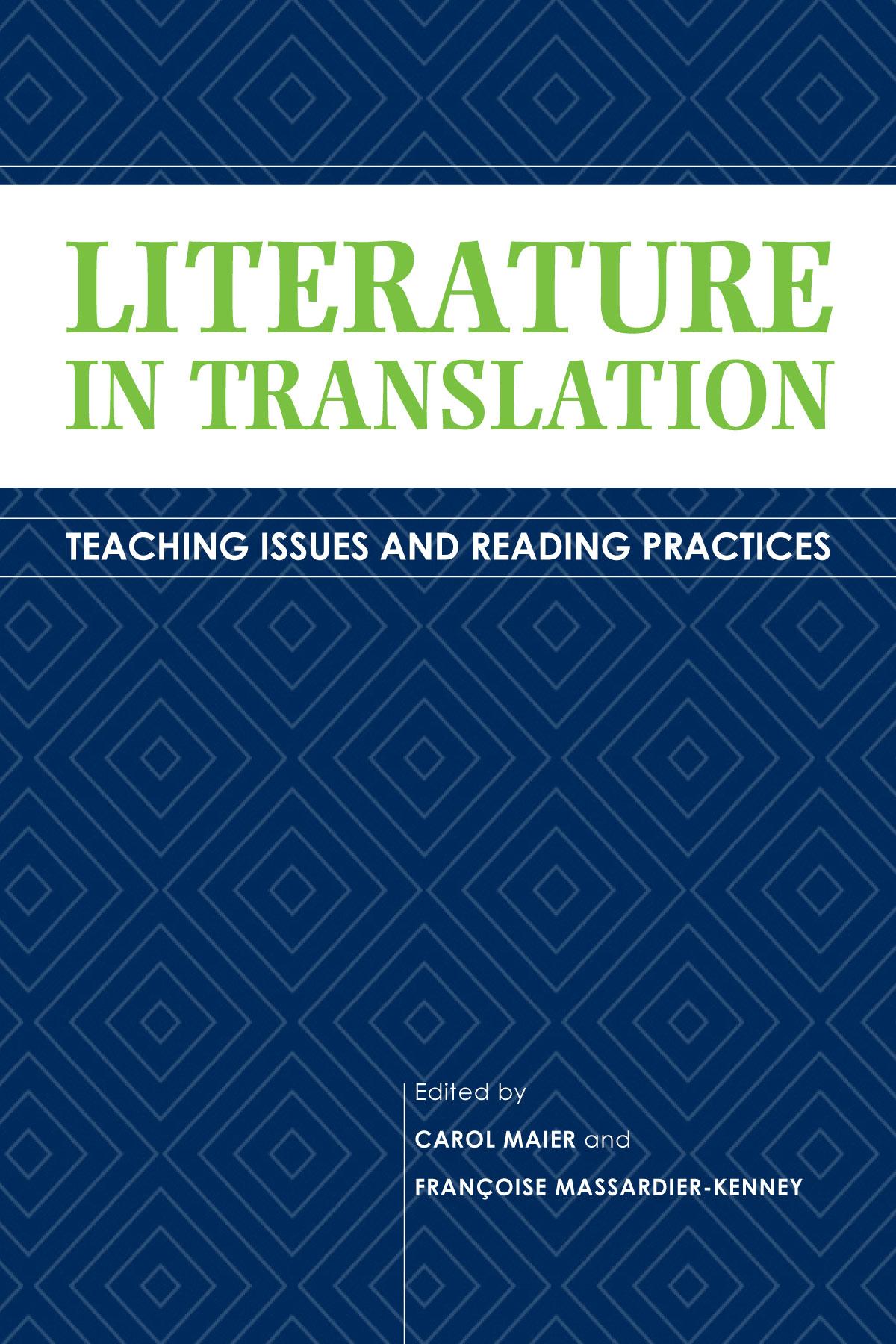
In the last several decades, literary works from around the world have made their way onto the reading lists of American university and college courses in an increasingly wide variety of disciplines. This is a cause for rejoicing. Through works in translation, students in our mostly monolingual society are at last becoming acquainted with the multilingual and multicultural world in which they will live and work. Many instructors have expanded their reach to teach texts that originate from across the globe. Unfortunately, literature in English translation is frequently taught as if it had been written in English, and students are not made familiar with the cultural, linguistic, and literary context in which that literature was produced. As a result, they submit what they read to their own cultural expectations; they do not read in translation and do not reap the benefits of intercultural communication.
Here a true challenge arises for an instructor. Books in translation seldom contain introductory information about the mediation that translation implies or the stakes involved in the transfer of cultural information. Instructors are often left to find their own material about the author or the culture of the source text. Lacking the appropriate pedagogical tools, they struggle to provide information about either the original work or about translation itself, and they might feel uneasy about teaching material for which they lack adequate preparation. Consequently, they restrict themselves to well-known works in translation or works from other countries originally written in English.
Literature in Translation: Teaching Issues and Reading Practices squarely addresses this pedagogical lack. The book’s sixteen essays provide for instructors a context in which to teach works from a variety of languages and cultures in ways that highlight the effects of linguistic and cultural transfers.
Before Memmo my notes were scattered across PDFs. Now a workspace pulls everything into one place — I see exactly what's still left to study.
Memmo's summaries are gold before exams. I don't have to re-read 800 pages two weeks before — just the important parts.
The AI chat has saved me the night before an exam more than once. I just keep asking until I get it — no waiting on a study group to reply.
The quizzes hit exactly what I need to know. Memmo tracks what I get stuck on — so I only practice what's worth it.
Flashcards with spaced repetition are magic. Memmo knows when I'm about to forget something and brings it back.
The AI podcasts are my favorite. I listen on my way to school and get a recap without sitting at a computer.

Handbok i kvalitativa metoder
281 kr

Hållbar utveckling: en introduktion för ingenjörer och andra problemlösare
334 kr

Brymans Samhällsvetenskapliga metoder
390 kr

Projektledning
491 kr

Den orättvisa hälsan: om socioekonomiska skillnader i hälsa och livslängd
326 kr

Organizational Leadership
429 kr

Vetenskapsteori för nybörjare
196 kr

På väg mot läraryrket
172 kr

Det sociala livet i skolan: Socialpsykologiska perspektiv
253 kr

Betygsättningens didaktik
151 kr

Personality
402 kr

Studying Leadership
404 kr

Managing Innovation
477 kr

Introduktion till samhällsvetenskaplig metod
347 kr

The Psychology of Sex and Gender
698 kr

Evidens och kunskap för socialt arbete
207 kr

Introduction to Leadership
605 kr