
Before Memmo my notes were scattered across PDFs. Now a workspace pulls everything into one place — I see exactly what's still left to study.
A timely historical analysis of a persistent global problem
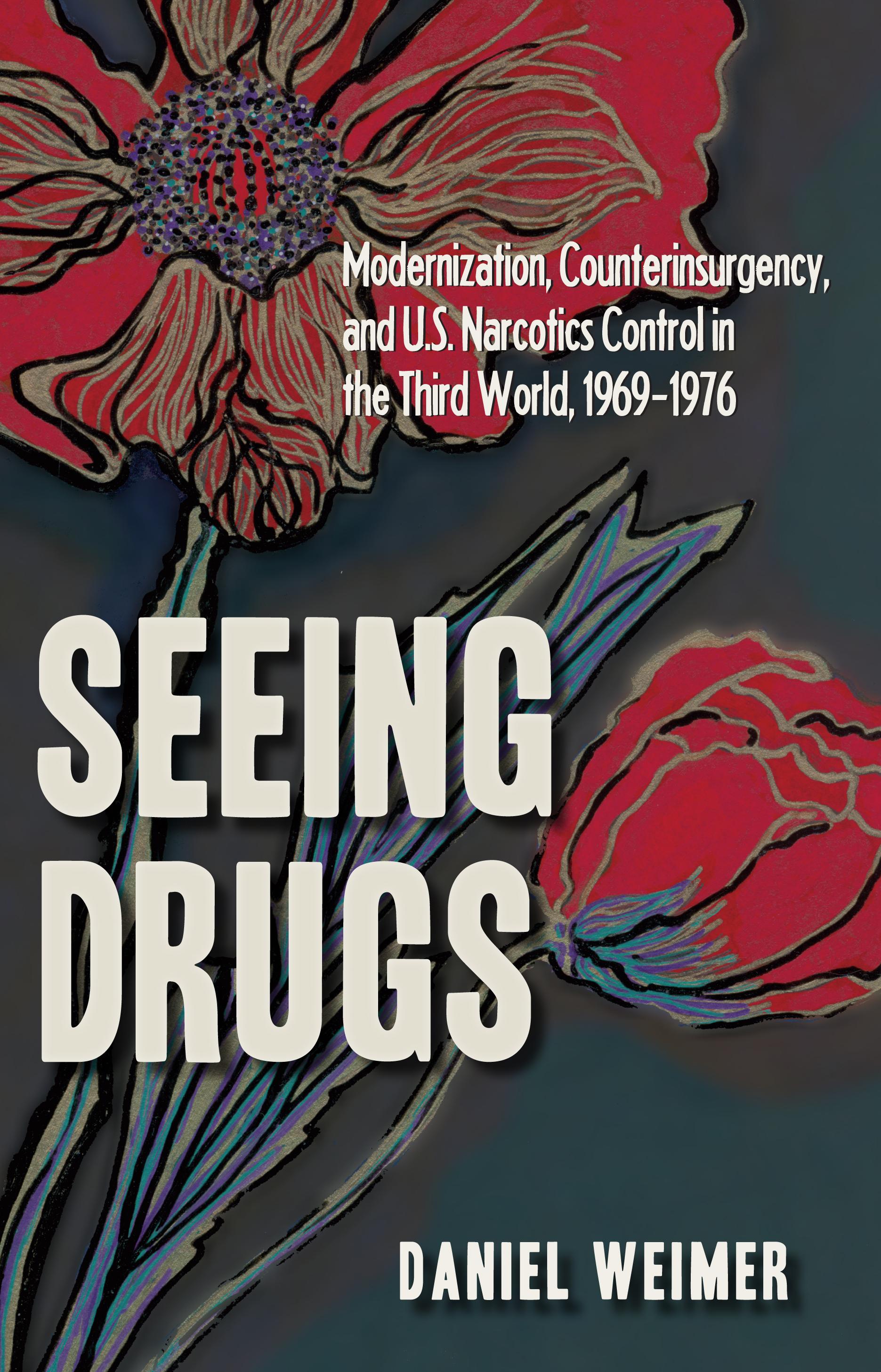
Since its declaration in the early 1970s, the American drug war has spanned the globe in a quest to stop the flow of illegal drugs into the United States. Explaining the conceptual framework within which policymakers understood illegal opium production and trafficking, Seeing Drugs examines the genesis of the war on drugs during the Nixon and Ford administrations when the United States developed the policies that set the parameters of subsequent American drug control abroad.
Faced with rising heroin use in the United States and the fear of drug-addicted Vietnam veterans carrying their affliction home and propelled by the belief that heroin addiction spreads like a contagious disease, U.S. officials identified three Third World nations—Thailand, Burma, and Mexico—as the primary sources of illegal narcotics servicing the American drug market. Author Daniel Weimer demonstrates that drug-control officials in these countries confronted a host of interlocking factors shaping the illicit narcotics trade and that, in response to these challenges, policymakers applied modernization and counterinsurgency theory to devise strategies to assist the Thai, Burmese, and Mexican governments in curbing drug trafficking. The Nixon and Ford administrations sincerely believed their policies could rein in the narcotics trade and diminish addiction within the United States. In the end, however, the drug war only guaranteed continued American intervention in the Third World, where the majority of illegal drug crops grew.
Through interdisciplinary and comparative analysis, Seeing Drugs examines the contours of the burgeoning drug war, the cultural significance of drugs and addiction, and their links to the formation of national identity within the United States, Thailand, Burma, and Mexico. By highlighting the prevalence of modernization and counterinsurgency discourse within drug-control policy, Weimer reveals an unexplored and important facet of the history of U.S–Third World interaction.
“Essential reading for anyone interested in both the history of U.S. drug policy and the process of modernization during the Cold War.” – William O. Walker III, author of Drug Control in the Americas and Opium and Foreign Policy
“Seeing Drugs explores the dramatic effects of post-1945 U.S. modernization and counterinsurgency efforts, joined with Cold War imperatives, on the United States’ war on drugs. The war on drugs was carried by American dollars, social scientists, officials, and technology into the poppy fields of Mexico, Thailand and Burma. Dan Weimer deftly demonstrates the layered ways in which beliefs about drugs as threat and symbol of antimodernism prompted Americans to forcibly transform drug-growing areas, sometimes with support from indigenous elites. His story, based on impressive research and capacious understanding of theory, reveals both the contradictions in the United States’ war on drugs as well as many reasons for its devastating effects. This work joins much of the most exciting new work in U.S. foreign relations, in taking serious interest in the transformative consequences of U.S. foreign policy for other nations. Seeing Drugs joins Al McCoy’s classic Politics of Heroin as a ‘must read’ for understanding the United States’ war on drugs.” - Anne L. Foster, author of Projections of Power: The United States and Europe in Colonial Southeast Asia, 1919-1941
“Weimer persuasively demonstrates that discourses of modernization and counterinsurgency helped to shape both U.S. counter-narcotics policy abroad and domestic drug policy at home along coercive lines. An important and timely book with much to teach us about the contradictions of the ‘war on drugs’ in Afghanistan, Colombia, and elsewhere.” – Brad Simpson, Princeton University
Before Memmo my notes were scattered across PDFs. Now a workspace pulls everything into one place — I see exactly what's still left to study.
Memmo's summaries are gold before exams. I don't have to re-read 800 pages two weeks before — just the important parts.
The AI chat has saved me the night before an exam more than once. I just keep asking until I get it — no waiting on a study group to reply.
The quizzes hit exactly what I need to know. Memmo tracks what I get stuck on — so I only practice what's worth it.
Flashcards with spaced repetition are magic. Memmo knows when I'm about to forget something and brings it back.
The AI podcasts are my favorite. I listen on my way to school and get a recap without sitting at a computer.

Handbok i kvalitativa metoder
281 kr

Hållbar utveckling: en introduktion för ingenjörer och andra problemlösare
334 kr

Brymans Samhällsvetenskapliga metoder
390 kr

Projektledning
491 kr

Den orättvisa hälsan: om socioekonomiska skillnader i hälsa och livslängd
326 kr

Organizational Leadership
429 kr

Vetenskapsteori för nybörjare
196 kr

På väg mot läraryrket
172 kr

Det sociala livet i skolan: Socialpsykologiska perspektiv
253 kr

Betygsättningens didaktik
151 kr

Personality
402 kr

Studying Leadership
404 kr

Managing Innovation
477 kr

Introduktion till samhällsvetenskaplig metod
347 kr

The Psychology of Sex and Gender
698 kr

Evidens och kunskap för socialt arbete
207 kr

Introduction to Leadership
605 kr