
Before Memmo my notes were scattered across PDFs. Now a workspace pulls everything into one place — I see exactly what's still left to study.
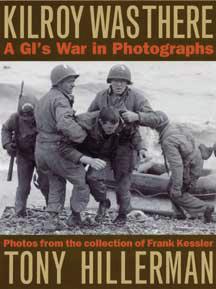
“In 1941 Frank Kessler, a young accountant in Canton, Ohio, was drafted, assigned to an Army Signal Corps unit, and went away to photograph the war in Europe. In 1945, home again with his wife and children, he stored hundreds of those images of blood and battle in his attic. There they stayed until after his death.
“Then Lee Kessler, Frank’s estranged younger brother, sorted through boxes seeking to better know a brother he’d never known very well. A flier who had been shot down and held in a German POW camp, Lee saw Frank’s photographs as images of a different side of war, one he never experienced. He was moved by what he saw and recognized their importance. He preserved them for all of us, carefully ordering them into albums and typing the information Frank had written on the backs of the photos.
“When I saw Frank Kessler’s photographs I was struck by how different they were from the movie-camera views I see on television. No public relations pictures here, intended to glorify battle and rally support. These were up-close snapshots of the dirty, damp, and disheveled men in the rifle companies and tank units. It was the war as they endured it, as they struggled through it from the beaches of France to the streets of Berlin until they finally won it.
“With his camera Kessler was out there on the killing fields alongside the rest of us. . . . Kessler had a remarkable talent for making significant the ordinary images of war. With a snapshot of a U.S. Army medic lighting a cigarette for a bloody German soldier, he tells us how opposing troops came to see one another. . . . He shows us soldiers sitting on the muddy bank of a little stream trying to take a bath. He shows us Sherman tanks burning, young men dying, young men dead. Like no other photographs I’ve seen, Kessler’s capture the ugliness, wreckage, cold, and misery of war.”—from the Preface
Before Memmo my notes were scattered across PDFs. Now a workspace pulls everything into one place — I see exactly what's still left to study.
Memmo's summaries are gold before exams. I don't have to re-read 800 pages two weeks before — just the important parts.
The AI chat has saved me the night before an exam more than once. I just keep asking until I get it — no waiting on a study group to reply.
The quizzes hit exactly what I need to know. Memmo tracks what I get stuck on — so I only practice what's worth it.
Flashcards with spaced repetition are magic. Memmo knows when I'm about to forget something and brings it back.
The AI podcasts are my favorite. I listen on my way to school and get a recap without sitting at a computer.

Handbok i kvalitativa metoder
281 kr

Hållbar utveckling: en introduktion för ingenjörer och andra problemlösare
334 kr

Brymans Samhällsvetenskapliga metoder
390 kr

Projektledning
491 kr

Den orättvisa hälsan: om socioekonomiska skillnader i hälsa och livslängd
326 kr

Vetenskapsteori för nybörjare
196 kr

Organizational Leadership
429 kr

På väg mot läraryrket
172 kr

Det sociala livet i skolan: Socialpsykologiska perspektiv
253 kr

Betygsättningens didaktik
151 kr

Personality
402 kr

Studying Leadership
404 kr

Managing Innovation
477 kr

Introduktion till samhällsvetenskaplig metod
347 kr

The Psychology of Sex and Gender
698 kr

Evidens och kunskap för socialt arbete
207 kr

Introduction to Leadership
605 kr