
Before Memmo my notes were scattered across PDFs. Now a workspace pulls everything into one place — I see exactly what's still left to study.
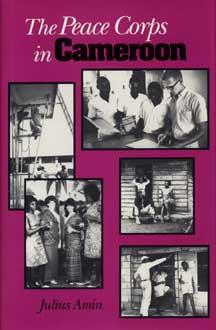
The Peace Corps was established in 1961 during the Kennedy administration, symbolizing a new direction in foreign policy-making for the United States. Founded on large aid programs staffed by volunteers, the agency’s primary goal was to help modernize Third World countries while guarding against the expansion of communism.
Julius A. Amin interprets the motives behind the development of the Peace Corps and analyzes the program and performance of its volunteers in Cameroon during the 1960s. He bases his study on previously unused primary sources, including the completed questionnaires of returned volunteers and the diaries and letters they donated to him. He also provides extensive interviews conducted in Cameroon where, as a student, he was taught by the volunteers and later worked as their colleague.
Amin finds that the volunteers contributed greatly to the social and educational development of Cameroon and made many new American friends within the host country. On a broader level, they learned about themselves and other people, and returned to the United States determined to reeducate Americans about Africa. Amin notes, however, that the volunteers expressed difficulty in justifying the ideals of American democracy to the Cameroonians in light of such issues as racism in America and U.S. intervention in Vietnam.
Washington policymakers have seldom involved returned volunteers in discussions concerning the Third World. Amin believes that the volunteers could be invaluable in stimulating a renewed friendship between America and Third World countries, and in helping to explain why programs designed to assist Third World development often fail at the implementation stage.
The Peace Corps in Cameroon also contains a comparitive analysis of the agency’s work in the neighboring countries of Ghana and Guinea, where its efforts were not as successful. In addition, it features numerous photographs of volunteers at work in Cameroon and maps to complement the text.
This pioneer study contributes to Africanist/American scholarship in general, and specifically adds to the historical literature about Peace Corps volunteers in a Third World country. It is must reading for anyone interested in similar endeavors in African countries or in the overall effectiveness of the Peace Corps program.
Before Memmo my notes were scattered across PDFs. Now a workspace pulls everything into one place — I see exactly what's still left to study.
Memmo's summaries are gold before exams. I don't have to re-read 800 pages two weeks before — just the important parts.
The AI chat has saved me the night before an exam more than once. I just keep asking until I get it — no waiting on a study group to reply.
The quizzes hit exactly what I need to know. Memmo tracks what I get stuck on — so I only practice what's worth it.
Flashcards with spaced repetition are magic. Memmo knows when I'm about to forget something and brings it back.
The AI podcasts are my favorite. I listen on my way to school and get a recap without sitting at a computer.

Handbok i kvalitativa metoder
281 kr

Hållbar utveckling: en introduktion för ingenjörer och andra problemlösare
334 kr

Brymans Samhällsvetenskapliga metoder
390 kr

Projektledning
491 kr

Den orättvisa hälsan: om socioekonomiska skillnader i hälsa och livslängd
326 kr

Organizational Leadership
429 kr

Vetenskapsteori för nybörjare
196 kr

På väg mot läraryrket
172 kr

Det sociala livet i skolan: Socialpsykologiska perspektiv
253 kr

Betygsättningens didaktik
151 kr

Personality
402 kr

Studying Leadership
404 kr

Managing Innovation
477 kr

Introduktion till samhällsvetenskaplig metod
347 kr

The Psychology of Sex and Gender
698 kr

Evidens och kunskap för socialt arbete
207 kr

Introduction to Leadership
605 kr