
Before Memmo my notes were scattered across PDFs. Now a workspace pulls everything into one place — I see exactly what's still left to study.
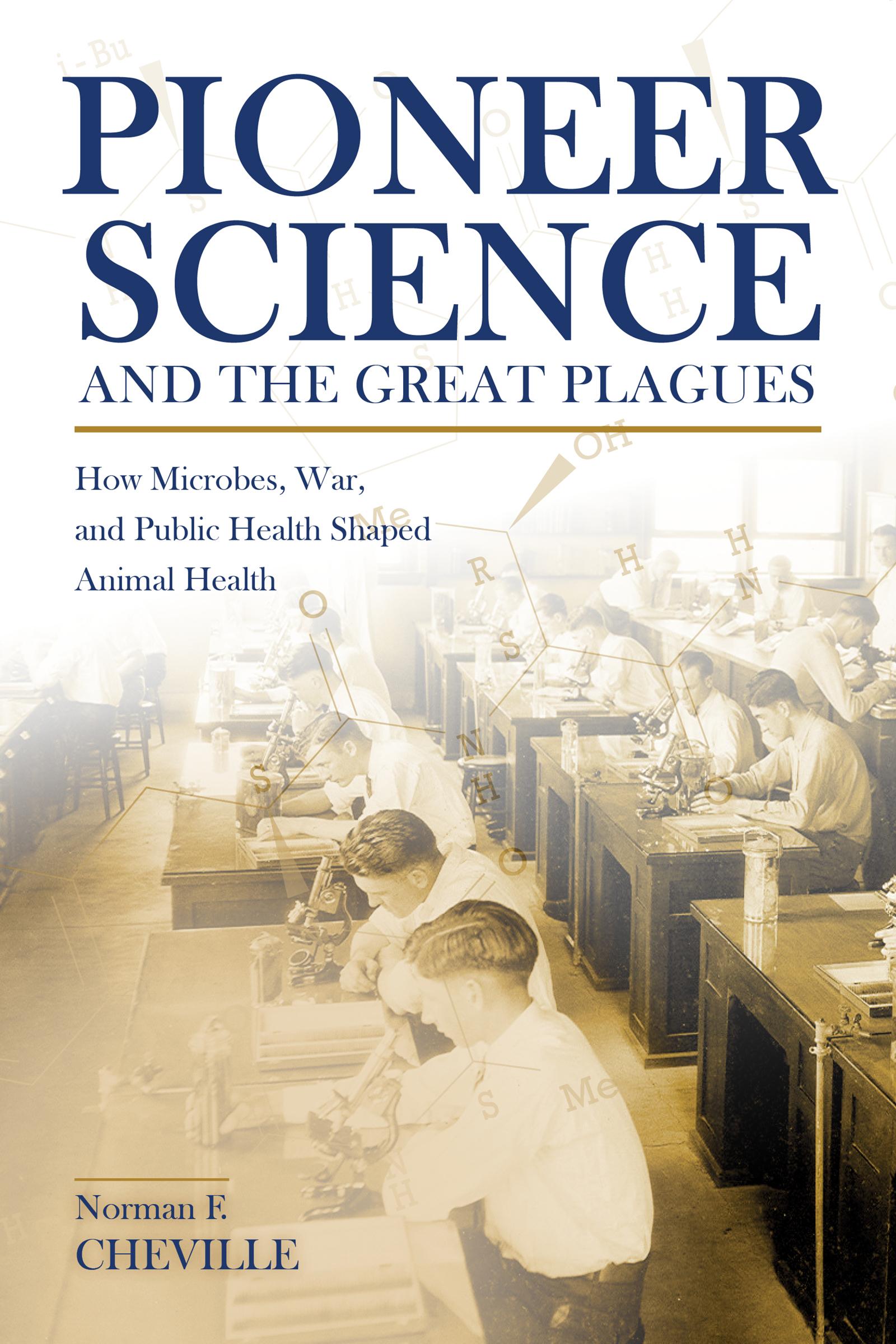
Pioneer Science and the Great Plagues covers the century when infectious plagues—anthrax, tuberculosis, tetanus, plague, smallpox, and polio—were conquered, and details the important role that veterinary scientists played. The narrative is driven by astonishing events that centered on animal disease: the influenza pandemic of 1872, discovery of the causes of anthrax and tuberculosis in the 1880s, conquest of Texas cattle fever and then yellow fever, German anthrax attacks on the United States during World War I, the tuberculin war of 1931, Japanese biological warfare in the 1940s, and today’s bioterror dangers.
Veterinary science in the rural Midwest arose from agriculture, but in urban Philadelphia it came from medicine; similar differences occurred in Canada between Toronto and Montreal. As land-grant colleges were established after the American Civil War, individual states followed divergent pathways in supporting veterinary science. Some employed a trade school curriculum that taught agriculturalists to empirically treat animal diseases and others emphasized a curriculum tied to science. This pattern continued for a century, but today some institutions have moved back to the trade school philosophy. Avoiding lessons of the 1910 Flexner Report on medical education reform, university-associated veterinary schools are being approved that do not have control of their own veterinary hospitals, diagnostic laboratories, and research institutes—components that are critical for training students in science. Underlying this change were twin idiosyncrasies of culture—disbelief in science and distrust of government—that spawned scientology, creationism, anti-vaccination movements, and other anti-science scams.
As new infectious plagues continue to arise, Pioneer Science and the Great Plagues details the strategies we learned defeating plagues from 1860 to 1960—and the essential role veterinary science played. To defeat the plagues of today it is essential we avoid the digital cocoon of disbelief in science and cultural stasis now threatening progress.
Before Memmo my notes were scattered across PDFs. Now a workspace pulls everything into one place — I see exactly what's still left to study.
Memmo's summaries are gold before exams. I don't have to re-read 800 pages two weeks before — just the important parts.
The AI chat has saved me the night before an exam more than once. I just keep asking until I get it — no waiting on a study group to reply.
The quizzes hit exactly what I need to know. Memmo tracks what I get stuck on — so I only practice what's worth it.
Flashcards with spaced repetition are magic. Memmo knows when I'm about to forget something and brings it back.
The AI podcasts are my favorite. I listen on my way to school and get a recap without sitting at a computer.

Handbok i kvalitativa metoder
281 kr

Hållbar utveckling: en introduktion för ingenjörer och andra problemlösare
334 kr

Brymans Samhällsvetenskapliga metoder
390 kr

Projektledning
491 kr

Den orättvisa hälsan: om socioekonomiska skillnader i hälsa och livslängd
326 kr

Vetenskapsteori för nybörjare
196 kr

Organizational Leadership
429 kr

På väg mot läraryrket
172 kr

Det sociala livet i skolan: Socialpsykologiska perspektiv
253 kr

Betygsättningens didaktik
151 kr

Personality
402 kr

Studying Leadership
404 kr

Managing Innovation
477 kr

Introduktion till samhällsvetenskaplig metod
347 kr

The Psychology of Sex and Gender
698 kr

Evidens och kunskap för socialt arbete
207 kr

Introduction to Leadership
605 kr