
Before Memmo my notes were scattered across PDFs. Now a workspace pulls everything into one place — I see exactly what's still left to study.
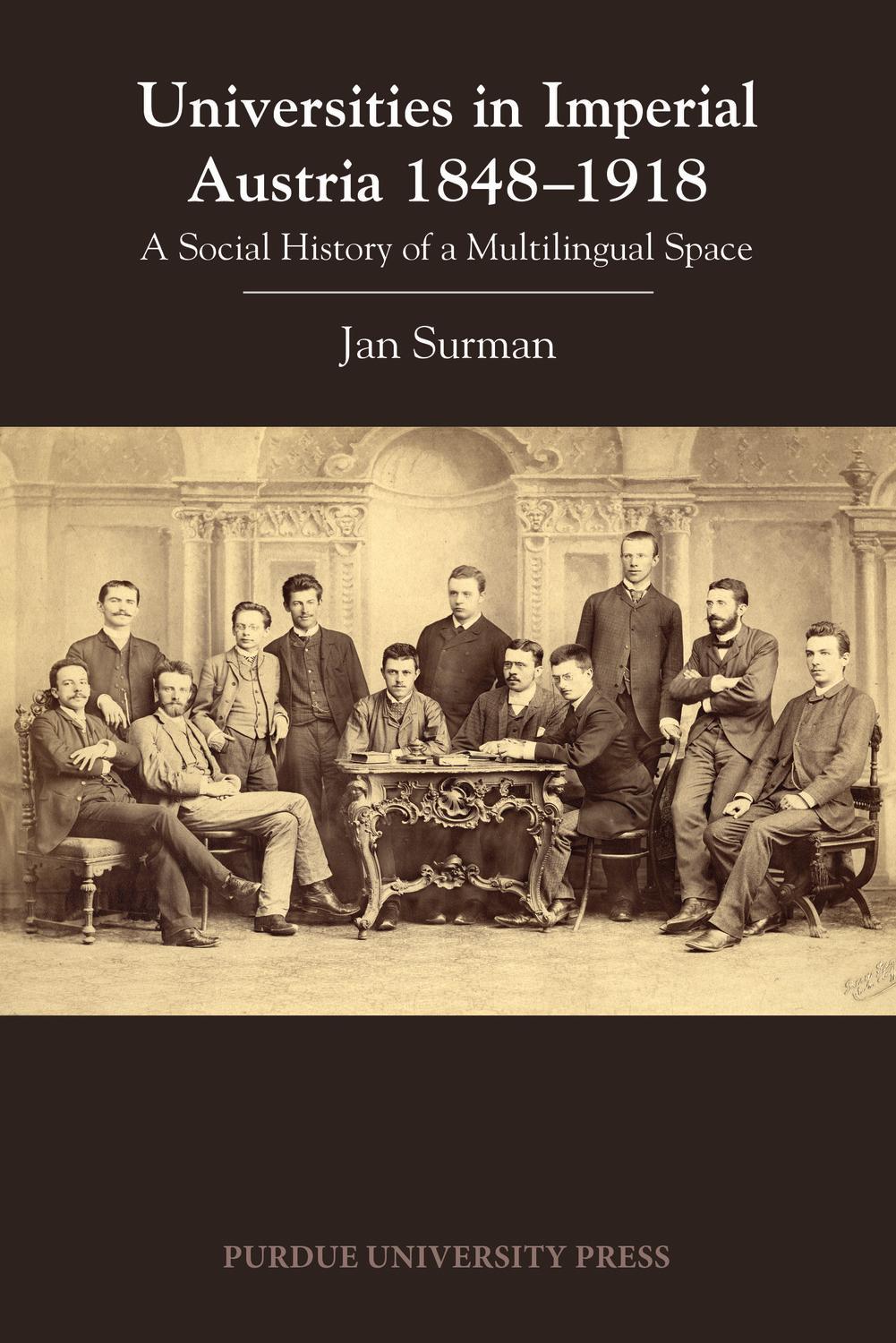
Combining history of science and a history of universities with the new imperial history, Universities in Imperial Austria 1848–1918: A Social History of a Multilingual Space by Jan Surman analyzes the practice of scholarly migration and its lasting influence on the intellectual output in the Austrian part of the Habsburg Empire.
The Habsburg Empire and its successor states were home to developments that shaped Central Europe's scholarship well into the twentieth century. Universities became centers of both state- and nation-building, as well as of confessional resistance, placing scholars if not in conflict, then certainly at odds with the neutral international orientation of academe.
By going beyond national narratives, Surman reveals the Empire as a state with institutions divided by language but united by legislation, practices, and other influences. Such an approach allows readers a better view to how scholars turned gradually away from state-centric discourse to form distinct language communities after 1867; these influences affected scholarship, and by examining the scholarly record, Surman tracks the turn.
Drawing on archives in Austria, the Czech Republic, Poland, and Ukraine, Surman analyzes the careers of several thousand scholars from the faculties of philosophy and medicine of a number of Habsburg universities, thus covering various moments in the history of the Empire for the widest view. Universities in Imperial Austria 1848–1918 focuses on the tension between the political and linguistic spaces scholars occupied and shows that this tension did not lead to a gradual dissolution of the monarchy’s academia, but rather to an ongoing development of new strategies to cope with the cultural and linguistic multitude.
Before Memmo my notes were scattered across PDFs. Now a workspace pulls everything into one place — I see exactly what's still left to study.
Memmo's summaries are gold before exams. I don't have to re-read 800 pages two weeks before — just the important parts.
The AI chat has saved me the night before an exam more than once. I just keep asking until I get it — no waiting on a study group to reply.
The quizzes hit exactly what I need to know. Memmo tracks what I get stuck on — so I only practice what's worth it.
Flashcards with spaced repetition are magic. Memmo knows when I'm about to forget something and brings it back.
The AI podcasts are my favorite. I listen on my way to school and get a recap without sitting at a computer.

Handbok i kvalitativa metoder
281 kr

Hållbar utveckling: en introduktion för ingenjörer och andra problemlösare
334 kr

Brymans Samhällsvetenskapliga metoder
390 kr

Projektledning
491 kr

Den orättvisa hälsan: om socioekonomiska skillnader i hälsa och livslängd
326 kr

Vetenskapsteori för nybörjare
196 kr

Organizational Leadership
429 kr

På väg mot läraryrket
172 kr

Det sociala livet i skolan: Socialpsykologiska perspektiv
253 kr

Betygsättningens didaktik
151 kr

Personality
402 kr

Studying Leadership
404 kr

Managing Innovation
477 kr

Introduktion till samhällsvetenskaplig metod
347 kr

The Psychology of Sex and Gender
698 kr

Evidens och kunskap för socialt arbete
207 kr

Introduction to Leadership
605 kr