
Before Memmo my notes were scattered across PDFs. Now a workspace pulls everything into one place — I see exactly what's still left to study.
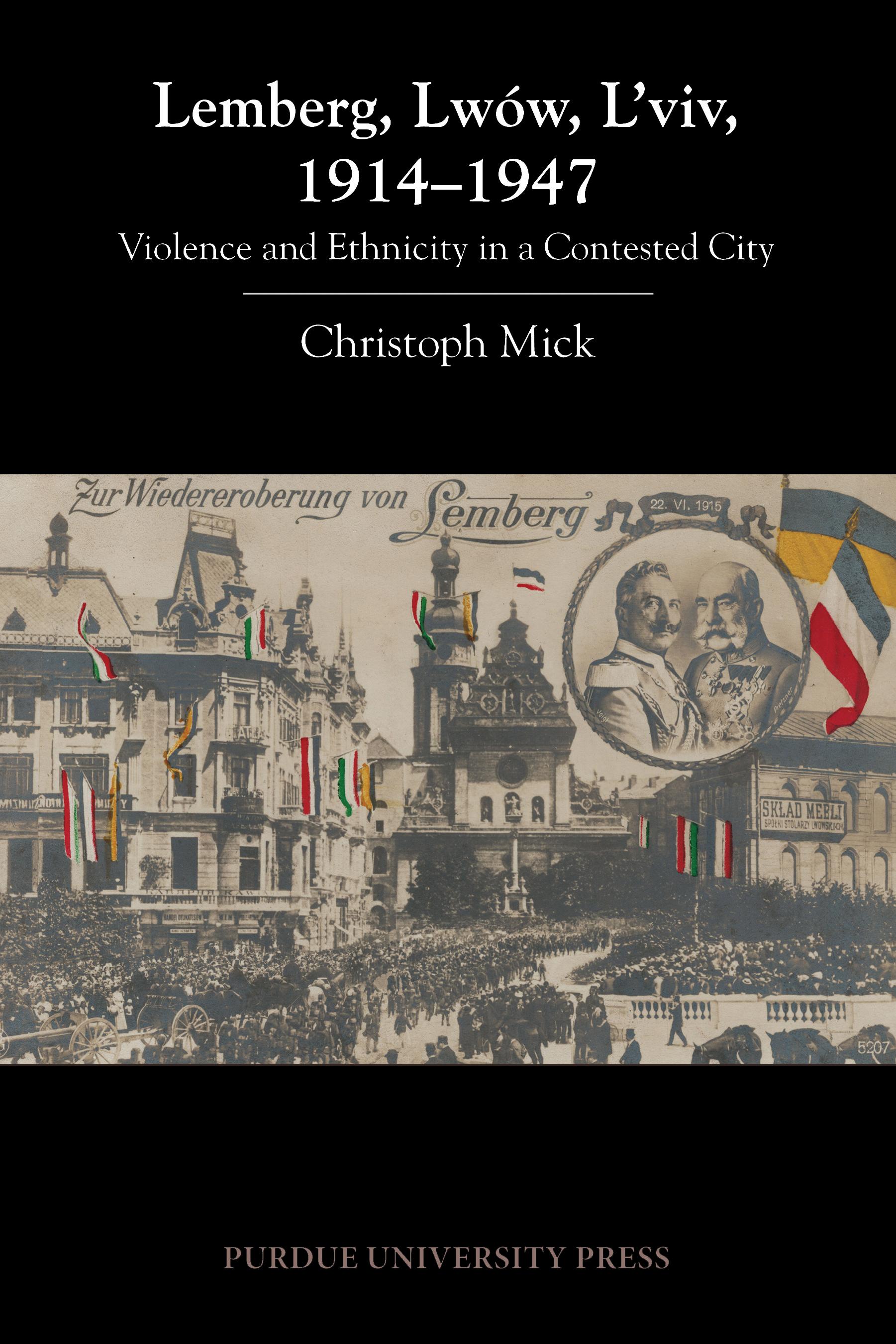
Known as Lemberg in German and Lwów in Polish, the city of L'viv in modern Ukraine was in the crosshairs of imperial and national aspirations for much of the twentieth century. This book tells the compelling story of how its inhabitants (Roman Catholic Poles, Greek Catholic Ukrainians, and Jews) reacted to the sweeping political changes during and after World Wars I and II. The Eastern Front shifted back and forth, and the city changed hands seven times. At the end of each war, L'viv found itself in the hands of a different state.
While serious tensions had existed among Poles, Ukrainians/Ruthenians, and Jews in the city, before 1914 eruptions of violence were still infrequent. The changes of political control over the city during World War I led to increased intergroup frictions, new power relations, and episodes of shocking violence, particularly against Jews. The city's incorporation into the independent Polish Republic in November 1918 after a brief period of Ukrainian rule sparked intensified conflict. Ukrainians faced discrimination and political repression under the new government, and Ukrainian nationalists attacked the Polish state. In the 1930s, anti-Semitism increased sharply. During World War II, the city experienced first Soviet rule, then Nazi occupation, and finally Soviet conquest. The Nazis deported and murdered nearly all of the city's large Jewish population, and at the end of the war the Soviet forces expelled the city's Polish inhabitants.
Based on archival research conducted in L'viv, Kiev, Warsaw, Vienna, Berlin, and Moscow, as well as an array of contemporary printed sources and scholarly studies, this book examines how the inhabitants of the city reacted to the changes in political control, and how ethnic and national ideologies shaped their dealings with each other. An earlier German version of this volume was published as Kriegserfahrungen in einer multiethnischen Stadt: Lemberg 1914-1947(2011).
Before Memmo my notes were scattered across PDFs. Now a workspace pulls everything into one place — I see exactly what's still left to study.
Memmo's summaries are gold before exams. I don't have to re-read 800 pages two weeks before — just the important parts.
The AI chat has saved me the night before an exam more than once. I just keep asking until I get it — no waiting on a study group to reply.
The quizzes hit exactly what I need to know. Memmo tracks what I get stuck on — so I only practice what's worth it.
Flashcards with spaced repetition are magic. Memmo knows when I'm about to forget something and brings it back.
The AI podcasts are my favorite. I listen on my way to school and get a recap without sitting at a computer.

Handbok i kvalitativa metoder
281 kr

Hållbar utveckling: en introduktion för ingenjörer och andra problemlösare
334 kr

Brymans Samhällsvetenskapliga metoder
390 kr

Projektledning
491 kr

Den orättvisa hälsan: om socioekonomiska skillnader i hälsa och livslängd
326 kr

Vetenskapsteori för nybörjare
196 kr

Organizational Leadership
429 kr

På väg mot läraryrket
172 kr

Det sociala livet i skolan: Socialpsykologiska perspektiv
253 kr

Betygsättningens didaktik
151 kr

Personality
402 kr

Studying Leadership
404 kr

Managing Innovation
477 kr

Introduktion till samhällsvetenskaplig metod
347 kr

The Psychology of Sex and Gender
698 kr

Evidens och kunskap för socialt arbete
207 kr

Introduction to Leadership
605 kr