
Before Memmo my notes were scattered across PDFs. Now a workspace pulls everything into one place — I see exactly what's still left to study.
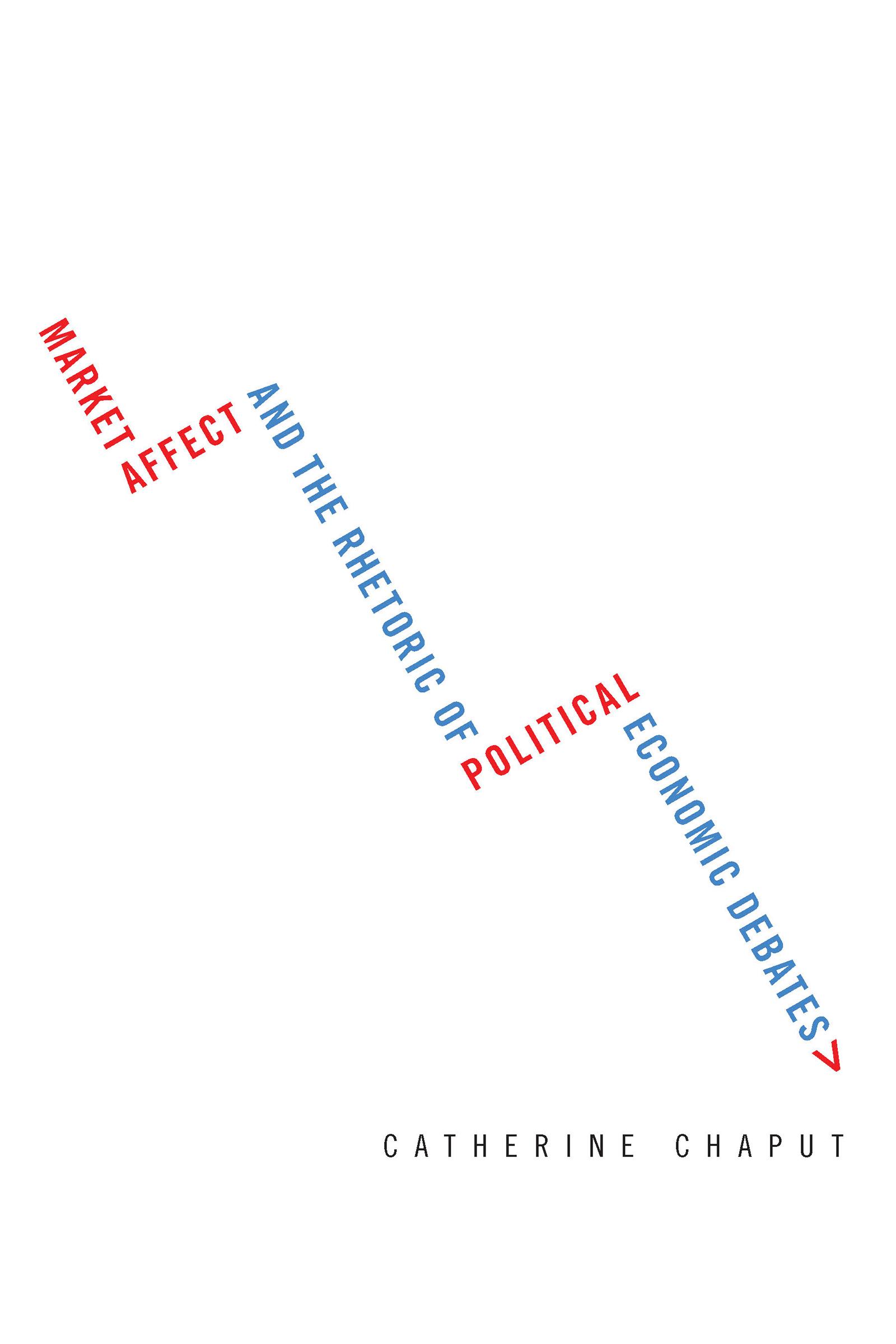
What explains the "triumph of capitalism"? Why do people so often respond positively to discussions favoring it while shutting down arguments against it? Overwhelmingly theories regarding capitalism's resilience have focused on individual choice bolstered by careful rhetorical argumentation. In this penetrating study, however, Catherine Chaput shows that something more than choice is at work in capitalism's ability to thrive in public practice and imagination—more even than material resources (power) and cultural imperialism (ideology). That "something," she contends, is market affect.
Affect, says Chaput, signifies a semi-autonomous entity circulating through individuals and groups. Physiological in nature but moving across cultural, material, and environmental boundaries, affect has three functions: it opens or closes individual receptivity; it pulls or pushes individual identification; and it raises or lowers individual energies. This novel approach begins by connecting affect to rhetorical theory and offers a method for tracking its three modalities in relation to economic markets. Each of the following chapters compares a major theorist of capitalism with one of his important critics, beginning with the juxtaposition of Adam Smith and Karl Marx, who set the agenda not only for arguments endorsing and critiquing capitalism but also for the affective energies associated with these positions. Subsequent chapters restage this initial debate through pairs of economic theorists—John Maynard Keynes and Thorstein Veblen, Friedrich Hayek and Theodor Adorno, and Milton Friedman and John Kenneth Galbraith—who represent key historical moments. In each case, Chaput demonstrates, capitalism's critics have fallen short in their rhetorical effectiveness.
Chaput concludes by exploring possibilities for escaping the straitjacket imposed by these debates. In particular she points to the biopolitical lectures of Michel Foucault as offering a framework for more persuasive anticapitalist critiques by reconstituting people's conscious understandings as well as their natural instincts.
Before Memmo my notes were scattered across PDFs. Now a workspace pulls everything into one place — I see exactly what's still left to study.
Memmo's summaries are gold before exams. I don't have to re-read 800 pages two weeks before — just the important parts.
The AI chat has saved me the night before an exam more than once. I just keep asking until I get it — no waiting on a study group to reply.
The quizzes hit exactly what I need to know. Memmo tracks what I get stuck on — so I only practice what's worth it.
Flashcards with spaced repetition are magic. Memmo knows when I'm about to forget something and brings it back.
The AI podcasts are my favorite. I listen on my way to school and get a recap without sitting at a computer.

Handbok i kvalitativa metoder
281 kr

Hållbar utveckling: en introduktion för ingenjörer och andra problemlösare
334 kr

Brymans Samhällsvetenskapliga metoder
390 kr

Projektledning
491 kr

Den orättvisa hälsan: om socioekonomiska skillnader i hälsa och livslängd
326 kr

Vetenskapsteori för nybörjare
196 kr

Organizational Leadership
429 kr

På väg mot läraryrket
172 kr

Det sociala livet i skolan: Socialpsykologiska perspektiv
253 kr

Betygsättningens didaktik
151 kr

Personality
402 kr

Studying Leadership
404 kr

Managing Innovation
477 kr

Introduktion till samhällsvetenskaplig metod
347 kr

The Psychology of Sex and Gender
698 kr

Evidens och kunskap för socialt arbete
207 kr

Introduction to Leadership
605 kr