
Before Memmo my notes were scattered across PDFs. Now a workspace pulls everything into one place — I see exactly what's still left to study.
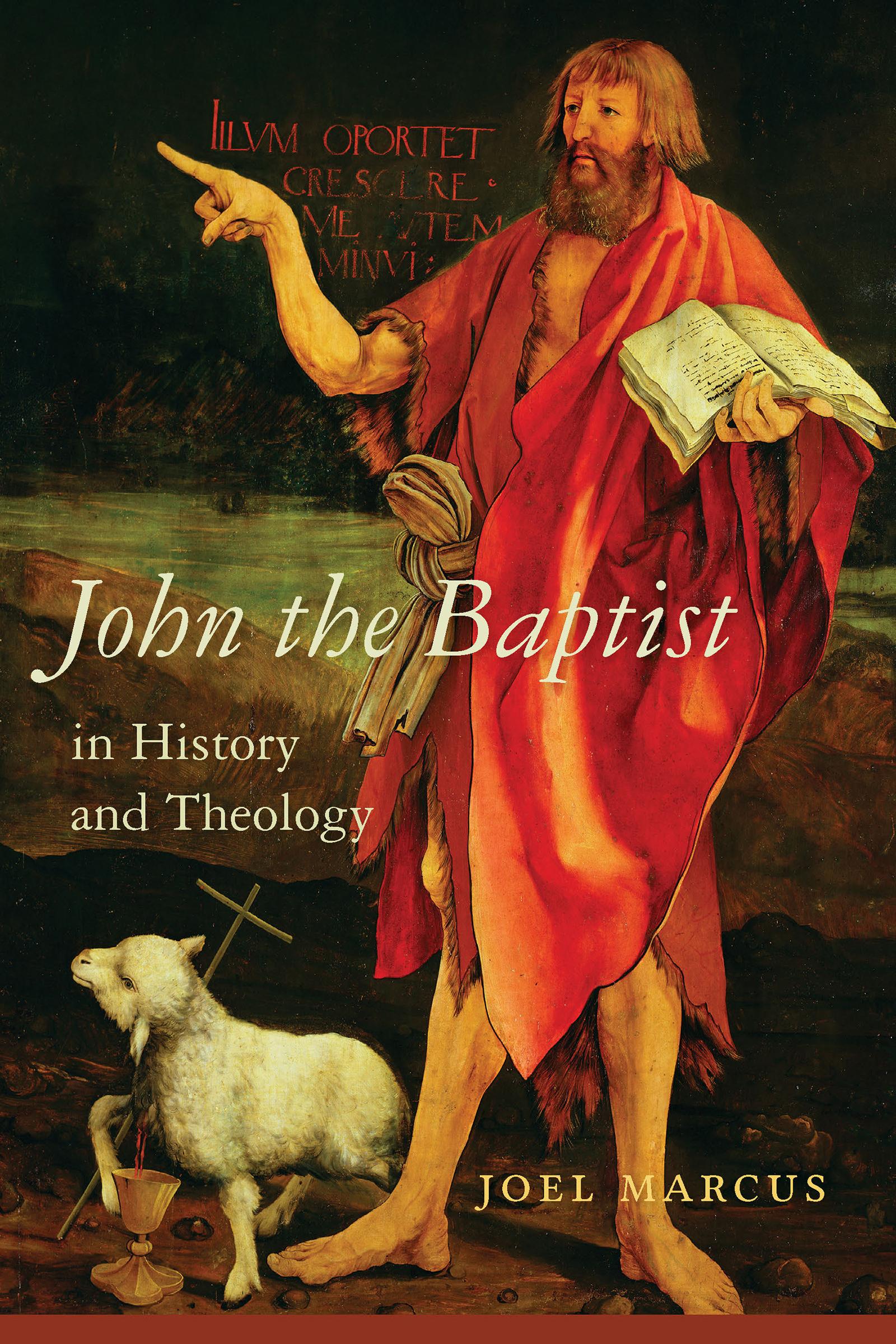
An analysis that challenges the conventional Christian hierarchy of John the Baptist and Jesus of Nazareth
While the Christian tradition has subordinated John the Baptist to Jesus of Nazareth, John himself would likely have disagreed with that ranking. In this eye-opening new book, John the Baptist in History and Theology, Joel Marcus makes a powerful case that John saw himself, not Jesus, as the proclaimer and initiator of the kingdom of God and his own ministry as the center of God's saving action in history.
Although the Fourth Gospel has the Baptist saying, "He must increase, but I must decrease," Marcus contends that this and other biblical and extrabiblical evidence reveal a continuing competition between the two men that early Christians sought to muffle. Like Jesus, John was an apocalyptic prophet who looked forward to the imminent end of the world and the establishment of God's rule on earth. Originally a member of the Dead Sea Sect, an apocalyptic community within Judaism, John broke with the group over his growing conviction that he himself was Elijah, the end-time prophet who would inaugurate God's kingdom on earth. Through his ministry of baptism, he ushered all who came to him—Jews and non-Jews alike—into this dawning new age. Jesus began his career as a follower of the Baptist, but, like other successor figures in religious history, he parted ways from his predecessor as he became convinced of his own centrality in God's purposes. Meanwhile John's mass following and apocalyptic message became political threats to Herod Antipas, who had John executed to abort any revolutionary movement.
Based on close critical-historical readings of early texts—including the accounts of John in the Gospels and in Josephus's Antiquities—as well as parallels from later religious movements, John the Baptist in History and Theology situates the Baptist within Second Temple Judaism and compares him to other apocalyptic thinkers from ancient and modern times. It concludes with thoughtful reflections on how its revisionist interpretations might be incorporated into the Christian faith.
Before Memmo my notes were scattered across PDFs. Now a workspace pulls everything into one place — I see exactly what's still left to study.
Memmo's summaries are gold before exams. I don't have to re-read 800 pages two weeks before — just the important parts.
The AI chat has saved me the night before an exam more than once. I just keep asking until I get it — no waiting on a study group to reply.
The quizzes hit exactly what I need to know. Memmo tracks what I get stuck on — so I only practice what's worth it.
Flashcards with spaced repetition are magic. Memmo knows when I'm about to forget something and brings it back.
The AI podcasts are my favorite. I listen on my way to school and get a recap without sitting at a computer.

Handbok i kvalitativa metoder
281 kr

Hållbar utveckling: en introduktion för ingenjörer och andra problemlösare
334 kr

Brymans Samhällsvetenskapliga metoder
390 kr

Projektledning
491 kr

Den orättvisa hälsan: om socioekonomiska skillnader i hälsa och livslängd
326 kr

Vetenskapsteori för nybörjare
196 kr

Organizational Leadership
429 kr

På väg mot läraryrket
172 kr

Det sociala livet i skolan: Socialpsykologiska perspektiv
253 kr

Betygsättningens didaktik
151 kr

Personality
402 kr

Studying Leadership
404 kr

Managing Innovation
477 kr

Introduktion till samhällsvetenskaplig metod
347 kr

The Psychology of Sex and Gender
698 kr

Evidens och kunskap för socialt arbete
207 kr

Introduction to Leadership
605 kr