
Before Memmo my notes were scattered across PDFs. Now a workspace pulls everything into one place — I see exactly what's still left to study.
A vivid portrait of a Scottish religious leader and the South Carolina colony he helped shape
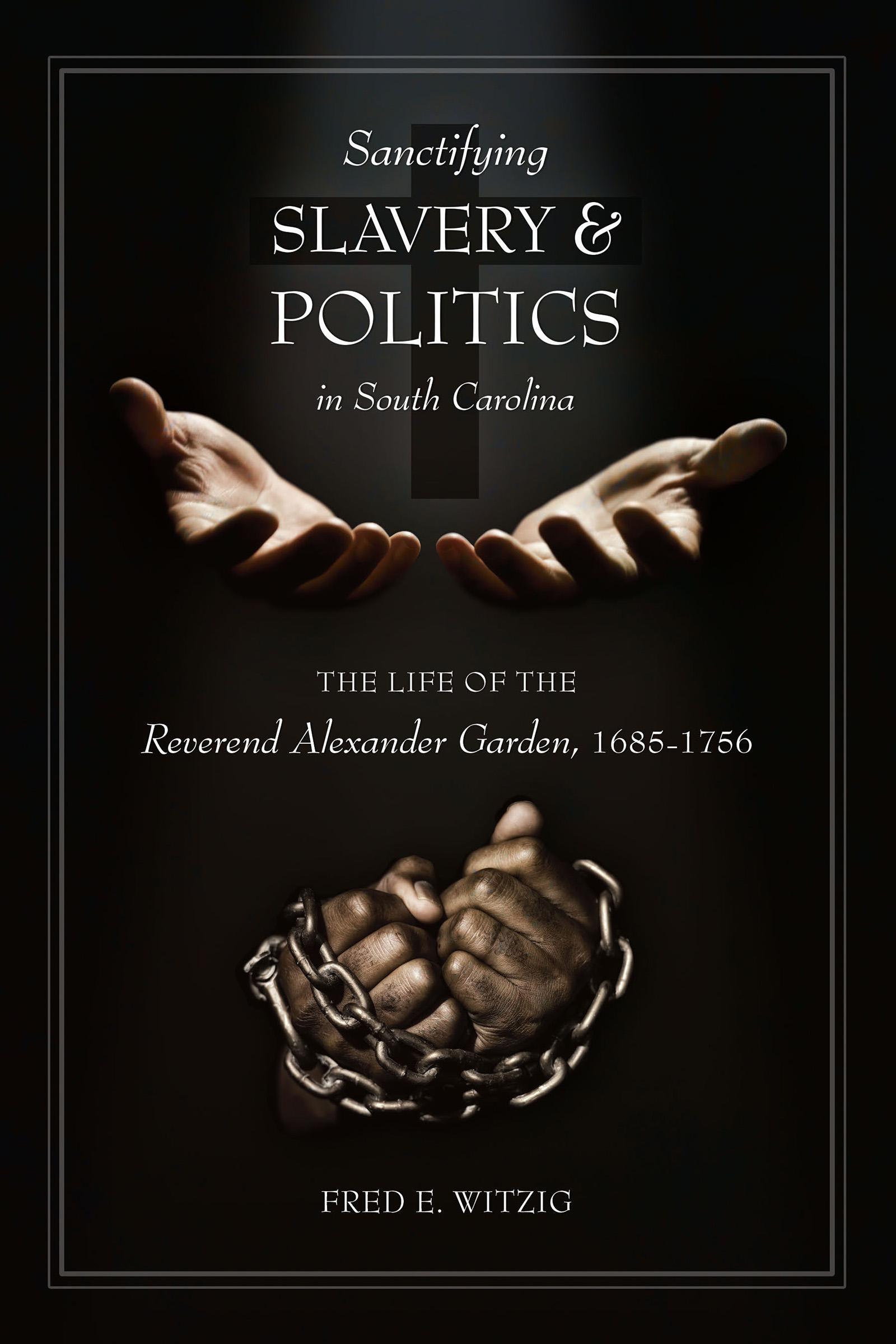
When Alexander Garden, a Scottish minister of the Church of England, arrived in South Carolina in 1720, he found a colony smoldering from the devastation of the Yamasee War and still suffering from economic upheaval, political factionalism, and rampant disease. It was also a colony turning enthusiastically toward plantation agriculture, made possible by African slave labor. In Sanctifying Slavery and Politics in South Carolina, the first published biography of Garden, Fred E. Witzig paints a vivid portrait of the religious leader and the South Carolina colony he helped shape.
Shortly after his arrival, Garden, a representative of the bishop of London, became the rector of St. Philip's Church in Charleston, the first Anglican parish in the colony. The ambitious clergyman quickly married into a Charleston slave-trading family and allied himself with the political and social elite. From the pulpit Garden reinforced the social norms and economic demands of the southern planters and merchants, and he disciplined recalcitrant missionaries who dared challenge the prevailing social order. As a way of defending the morality of southern slaveholders, he found himself having to establish the first large-scale school for slaves in Charles Town in the 1740s.
Garden also led a spirited—and largely successful—resistance to the Great Awakening evangelical movement championed by the revivalist minister George Whitefield, whose message of personal salvation and a more democratic Christianity was anathema to the social fabric of the slaveholding South, which continually feared a slave rebellion. As a minister Garden helped make slavery morally defensible in the eyes of his peers, giving the appearance that the spiritual obligations of his slaveholding and slave-trading friends were met as they all became extraordinarily wealthy.
Witzig's lively cultural history—bolstered by numerous primary sources, maps, and illustrations—helps illuminate both the roots of the Old South and the Church of England's role in sanctifying slavery in South Carolina.
Before Memmo my notes were scattered across PDFs. Now a workspace pulls everything into one place — I see exactly what's still left to study.
Memmo's summaries are gold before exams. I don't have to re-read 800 pages two weeks before — just the important parts.
The AI chat has saved me the night before an exam more than once. I just keep asking until I get it — no waiting on a study group to reply.
The quizzes hit exactly what I need to know. Memmo tracks what I get stuck on — so I only practice what's worth it.
Flashcards with spaced repetition are magic. Memmo knows when I'm about to forget something and brings it back.
The AI podcasts are my favorite. I listen on my way to school and get a recap without sitting at a computer.

Handbok i kvalitativa metoder
281 kr

Hållbar utveckling: en introduktion för ingenjörer och andra problemlösare
334 kr

Brymans Samhällsvetenskapliga metoder
390 kr

Projektledning
491 kr

Den orättvisa hälsan: om socioekonomiska skillnader i hälsa och livslängd
326 kr

Vetenskapsteori för nybörjare
196 kr

Organizational Leadership
429 kr

På väg mot läraryrket
172 kr

Det sociala livet i skolan: Socialpsykologiska perspektiv
253 kr

Betygsättningens didaktik
151 kr

Personality
402 kr

Studying Leadership
404 kr

Managing Innovation
477 kr

Introduktion till samhällsvetenskaplig metod
347 kr

The Psychology of Sex and Gender
698 kr

Evidens och kunskap för socialt arbete
207 kr

Introduction to Leadership
605 kr