
Before Memmo my notes were scattered across PDFs. Now a workspace pulls everything into one place — I see exactly what's still left to study.
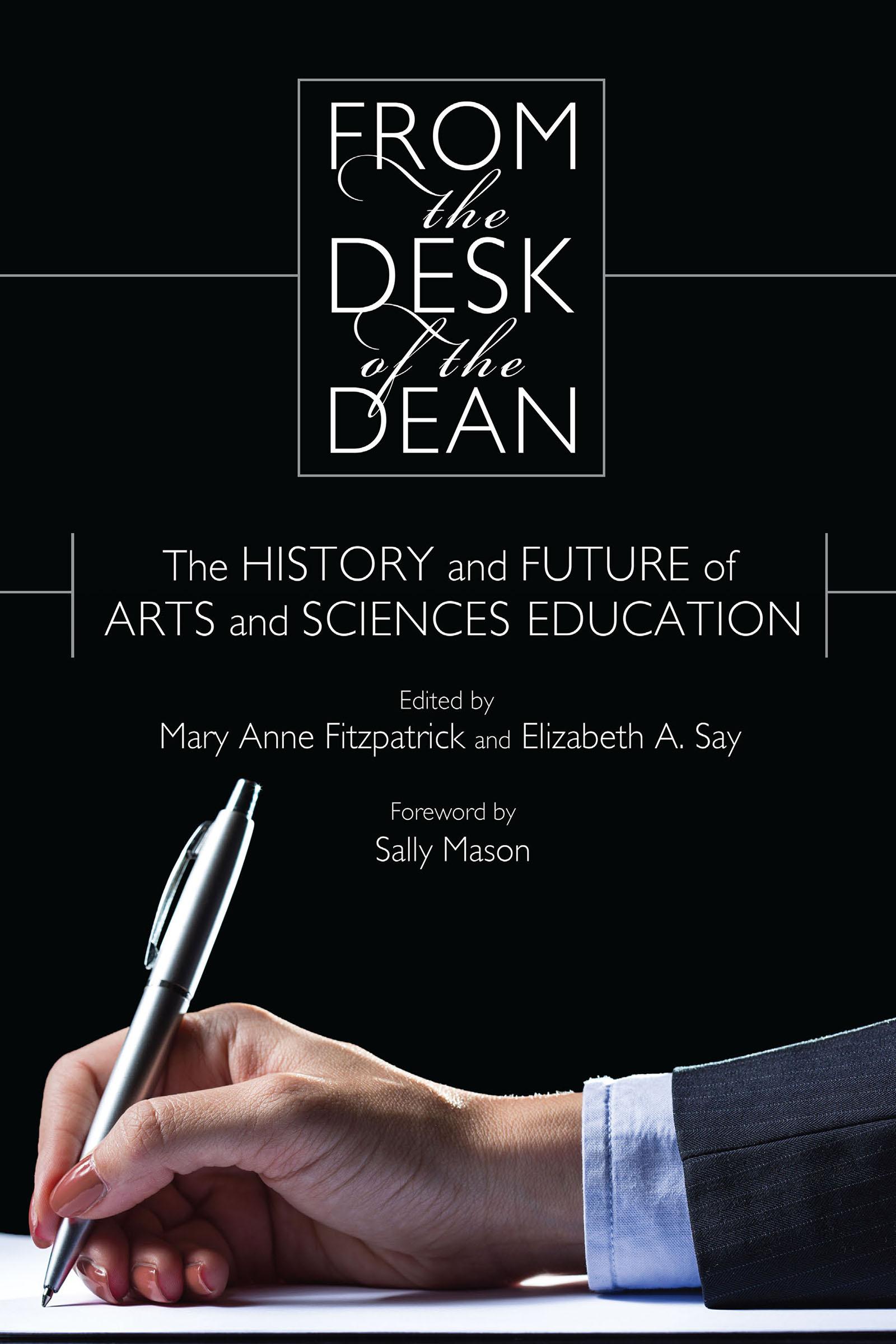
Deans and former deans map the recent past and contemplate the immediate future of liberal arts and sciences education
For those who have devoted their lives to teaching, learning, and innovation in the arts and sciences, it likely comes as no surprise that there has been a revaluing and devaluing of the work of students and faculty in the arts and sciences fields. In response Mary Anne Fitzpatrick and Elizabeth A. Say offer From the Desk of the Dean, an anthology of original essays by arts and sciences deans and former deans addressing the increasing demands for vocational education at the expense of the liberal arts and sciences. This informative collection examines the challenges in higher education and offers a compelling case for the value of the liberal arts and sciences.
To honor the fiftieth anniversary of the founding of the Council of Colleges of Arts and Sciences (CCAS), the largest association of arts and sciences deans in the country, editors Fitzpatrick and Say, both past presidents of CCAS, have assembled nine essays as well as three section introductions to create From the Desk of the Dean. Their goal is to prompt open discussions about American higher education and the perceived value of degrees in the basic arts and science fields. Many agree that to the public an accounting degree is of greater value than an art history degree and a civil engineering degree has more value than a degree in physics.
The contributors to the volume include deans with experience working at public and private universities, large research universities, comprehensive teaching institutions, as well as scholarly and advocacy groups. Their essays, informed by their experiences as leaders who support excellence in teaching, research, and creative activity in the basic fields of human knowledge, examine the many criticisms of higher education and of the faculty and programs in arts and sciences.
Sally Mason, president emerita of the University of Iowa, provides a foreword.
Before Memmo my notes were scattered across PDFs. Now a workspace pulls everything into one place — I see exactly what's still left to study.
Memmo's summaries are gold before exams. I don't have to re-read 800 pages two weeks before — just the important parts.
The AI chat has saved me the night before an exam more than once. I just keep asking until I get it — no waiting on a study group to reply.
The quizzes hit exactly what I need to know. Memmo tracks what I get stuck on — so I only practice what's worth it.
Flashcards with spaced repetition are magic. Memmo knows when I'm about to forget something and brings it back.
The AI podcasts are my favorite. I listen on my way to school and get a recap without sitting at a computer.

Handbok i kvalitativa metoder
281 kr

Hållbar utveckling: en introduktion för ingenjörer och andra problemlösare
334 kr

Brymans Samhällsvetenskapliga metoder
390 kr

Projektledning
491 kr

Den orättvisa hälsan: om socioekonomiska skillnader i hälsa och livslängd
326 kr

Vetenskapsteori för nybörjare
196 kr

Organizational Leadership
429 kr

På väg mot läraryrket
172 kr

Det sociala livet i skolan: Socialpsykologiska perspektiv
253 kr

Betygsättningens didaktik
151 kr

Personality
402 kr

Studying Leadership
404 kr

Managing Innovation
477 kr

Introduktion till samhällsvetenskaplig metod
347 kr

The Psychology of Sex and Gender
698 kr

Evidens och kunskap för socialt arbete
207 kr

Introduction to Leadership
605 kr