
Before Memmo my notes were scattered across PDFs. Now a workspace pulls everything into one place — I see exactly what's still left to study.
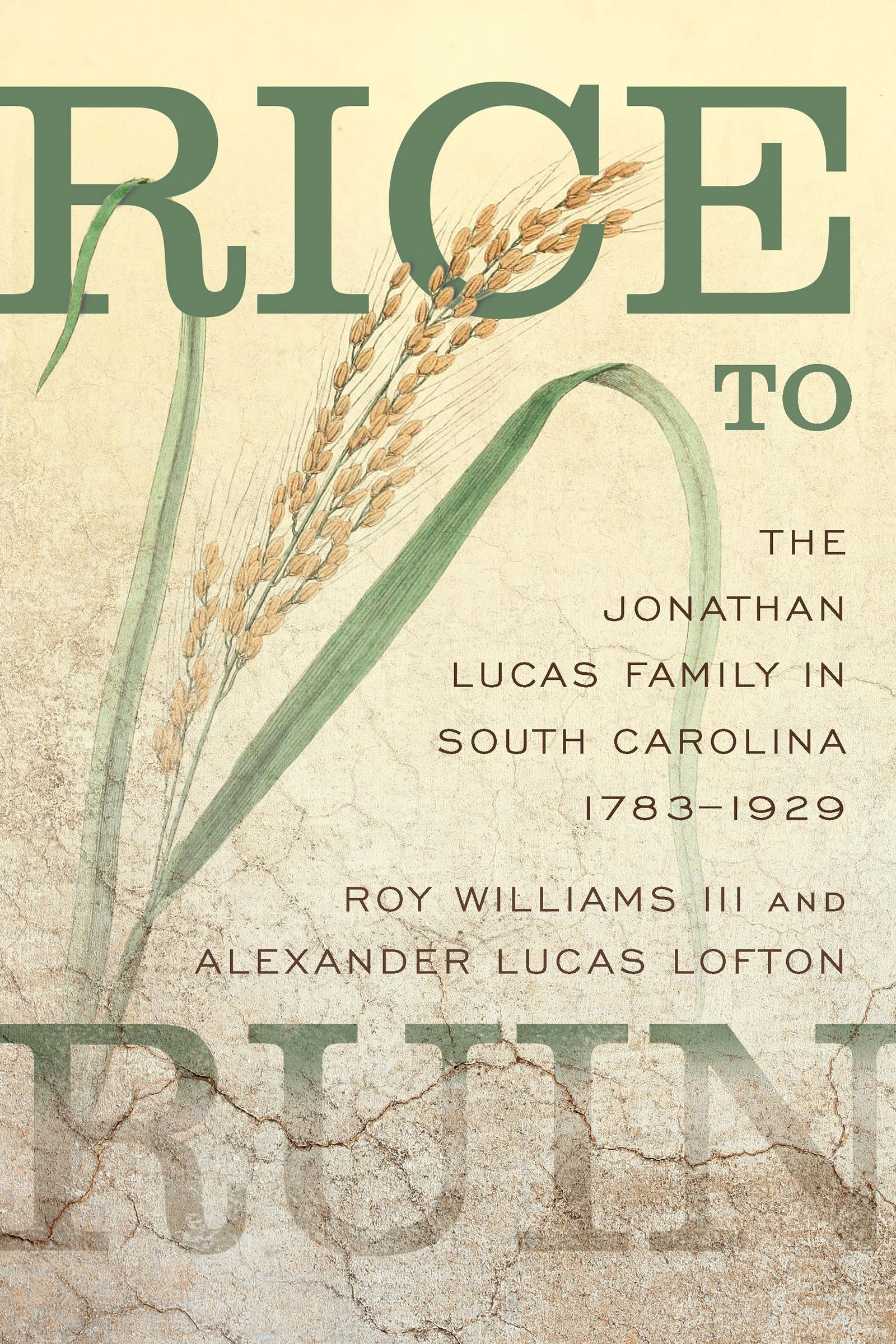
The saga of the precipitous rise and ultimate fall of the Jonathan Lucas family's rice-mill dynasty
In the 1780s Jonathan Lucas, on a journey from his native England, shipwrecked near the Santee Delta of South Carolina, about forty miles north of Charleston. Lucas, the son of English mill owners and builders, found himself, fortuitously, near vast acres of swamp and marshland devoted to rice cultivation. When the labor-intensive milling process could not keep pace with high crop yields, Lucas was asked by planters to build a machine to speed the process. In 1787 he introduced the first highly successful water-pounding rice mill—creating the foundation of an international rice mill dynasty. In Rice to Ruin, Roy Williams III and Alexander Lucas Lofton recount the saga of the precipitous rise and ultimate fall of that empire.
Lucas's invention did for rice, South Carolina's first great agricultural staple, what Eli Whitney did for cotton with his cotton gin. With his sons Jonathan Lucas II and William Lucas, Lucas built rice mills throughout the lowcountry. Eventually the rice kingdom extended to India, Egypt, and Europe after the younger Jonathan Lucas moved to London to be at the center of the international rice trade.
Their lives were grand until the American Civil War and its aftermath. The end of slave labor changed the family's fortunes. The capital tied up in slaves evaporated; the plantations and town houses had to be sold off one by one; and the rice fields once described as "the gold mines of South Carolina" often failed or were no longer planted. Disease and debt took its toll on the Lucas clan, and, in the decades that followed, efforts to regain the lost fortune proved futile. In the end the once-glorious Carolina gold rice fields that had brought riches left the family in ruin.
Before Memmo my notes were scattered across PDFs. Now a workspace pulls everything into one place — I see exactly what's still left to study.
Memmo's summaries are gold before exams. I don't have to re-read 800 pages two weeks before — just the important parts.
The AI chat has saved me the night before an exam more than once. I just keep asking until I get it — no waiting on a study group to reply.
The quizzes hit exactly what I need to know. Memmo tracks what I get stuck on — so I only practice what's worth it.
Flashcards with spaced repetition are magic. Memmo knows when I'm about to forget something and brings it back.
The AI podcasts are my favorite. I listen on my way to school and get a recap without sitting at a computer.

Handbok i kvalitativa metoder
281 kr

Hållbar utveckling: en introduktion för ingenjörer och andra problemlösare
334 kr

Brymans Samhällsvetenskapliga metoder
390 kr

Projektledning
491 kr

Den orättvisa hälsan: om socioekonomiska skillnader i hälsa och livslängd
326 kr

Vetenskapsteori för nybörjare
196 kr

Organizational Leadership
429 kr

På väg mot läraryrket
172 kr

Det sociala livet i skolan: Socialpsykologiska perspektiv
253 kr

Betygsättningens didaktik
151 kr

Personality
402 kr

Studying Leadership
404 kr

Managing Innovation
477 kr

Introduktion till samhällsvetenskaplig metod
347 kr

The Psychology of Sex and Gender
698 kr

Evidens och kunskap för socialt arbete
207 kr

Introduction to Leadership
605 kr