
Before Memmo my notes were scattered across PDFs. Now a workspace pulls everything into one place — I see exactly what's still left to study.
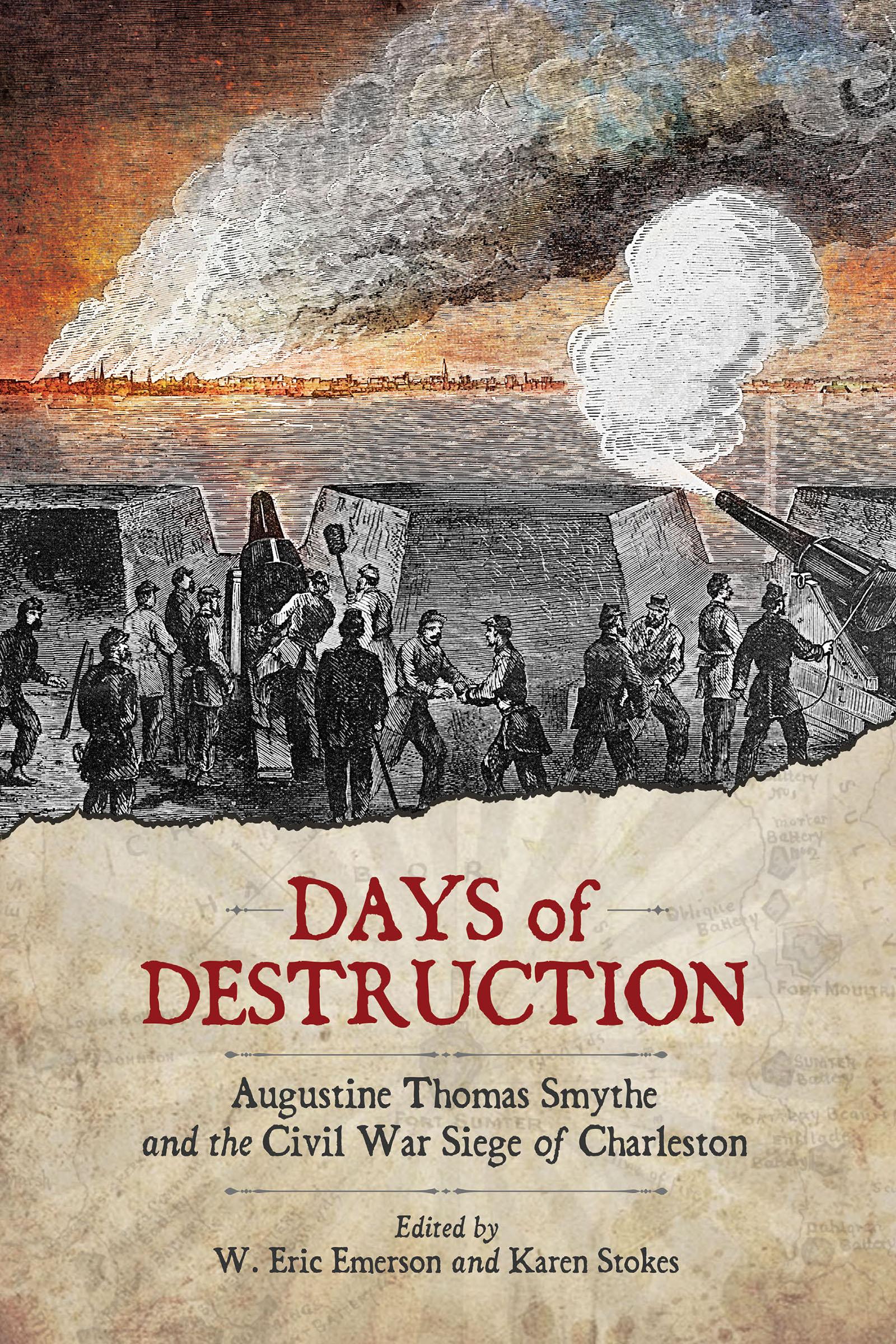
One soldier's eloquent, descriptive letters to his family offering a personal view of the devastating assault
In Days of Destruction, editors W. Eric Emerson and Karen Stokes chronicle the events of the siege of Charleston, South Carolina, through a collection of letters written by Augustine Thomas Smythe, a well-educated young man from a prominent Charleston family. The vivid, eloquent letters he wrote to his family depict all that he saw and experienced during the long, destructive assault on the Holy City and describe in detail the damage done to Charleston's houses, churches, and other buildings in the desolated shell district, as well as the toll on human life.
Smythe's role in the Civil War was different from that of his many companions serving in Virginia and undoubtedly different from anything he could have imagined when the war began. Aftera baptism in blood at the Battle of Secessionville, South Carolina, Smythe was assigned to the Confederate Signal Corps. He served on the ironclad CSS Palmetto State and then occupied a post high above Charleston in the steeple of St. Michael's Episcopal Church. From behind a telescope in his lofty perch, he observed the fierce attacks on Fort Sumter, the effects of the unrelenting shelling of the city by enemy guns at Morris Island, and the naval battles and operations in the harbor, including the actions of the Confederate torpedo boats and the H. L. Hunley submarine.
The Confederate Signal Corps played a vital role in the defense of Charleston and its environs, and Smythe's letters, perhaps more than any other first-person account, detail the daily life and service experiencesof signalmen in and around the city during the war. For more than eighteen months, Smythe's neighborhood south of Broad Street, one of the city's oldest and wealthiest communities, was abandoned by the great majority of its residents. His letters provide the reader with an almost postapocalyptic perspective of the oftentimes quiet, and frequently lawless, street where he lived before and during the siege of Charleston.
Before Memmo my notes were scattered across PDFs. Now a workspace pulls everything into one place — I see exactly what's still left to study.
Memmo's summaries are gold before exams. I don't have to re-read 800 pages two weeks before — just the important parts.
The AI chat has saved me the night before an exam more than once. I just keep asking until I get it — no waiting on a study group to reply.
The quizzes hit exactly what I need to know. Memmo tracks what I get stuck on — so I only practice what's worth it.
Flashcards with spaced repetition are magic. Memmo knows when I'm about to forget something and brings it back.
The AI podcasts are my favorite. I listen on my way to school and get a recap without sitting at a computer.

Handbok i kvalitativa metoder
281 kr

Hållbar utveckling: en introduktion för ingenjörer och andra problemlösare
334 kr

Brymans Samhällsvetenskapliga metoder
390 kr

Projektledning
491 kr

Den orättvisa hälsan: om socioekonomiska skillnader i hälsa och livslängd
326 kr

Organizational Leadership
429 kr

Vetenskapsteori för nybörjare
196 kr

På väg mot läraryrket
172 kr

Det sociala livet i skolan: Socialpsykologiska perspektiv
253 kr

Betygsättningens didaktik
151 kr

Personality
402 kr

Studying Leadership
404 kr

Managing Innovation
477 kr

Introduktion till samhällsvetenskaplig metod
347 kr

The Psychology of Sex and Gender
698 kr

Evidens och kunskap för socialt arbete
207 kr

Introduction to Leadership
605 kr