
Before Memmo my notes were scattered across PDFs. Now a workspace pulls everything into one place — I see exactly what's still left to study.
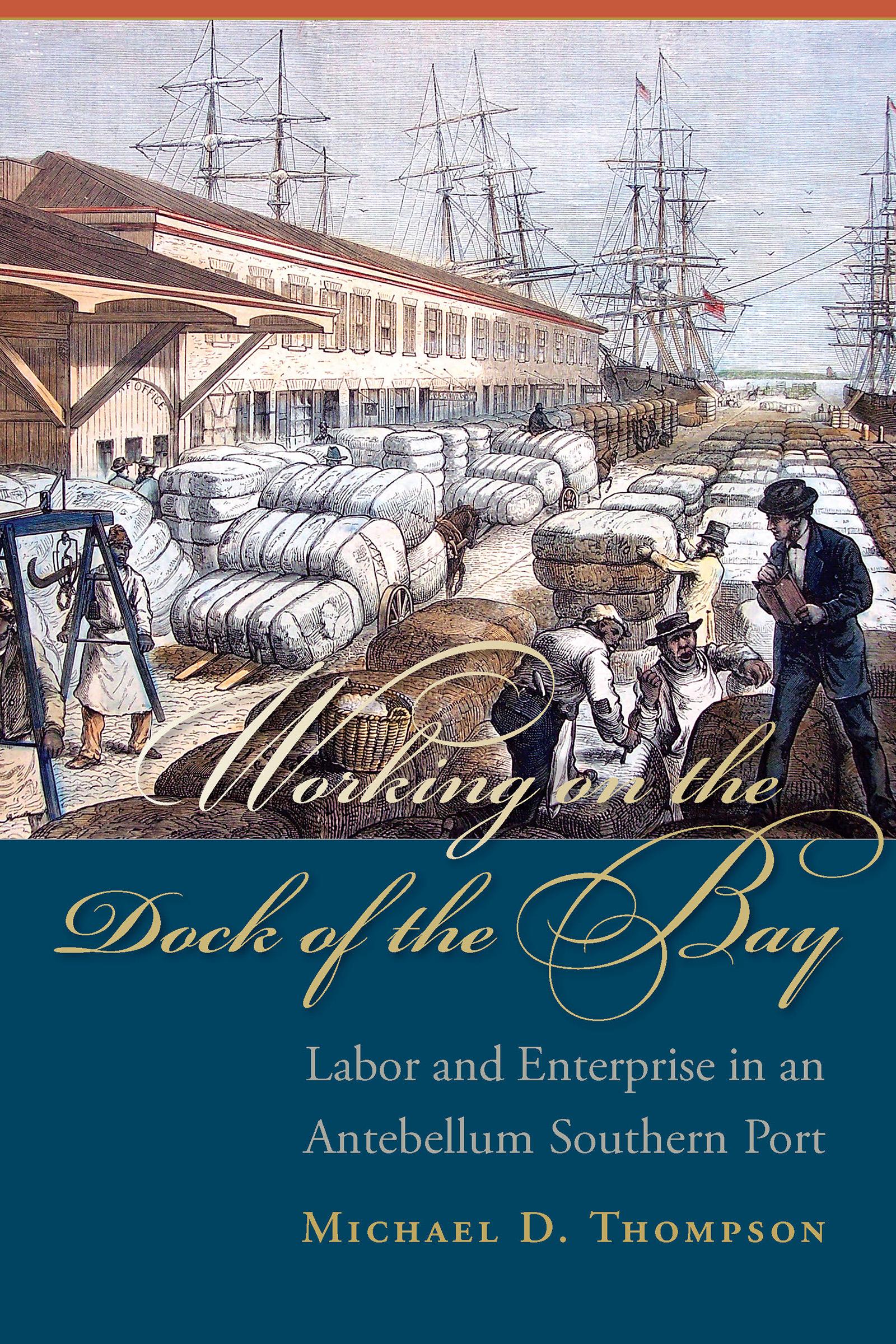
An examination of the role and struggles of enslaved dockworkers prior to emancipation
Working on the Dock of the Bay explores the history of waterfront labor and laborers—black and white, enslaved and free, native and immigrant—in Charleston, South Carolina, between the American Revolution and Civil War. Michael D. Thompson explains how a predominantly enslaved workforce laid the groundwork for the creation of a robust and effectual association of dockworkers, most of whom were black, shortly after emancipation. In revealing these wharf laborers' experiences, Thompson's book contextualizes the struggles of contemporary southern working people.
Like their postbellum and present-day counterparts, stevedores and draymen laboring on the wharves and levees of antebellum cities—whether in Charleston or New Orleans, New York or Boston, or elsewhere in the Atlantic World—were indispensable to the flow of commodities into and out of these ports. Despite their large numbers and the key role that waterfront workers played in these cities' premechanized, labor-intensive commercial economies, too little is known about who these laborers were and the work they performed.
Though scholars have explored the history of dockworkers in ports throughout the world, they have given little attention to waterfront laborers and dock work in the pre-Civil War American South or in any slave society. Aiming to remedy that deficiency, Thompson examines the complicated dynamics of race, class, and labor relations through the street-level experiences and perspectives of workingmen and sometimes workingwomen. Using this workers'-eye view of crucial events and developments, Working on the Dock of the Bay relocates waterfront workers and their activities from the margins of the past to the center of a new narrative, reframing their role from observers to critical actors in nineteenth-century American history. Organized topically, this study is rooted in primary source evidence including census, tax, court, and death records; city directories and ordinances; state statutes; wills; account books; newspapers; diaries; letters; and medical journals.
Before Memmo my notes were scattered across PDFs. Now a workspace pulls everything into one place — I see exactly what's still left to study.
Memmo's summaries are gold before exams. I don't have to re-read 800 pages two weeks before — just the important parts.
The AI chat has saved me the night before an exam more than once. I just keep asking until I get it — no waiting on a study group to reply.
The quizzes hit exactly what I need to know. Memmo tracks what I get stuck on — so I only practice what's worth it.
Flashcards with spaced repetition are magic. Memmo knows when I'm about to forget something and brings it back.
The AI podcasts are my favorite. I listen on my way to school and get a recap without sitting at a computer.

Handbok i kvalitativa metoder
281 kr

Hållbar utveckling: en introduktion för ingenjörer och andra problemlösare
334 kr

Brymans Samhällsvetenskapliga metoder
390 kr

Projektledning
491 kr

Den orättvisa hälsan: om socioekonomiska skillnader i hälsa och livslängd
326 kr

Vetenskapsteori för nybörjare
196 kr

Organizational Leadership
429 kr

På väg mot läraryrket
172 kr

Det sociala livet i skolan: Socialpsykologiska perspektiv
253 kr

Betygsättningens didaktik
151 kr

Personality
402 kr

Studying Leadership
404 kr

Managing Innovation
477 kr

Introduktion till samhällsvetenskaplig metod
347 kr

The Psychology of Sex and Gender
698 kr

Evidens och kunskap för socialt arbete
207 kr

Introduction to Leadership
605 kr