
Before Memmo my notes were scattered across PDFs. Now a workspace pulls everything into one place — I see exactly what's still left to study.
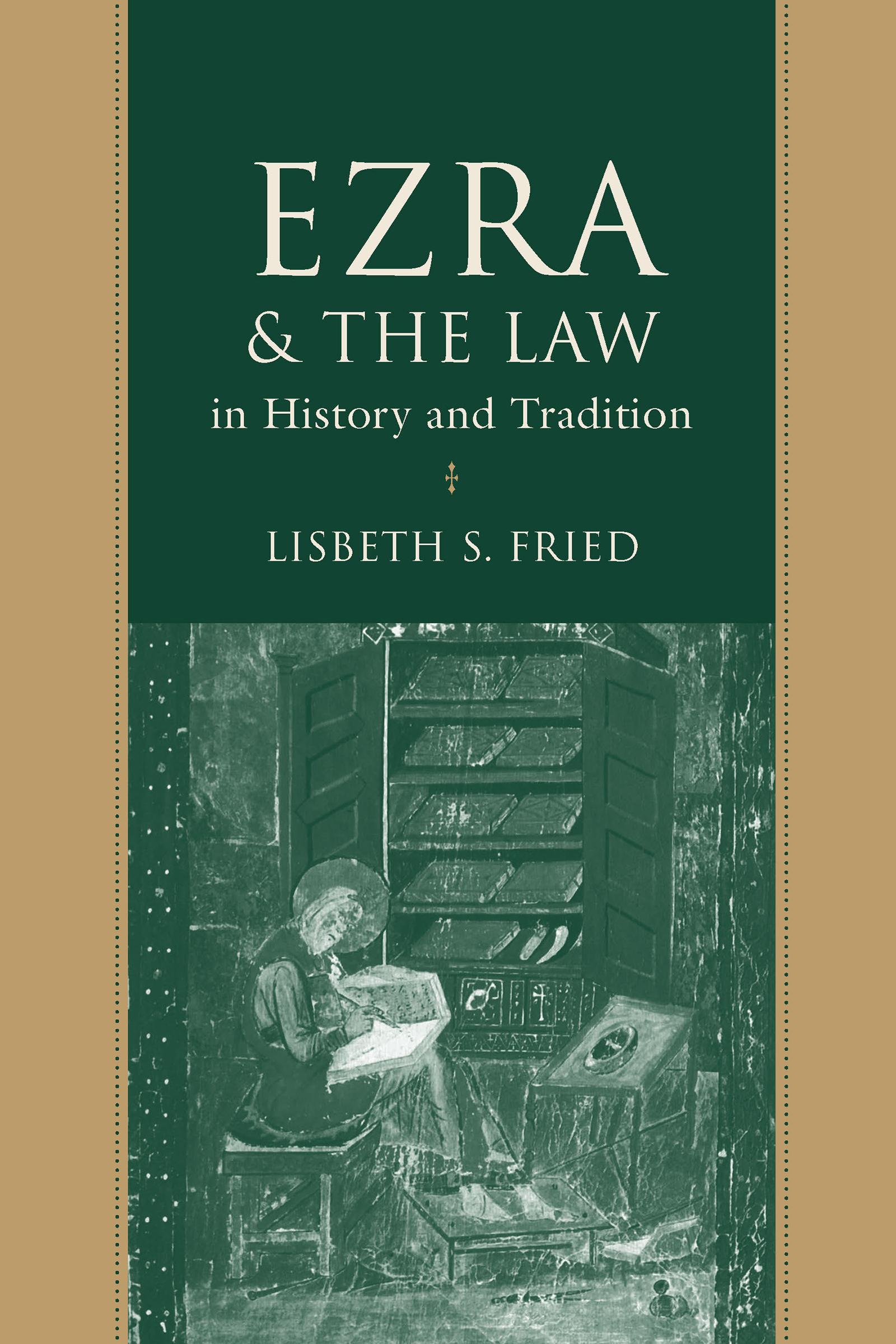
An in-depth examination that separates the historical Ezra from the biblical legend
The historical Ezra was sent to Jerusalem as an emissary of the Persian monarch. What was his task? According to the Bible, the Persian king sent Ezra to bring the Torah, the five books of the Laws of Moses, to the Jews. Modern scholars have claimed not only that Ezra brought the Torah to Jerusalem, but that he actually wrote it, and in so doing Ezra created Judaism. Without Ezra, they say, Judaism would not exist.
In Ezra and the Law in History and Tradition, Lisbeth S. Fried separates historical fact from biblical legend. Drawing on inscriptions from the Achaemenid Empire, she presents the historical Ezra in the context of authentic Persian administrative practices and concludes that Ezra, the Persian official, neither wrote nor edited the Torah, nor would he even have known it. The origin of Judaism, so often associated with Ezra by modern scholars, must be sought elsewhere.
After discussing the historical Ezra, Fried examines ancient, medieval, and modern views of him, explaining how each originated, and why. She relates the stories told about Ezra by medieval Christians to explain why their Greek Old Testament differs from the Hebrew Bible, as well as the explanations offered by medieval Samaritans concerning how their Samaritan Bible varies from the one the Jews use. Church Fathers as well as medieval Samaritan writers explained the differences by claiming that Ezra falsified the Bible when he rewrote it, so that in effect, it is not the book that Moses wrote but something else. Moslem scholars also maintain that Ezra falsified the Old Testament, since Mohammed, the last judgment, and Heaven and Hell are revealed in it. In contrast Jewish Talmudic writers viewed Ezra both as a second Moses and as the prophet Malachi.
In the process of describing ancient, medieval, and modern views of Ezra, Fried brings out various understandings of God, God's law, and God's plan for our salvation.
Before Memmo my notes were scattered across PDFs. Now a workspace pulls everything into one place — I see exactly what's still left to study.
Memmo's summaries are gold before exams. I don't have to re-read 800 pages two weeks before — just the important parts.
The AI chat has saved me the night before an exam more than once. I just keep asking until I get it — no waiting on a study group to reply.
The quizzes hit exactly what I need to know. Memmo tracks what I get stuck on — so I only practice what's worth it.
Flashcards with spaced repetition are magic. Memmo knows when I'm about to forget something and brings it back.
The AI podcasts are my favorite. I listen on my way to school and get a recap without sitting at a computer.

Handbok i kvalitativa metoder
281 kr

Hållbar utveckling: en introduktion för ingenjörer och andra problemlösare
334 kr

Brymans Samhällsvetenskapliga metoder
390 kr

Projektledning
491 kr

Den orättvisa hälsan: om socioekonomiska skillnader i hälsa och livslängd
326 kr

Vetenskapsteori för nybörjare
196 kr

Organizational Leadership
429 kr

På väg mot läraryrket
172 kr

Det sociala livet i skolan: Socialpsykologiska perspektiv
253 kr

Betygsättningens didaktik
151 kr

Personality
402 kr

Studying Leadership
404 kr

Managing Innovation
477 kr

Introduktion till samhällsvetenskaplig metod
347 kr

The Psychology of Sex and Gender
698 kr

Evidens och kunskap för socialt arbete
207 kr

Introduction to Leadership
605 kr