
Before Memmo my notes were scattered across PDFs. Now a workspace pulls everything into one place — I see exactly what's still left to study.
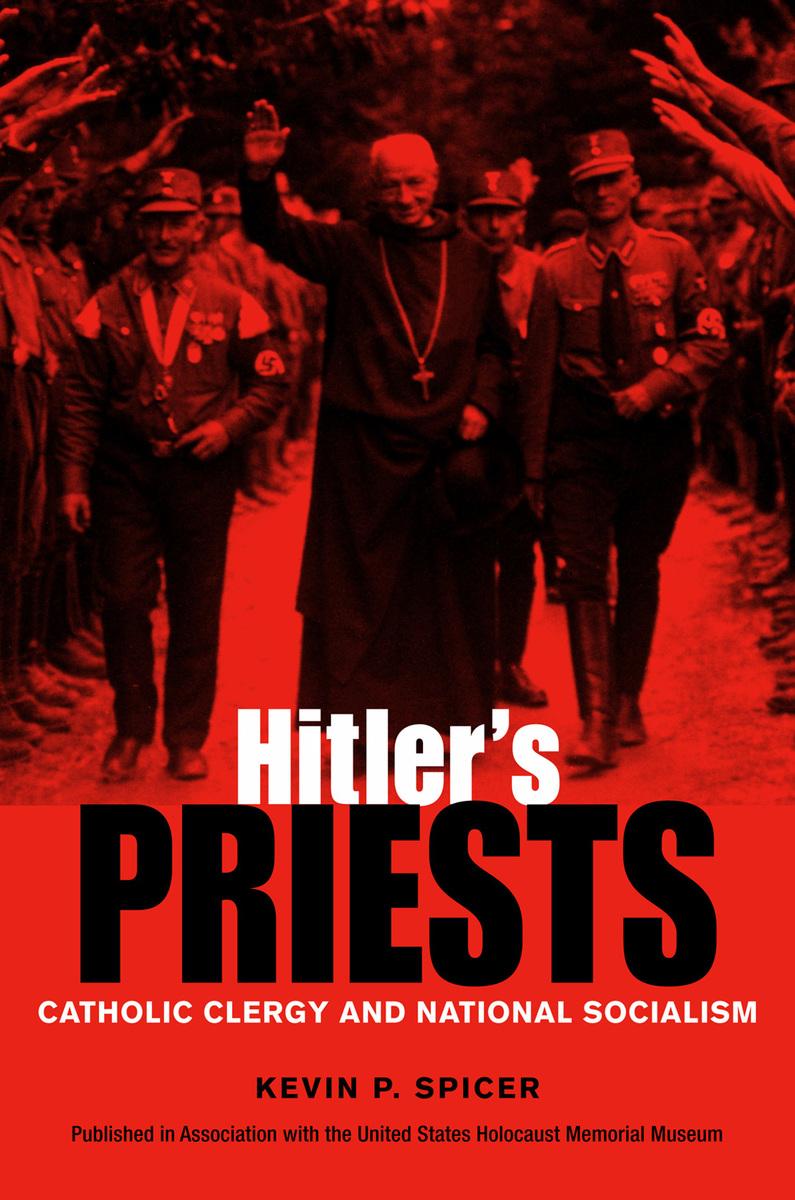
Shaken by military defeat and economic depression after War World I, Germans sought to restore their nation's dignity and power. In this context the National Socialist Party, with its promise of a revivified Germany, drew supporters. Among the most zealous were a number of Catholic clergymen known as "brown priests" who volunteered as Nazi propagandists. In this insightful study, Spicer unearths a dark subchapter in Roman Catholic history, introduces the principal clergymen who participated in the Nazi movement, examines their motives, details their advocacy of National Socialism, and explores the consequences of their political activism.
Some brown priests, particularly war veterans, advocated National Socialism because it appealed to their patriotic ardor. Others had less laudatory motives: disaffection with clerical life, conflicts with Church superiors, or ambition for personal power and fame. Whatever their individual motives, they employed their skills as orators, writers, and teachers to proclaim the message of Nazism. Especially during the early 1930s, when the Church forbade membership in the party, these clergymen strove to prove that Catholicism was compatible with National Socialism, thereby justifying their support of Nazi ideology. Father Dr. Philipp Haeuser, a scholar and pastor, went so far as to promote antisemitism while deifying Adolf Hitler. The Führer's antisemitism, Spicer argues, did not deter clergymen such as Haeuser because, although the Church officially rejected the Nazis' extreme racism, Catholic teachings tolerated hostility toward Jews by blaming them for Christ's crucifixion.
While a handful of brown priests enjoyed the forbearance of their bishops, others endured reprimand or even dismissal; a few found new vocations with the Third Reich. After the fall of the Reich, the most visible brown priests faced trial for their part in the crimes of National Socialism, a movement they had once so earnestly supported.
In addition to this intriguing history about clergymen trying to reconcile faith and politics, Spicer provides a master list—verified by extensive research in Church and government archives—of Catholic clergy who publicly supported National Socialism.
Before Memmo my notes were scattered across PDFs. Now a workspace pulls everything into one place — I see exactly what's still left to study.
Memmo's summaries are gold before exams. I don't have to re-read 800 pages two weeks before — just the important parts.
The AI chat has saved me the night before an exam more than once. I just keep asking until I get it — no waiting on a study group to reply.
The quizzes hit exactly what I need to know. Memmo tracks what I get stuck on — so I only practice what's worth it.
Flashcards with spaced repetition are magic. Memmo knows when I'm about to forget something and brings it back.
The AI podcasts are my favorite. I listen on my way to school and get a recap without sitting at a computer.

Handbok i kvalitativa metoder
281 kr

Hållbar utveckling: en introduktion för ingenjörer och andra problemlösare
334 kr

Brymans Samhällsvetenskapliga metoder
390 kr

Projektledning
491 kr

Den orättvisa hälsan: om socioekonomiska skillnader i hälsa och livslängd
326 kr

Vetenskapsteori för nybörjare
196 kr

Organizational Leadership
429 kr

På väg mot läraryrket
172 kr

Det sociala livet i skolan: Socialpsykologiska perspektiv
253 kr

Betygsättningens didaktik
151 kr

Personality
402 kr

Studying Leadership
404 kr

Managing Innovation
477 kr

Introduktion till samhällsvetenskaplig metod
347 kr

The Psychology of Sex and Gender
698 kr

Evidens och kunskap för socialt arbete
207 kr

Introduction to Leadership
605 kr