
Before Memmo my notes were scattered across PDFs. Now a workspace pulls everything into one place — I see exactly what's still left to study.
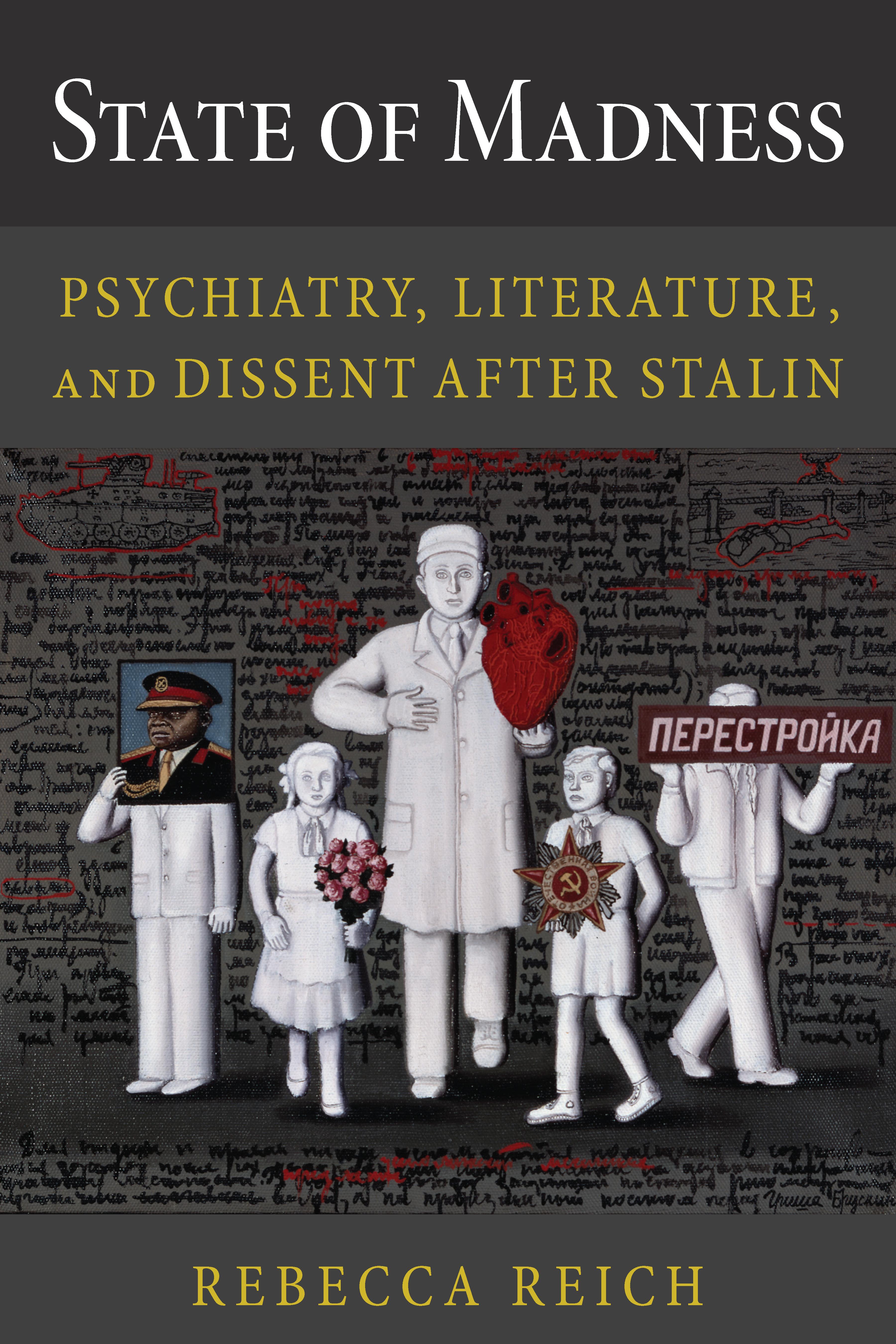
What madness meant was a fiercely contested question in Soviet society. State of Madness examines the politically fraught collision between psychiatric and literary discourses in the years after Joseph Stalin's death. State psychiatrists deployed set narratives of mental illness to pathologize dissenting politics and art. Dissidents such as Aleksandr Vol'pin, Vladimir Bukovskii, and Semen Gluzman responded by highlighting a pernicious overlap between those narratives and their life stories. The state, they suggested in their own psychiatrically themed texts, had crafted an idealized view of reality that itself resembled a pathological work of art. In their unsanctioned poetry and prose, the writers Joseph Brodsky, Andrei Siniavskii, and Venedikt Erofeev similarly engaged with psychiatric discourse to probe where creativity ended and insanity began. Together, these dissenters cast themselves as psychiatrists to a sick society. By challenging psychiatry's right to declare them or what they wrote insane, dissenters exposed as a self-serving fiction the state's renewed claims to rationality and modernity in the post-Stalin years. They were, as they observed, like the child who breaks the spell of collective delusion in Hans Christian Andersen's story "The Emperor's New Clothes." In a society where normality means insisting that the naked monarch is clothed, it is the truth-teller who is pathologized. Situating literature's encounter with psychiatry at the center of a wider struggle over authority and power, this bold interdisciplinary study will appeal to literary specialists; historians of culture, science, and medicine; and scholars and students of the Soviet Union and its legacy for Russia today.
Before Memmo my notes were scattered across PDFs. Now a workspace pulls everything into one place — I see exactly what's still left to study.
Memmo's summaries are gold before exams. I don't have to re-read 800 pages two weeks before — just the important parts.
The AI chat has saved me the night before an exam more than once. I just keep asking until I get it — no waiting on a study group to reply.
The quizzes hit exactly what I need to know. Memmo tracks what I get stuck on — so I only practice what's worth it.
Flashcards with spaced repetition are magic. Memmo knows when I'm about to forget something and brings it back.
The AI podcasts are my favorite. I listen on my way to school and get a recap without sitting at a computer.

Handbok i kvalitativa metoder
281 kr

Hållbar utveckling: en introduktion för ingenjörer och andra problemlösare
334 kr

Brymans Samhällsvetenskapliga metoder
390 kr

Projektledning
491 kr

Den orättvisa hälsan: om socioekonomiska skillnader i hälsa och livslängd
326 kr

Vetenskapsteori för nybörjare
196 kr

Organizational Leadership
429 kr

På väg mot läraryrket
172 kr

Det sociala livet i skolan: Socialpsykologiska perspektiv
253 kr

Betygsättningens didaktik
151 kr

Personality
402 kr

Studying Leadership
404 kr

Managing Innovation
477 kr

Introduktion till samhällsvetenskaplig metod
347 kr

The Psychology of Sex and Gender
698 kr

Evidens och kunskap för socialt arbete
207 kr

Introduction to Leadership
605 kr