
Before Memmo my notes were scattered across PDFs. Now a workspace pulls everything into one place — I see exactly what's still left to study.
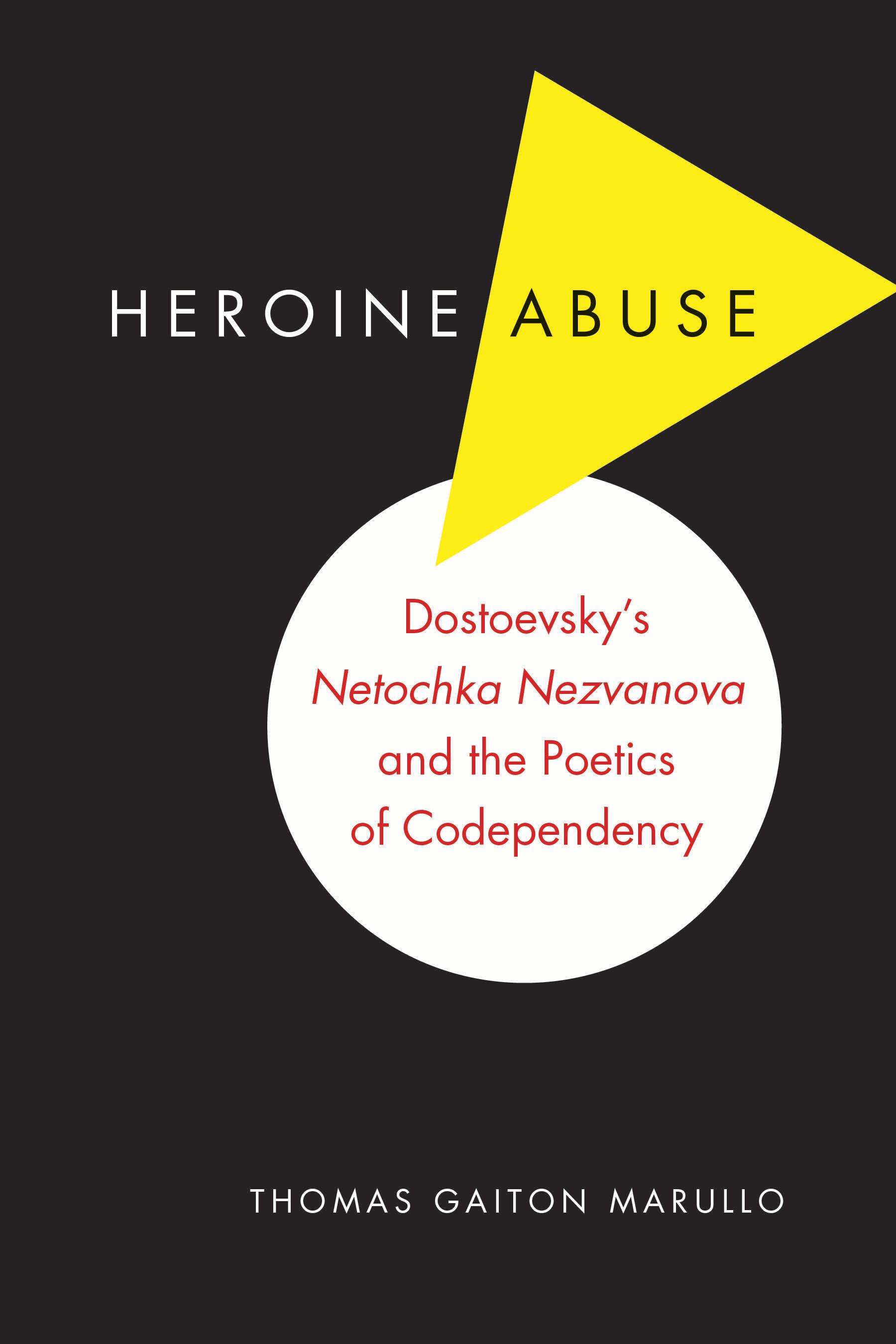
Fyodor Dostoevsky's first novel, Netochka Nezvanova, written in 1849, remains the least studied and understood of the writer's long fiction, but it was a seedbed for many topics and themes that became hallmarks of his major works. Specifically, Netochka Nezvanova was the first in Dostoevsky's corpus to focus on the psychology of children and the first to feature a woman in a leading and narrative role. It was also the first work in Russian literature to deal with problems of the family.
In Heroine Abuse, Thomas Marullo contends that Netochka Nezvanova also provides a striking example of what psychologists today call codependency: the ways—often deviant and destructive—in which individuals bond with people, places, and things, as well as with images and ideas, to cope with the vicissitudes of life. Marullo shows how, at age twenty-eight, Dostoevsky intuited and illustrated the workings of "relationship addiction" almost a century and a half before it became the scholarly focus of practitioners of mental health. The moral monsters, "infernal" women, children-adults, and adult-children who populate Netochka Nezvanova seek codependence in people, places, and things, and in images, ideas, and ideals to satiate cravings for love, dominance, and control, as well as to indulge in narcissism, sexual perversion, and other aberrant or alternative behaviors. (Indeed, in no other work would Dostoevsky examine such phenomena as pedophilia and lesbianism with such abandon.) Racing from tie to tie, bond to bond, and caught in a debilitating loop that they claim to detest, but sadomasochistically enjoy, the characters in Netochka Nezvanova wreak havoc on themselves and the world. They do so, moreover, with impunity, their addictions moving them from momentary exultation as self-styled extraordinary men and women, through prolonged darkness and despair, and once again, to old and new addictions for physical and emotional release.
Readers of Heroine Abuse will see Netochka Nezvanova as a timeless model in depicting codependency in the world of the twenty-first century as it did in St. Petersburg in 1849. Marullo's original work will appeal to scholars and students of Russian and comparative fiction; to doctors, psychologists, and therapists; to laymen and women interested in relationship addiction; and, finally, to codependents and relationship addicts of all types.
Before Memmo my notes were scattered across PDFs. Now a workspace pulls everything into one place — I see exactly what's still left to study.
Memmo's summaries are gold before exams. I don't have to re-read 800 pages two weeks before — just the important parts.
The AI chat has saved me the night before an exam more than once. I just keep asking until I get it — no waiting on a study group to reply.
The quizzes hit exactly what I need to know. Memmo tracks what I get stuck on — so I only practice what's worth it.
Flashcards with spaced repetition are magic. Memmo knows when I'm about to forget something and brings it back.
The AI podcasts are my favorite. I listen on my way to school and get a recap without sitting at a computer.

Handbok i kvalitativa metoder
281 kr

Hållbar utveckling: en introduktion för ingenjörer och andra problemlösare
334 kr

Brymans Samhällsvetenskapliga metoder
390 kr

Projektledning
491 kr

Den orättvisa hälsan: om socioekonomiska skillnader i hälsa och livslängd
326 kr

Organizational Leadership
429 kr

Vetenskapsteori för nybörjare
196 kr

På väg mot läraryrket
172 kr

Det sociala livet i skolan: Socialpsykologiska perspektiv
253 kr

Betygsättningens didaktik
151 kr

Personality
402 kr

Studying Leadership
404 kr

Managing Innovation
477 kr

Introduktion till samhällsvetenskaplig metod
347 kr

The Psychology of Sex and Gender
698 kr

Evidens och kunskap för socialt arbete
207 kr

Introduction to Leadership
605 kr