
Before Memmo my notes were scattered across PDFs. Now a workspace pulls everything into one place — I see exactly what's still left to study.
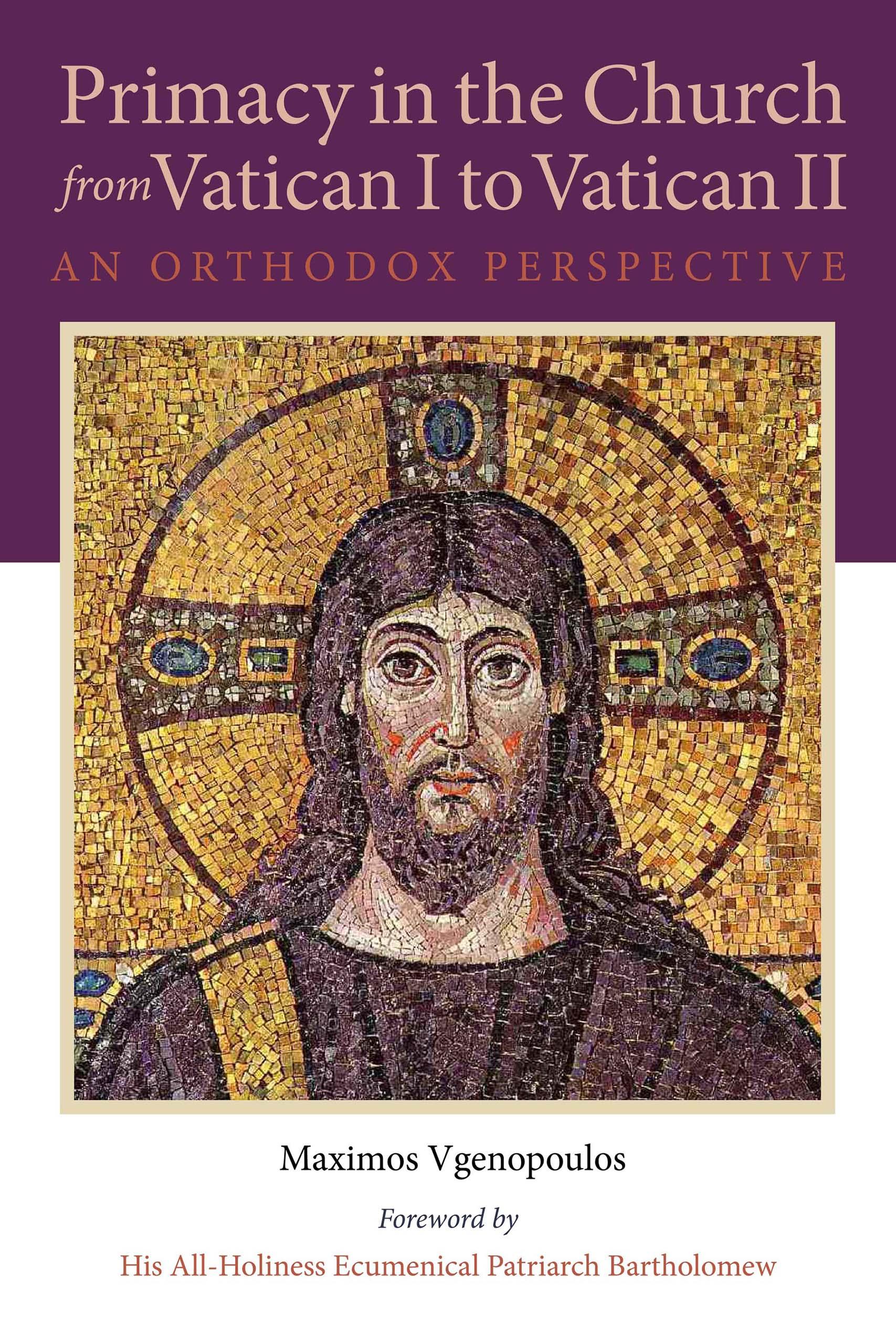
The primacy of the bishop of Rome, the pope, as it was finally shaped in the Middle Ages and later defined by Vatican I and II has been one of the thorniest issues in the history of the Western and Eastern Churches. This issue was a primary cause of the division between the two Churches and the events that followed the schism of 1054: the sack of Constantinople by the crusaders in 1204, the appointment by Pope Innocent III of a Latin patriarch of Constantinople, and the establishment of Uniatism as a method and model of union. Always a topic in ecumenical dialogue, the issue of primacy has appeared to be an insurmountable obstacle to the realization of full unity between Roman Catholicism and the Orthodox Christianity. In this timely and comprehensive work, Maximos Vgenopoulos analyzes the response of major Orthodox thinkers to the Catholic understanding of the primary of the pope over the last two centuries, showing the strengths and weaknesses of these positions.
Covering a broad range of primary and secondary sources and thinkers, Vgenopoulos approaches the issue of primacy with an open and ecumenical manner that looks forward to a way of resolving this most divisive issue between the two Churches. For the first time here the thought of Greek and Russian Orthodox theologians regarding primacy is brought together systematically and compared to demonstrate the emergence of a coherent view of primacy in accordance with the canonical principles of the Orthodox Church. In looking at crucial Greek-language sources Vgenopoulos makes a unique contribution by providing an account of the debate on primacy within the Greek Orthodox Church. Primacy in the Church from Vatican I to Vatican II is an invaluable resource on the official dialogue taking place between the Orthodox Church and the Roman Catholic Church today. This important book will be of broad interest to historians, theologians, seminarians, and all those interested in Orthodox-Catholic relations.
Before Memmo my notes were scattered across PDFs. Now a workspace pulls everything into one place — I see exactly what's still left to study.
Memmo's summaries are gold before exams. I don't have to re-read 800 pages two weeks before — just the important parts.
The AI chat has saved me the night before an exam more than once. I just keep asking until I get it — no waiting on a study group to reply.
The quizzes hit exactly what I need to know. Memmo tracks what I get stuck on — so I only practice what's worth it.
Flashcards with spaced repetition are magic. Memmo knows when I'm about to forget something and brings it back.
The AI podcasts are my favorite. I listen on my way to school and get a recap without sitting at a computer.

Handbok i kvalitativa metoder
281 kr

Hållbar utveckling: en introduktion för ingenjörer och andra problemlösare
334 kr

Brymans Samhällsvetenskapliga metoder
390 kr

Projektledning
491 kr

Den orättvisa hälsan: om socioekonomiska skillnader i hälsa och livslängd
326 kr

Vetenskapsteori för nybörjare
196 kr

Organizational Leadership
429 kr

På väg mot läraryrket
172 kr

Det sociala livet i skolan: Socialpsykologiska perspektiv
253 kr

Betygsättningens didaktik
151 kr

Personality
402 kr

Studying Leadership
404 kr

Managing Innovation
477 kr

Introduktion till samhällsvetenskaplig metod
347 kr

The Psychology of Sex and Gender
698 kr

Evidens och kunskap för socialt arbete
207 kr

Introduction to Leadership
605 kr