
Before Memmo my notes were scattered across PDFs. Now a workspace pulls everything into one place — I see exactly what's still left to study.
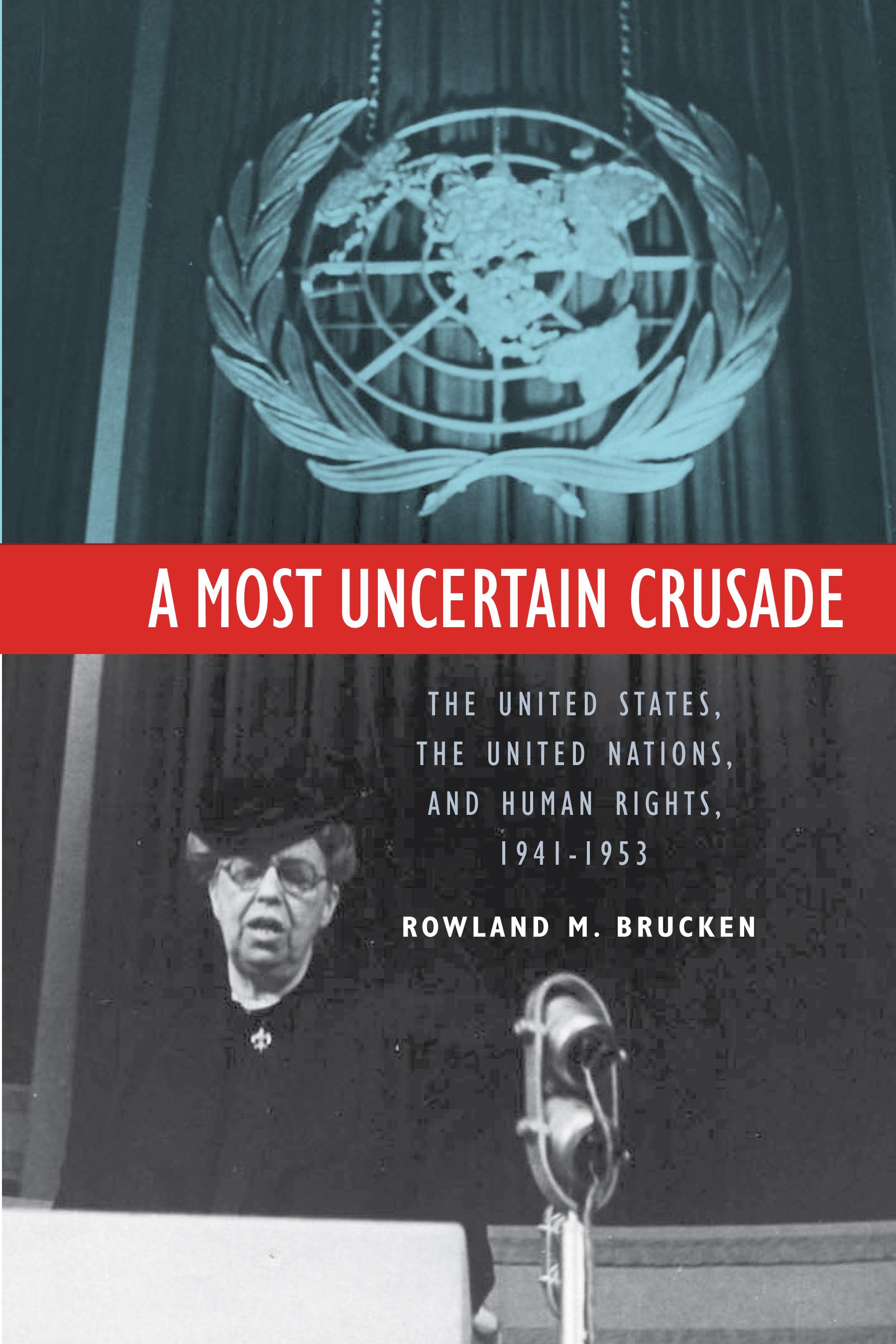
A Most Uncertain Crusade traces and analyzes the emergence of human rights as both an international concern and as a controversial domestic issue for US policy makers during and after World War II. Rowland Brucken focuses on officials in the State Department, at the United Nations, and within certain domestic non-governmental organizations, and explains why, after issuing wartime declarations that called for the definition and enforcement of international human rights standards, the US government refused to ratify the first UN treaties that fulfilled those twin purposes. The Truman and Eisenhower administrations worked to weaken the scope and enforcement mechanisms of early human rights agreements, and gradually withdrew support for Senate ratification. A small but influential group of isolationist–oriented senators, led by John Bricker (R-OH), warned that the treaties would bring about socialism, destroy white supremacy, and eviscerate the Bill of Rights. At the UN, a growing bloc of developing nations demanded the inclusion of economic guarantees, support for decolonization, and strong enforcement measures, all of which Washington opposed.
Prior to World War II, international law considered the protection of individual rights to fall largely under the jurisdiction of national governments. Alarmed by fascist tyranny and guided by a Wilsonian vision of global cooperation in pursuit of human rights, President Roosevelt issued the Four Freedoms and the Atlantic Charter. Behind the scenes, the State Department planners carefully considered how an international organization could best protect those guarantees. Their work paid off at the 1945 San Francisco Conference, which vested the UN with an unprecedented opportunity to define and protect the human rights of individuals.
After two years of negotiations, the UN General Assembly unanimously approved its first human rights treaty, the Genocide Convention. The UN Commission on Human Rights (UNCHR), led by Eleanor Roosevelt, drafted the nonbinding Universal Declaration of Human Rights in 1948. Subsequent efforts to craft an enforceable covenant of individual rights, though, bogged down quickly. A deadlock occurred as western nations, communist states, and developing countries disagreed on the inclusion of economic and social guarantees, the right of self-determination, and plans for implementation.
Meanwhile, a coalition of groups within the United States doubted the wisdom of American accession to any human rights treaties. Led by the American Bar Association and Senator Bricker, opponents proclaimed that ratification would lead to a U.N. led tyrannical world socialistic government. The backlash caused President Eisenhower to withdraw from the covenant drafting process. Brucken shows how the American human rights policy had come full circle: Eisenhower, like Roosevelt, issued statements that merely celebrated western values of freedom and democracy, criticized human rights records of other countries while at the same time postponed efforts to have the UN codify and enforce a list of binding rights due in part to America's own human rights violations.
Before Memmo my notes were scattered across PDFs. Now a workspace pulls everything into one place — I see exactly what's still left to study.
Memmo's summaries are gold before exams. I don't have to re-read 800 pages two weeks before — just the important parts.
The AI chat has saved me the night before an exam more than once. I just keep asking until I get it — no waiting on a study group to reply.
The quizzes hit exactly what I need to know. Memmo tracks what I get stuck on — so I only practice what's worth it.
Flashcards with spaced repetition are magic. Memmo knows when I'm about to forget something and brings it back.
The AI podcasts are my favorite. I listen on my way to school and get a recap without sitting at a computer.

Handbok i kvalitativa metoder
281 kr

Hållbar utveckling: en introduktion för ingenjörer och andra problemlösare
334 kr

Brymans Samhällsvetenskapliga metoder
390 kr

Projektledning
491 kr

Den orättvisa hälsan: om socioekonomiska skillnader i hälsa och livslängd
326 kr

Organizational Leadership
429 kr

Vetenskapsteori för nybörjare
196 kr

På väg mot läraryrket
172 kr

Det sociala livet i skolan: Socialpsykologiska perspektiv
253 kr

Betygsättningens didaktik
151 kr

Personality
402 kr

Studying Leadership
404 kr

Managing Innovation
477 kr

Introduktion till samhällsvetenskaplig metod
347 kr

The Psychology of Sex and Gender
698 kr

Evidens och kunskap för socialt arbete
207 kr

Introduction to Leadership
605 kr