
Before Memmo my notes were scattered across PDFs. Now a workspace pulls everything into one place — I see exactly what's still left to study.
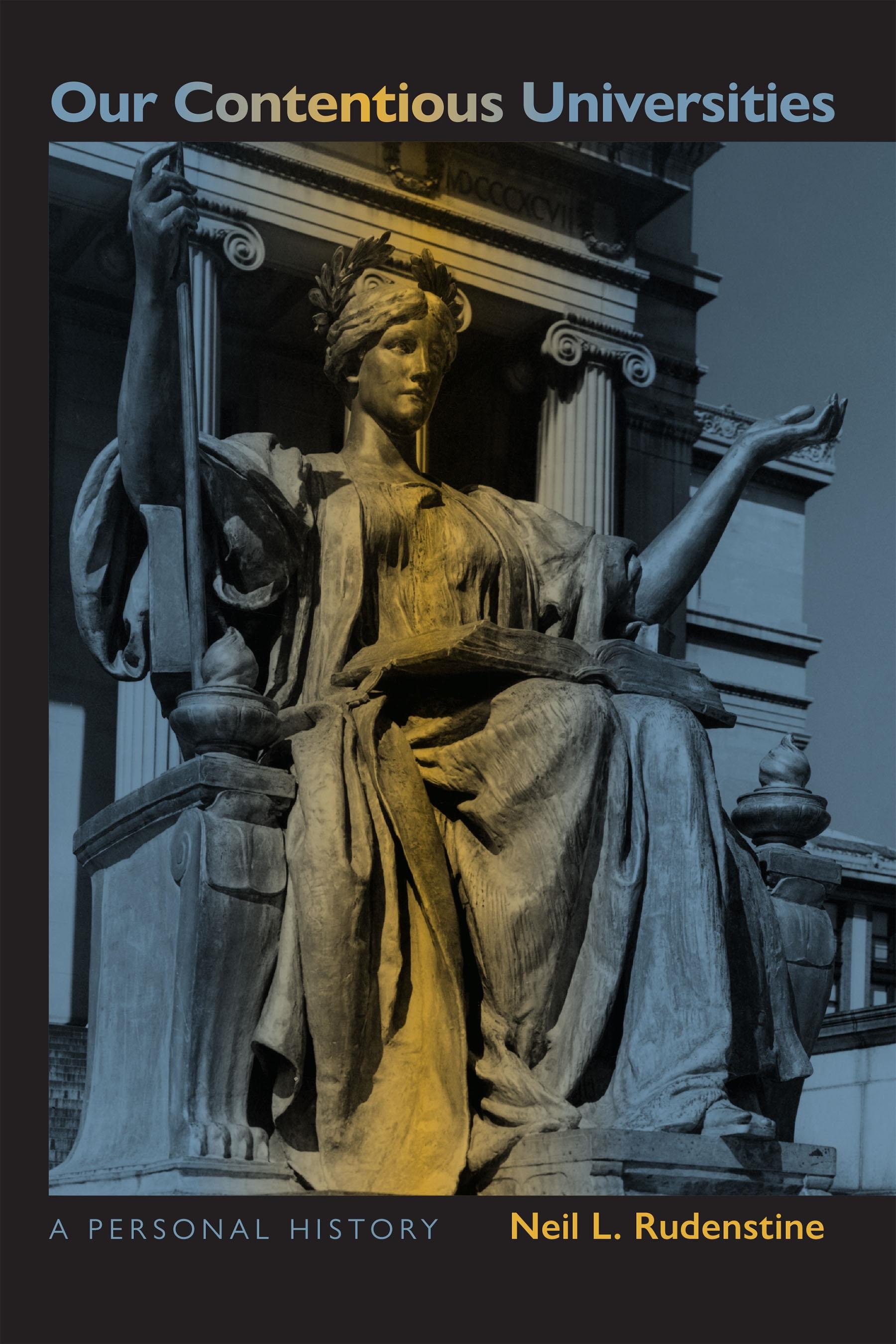
How universities have become increasingly contentious since the Sixties, from the viewpoint of a former Princeton provost and Harvard president
From his days at Princeton University as a member of the faculty, dean, and provost, and his time as a faculty member and president at Harvard University, Neil L. Rudenstine has been uniquely positioned to observe the changes that have occurred in higher education over the past few decades. In this book, he draws on his various roles to present an educator’s inside account of the modern university. More than that, Our Contentious Universities is a personal history of how our current campus climate of antagonism evolved, beginning with the late 1960s and up to our contemporary moment.
Starting with his perceptions of the anti-Vietnam War events at Columbia, Princeton, and Berkeley, as well as descriptions of what occurred at Harvard, Michigan, and other institutions, Rudenstine identifies a pattern that was characterized by students protesting against institutions because of purported university support for the Vietnam War. Not surprisingly, once the Vietnam War ended, the protests ceased. In contrast, Rudenstine reveals how contemporary campus conflicts essentially differ in nature from the Sixties protests. Since the issues that spark these present protests—such as climate change, conservative judicial opinions, lack of gun control legislation, the Hamas-Israeli war—are clearly not readily soluble problems, there can be no easily defined end to the action. Rudenstine also depicts how universities themselves have changed substantially over the past few decades. The institutions have not only evolved into a collection of decentralized quasi-autonomous departments in competition with other centers and initiatives for resources but also nurtured a highly diverse population of faculty and students with a variety of backgrounds and perspectives already at odds before they even encounter each other on campus.
Combining an analysis of how universities transformed with an examination of how protests changed, the book argues that, opposed to the external causes of student protest in the Sixties, it is actually the internal sources of division and conflict that now characterize our universities that are at the root of their contentious campus environments.
Before Memmo my notes were scattered across PDFs. Now a workspace pulls everything into one place — I see exactly what's still left to study.
Memmo's summaries are gold before exams. I don't have to re-read 800 pages two weeks before — just the important parts.
The AI chat has saved me the night before an exam more than once. I just keep asking until I get it — no waiting on a study group to reply.
The quizzes hit exactly what I need to know. Memmo tracks what I get stuck on — so I only practice what's worth it.
Flashcards with spaced repetition are magic. Memmo knows when I'm about to forget something and brings it back.
The AI podcasts are my favorite. I listen on my way to school and get a recap without sitting at a computer.

Handbok i kvalitativa metoder
281 kr

Hållbar utveckling: en introduktion för ingenjörer och andra problemlösare
334 kr

Brymans Samhällsvetenskapliga metoder
390 kr

Projektledning
491 kr

Den orättvisa hälsan: om socioekonomiska skillnader i hälsa och livslängd
326 kr

Vetenskapsteori för nybörjare
196 kr

Organizational Leadership
429 kr

På väg mot läraryrket
172 kr

Det sociala livet i skolan: Socialpsykologiska perspektiv
253 kr

Betygsättningens didaktik
151 kr

Personality
402 kr

Studying Leadership
404 kr

Managing Innovation
477 kr

Introduktion till samhällsvetenskaplig metod
347 kr

The Psychology of Sex and Gender
698 kr

Evidens och kunskap för socialt arbete
207 kr

Introduction to Leadership
605 kr