
Before Memmo my notes were scattered across PDFs. Now a workspace pulls everything into one place — I see exactly what's still left to study.
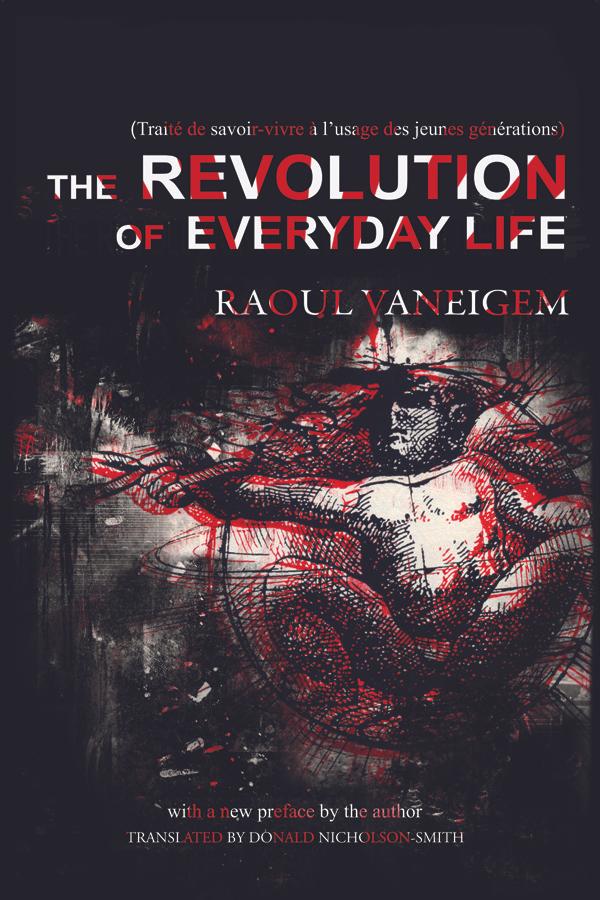
Originally published just months before the May 1968 upheavals in France, Raoul Vaneigem’s The Revolution of Everyday Life offered a lyrical and aphoristic critique of the “society of the spectacle” from the point of view of individual experience. Whereas Debord’s masterful analysis of the new historical conditions that triggered the uprisings of the 1960s armed the revolutionaries of the time with theory, Vaneigem’s book described their feelings of desperation directly, and armed them with “formulations capable of firing point-blank on our enemies.”
“I realise,” writes Vaneigem in his introduction, “that I have given subjective will an easy time in this book, but let no one reproach me for this without first considering the extent to which the objective conditions of the contemporary world advance the cause of subjectivity day after day.”
Vaneigem names and defines the alienating features of everyday life in consumer society: survival rather than life, the call to sacrifice, the cultivation of false needs, the dictatorship of the commodity, subjection to social roles, and above all the replacement of God by the Economy. And in the second part of his book, “Reversal of Perspective,” he explores the countervailing impulses that, in true dialectical fashion, persist within the deepest alienation: creativity, spontaneity, poetry, and the path from isolation to communication and participation.
For “To desire a different life is already that life in the making.” And “fulfillment is expressed in the singular but conjugated in the plural.”
The present English translation was first published by Rebel Press of London in 1983. This new edition of The Revolution of Everyday Life has been reviewed and corrected by the translator and contains a new preface addressed to English-language readers by Raoul Vaneigem. The book is the first of several translations of works by Raoul Vaneigem that PM Press plans to publish in uniform volumes. Vaneigem’s classic work is to be followed by The Knight, the Lady, the Devil, and Death (2003) and The Inhumanity of Religion (2000).
Before Memmo my notes were scattered across PDFs. Now a workspace pulls everything into one place — I see exactly what's still left to study.
Memmo's summaries are gold before exams. I don't have to re-read 800 pages two weeks before — just the important parts.
The AI chat has saved me the night before an exam more than once. I just keep asking until I get it — no waiting on a study group to reply.
The quizzes hit exactly what I need to know. Memmo tracks what I get stuck on — so I only practice what's worth it.
Flashcards with spaced repetition are magic. Memmo knows when I'm about to forget something and brings it back.
The AI podcasts are my favorite. I listen on my way to school and get a recap without sitting at a computer.

Handbok i kvalitativa metoder
281 kr

Hållbar utveckling: en introduktion för ingenjörer och andra problemlösare
334 kr

Brymans Samhällsvetenskapliga metoder
390 kr

Projektledning
491 kr

Den orättvisa hälsan: om socioekonomiska skillnader i hälsa och livslängd
326 kr

Vetenskapsteori för nybörjare
196 kr

Organizational Leadership
429 kr

På väg mot läraryrket
172 kr

Det sociala livet i skolan: Socialpsykologiska perspektiv
253 kr

Betygsättningens didaktik
151 kr

Personality
402 kr

Studying Leadership
404 kr

Managing Innovation
477 kr

Introduktion till samhällsvetenskaplig metod
347 kr

The Psychology of Sex and Gender
698 kr

Evidens och kunskap för socialt arbete
207 kr

Introduction to Leadership
605 kr