
Before Memmo my notes were scattered across PDFs. Now a workspace pulls everything into one place — I see exactly what's still left to study.
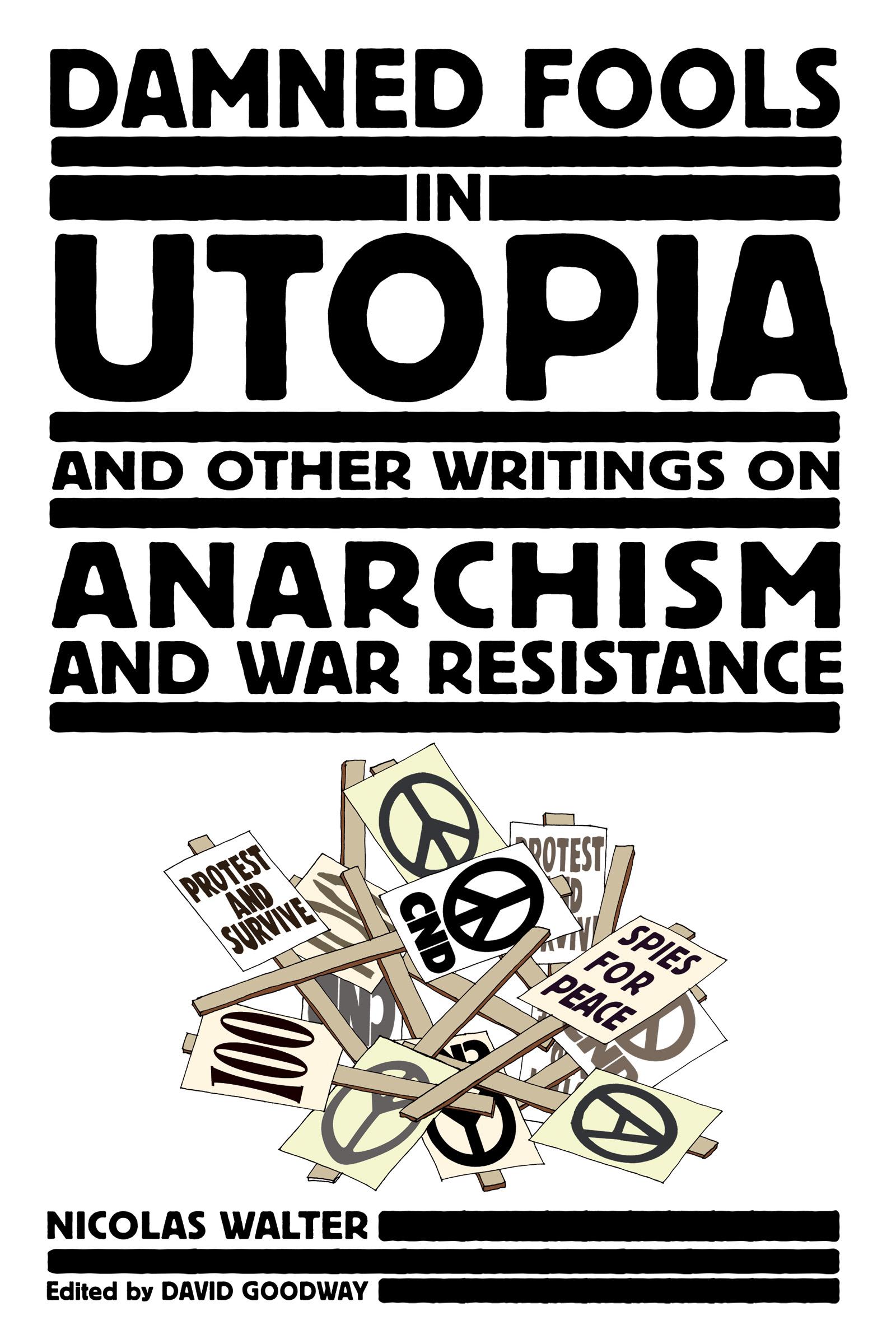
Nicolas Walter was the son of the neurologist, W. Grey Walter, and both his grandfathers had known Peter Kropotkin and Edward Carpenter. However, it was the twin jolts of Suez and the Hungarian Revolution while still a student, followed by participation in the resulting New Left and nuclear disarmament movement, that led him to anarchism himself. His personal history is recounted in two autobiographical pieces in this collection as well as the editor’s introduction.
During the 1960s he was a militant in the British nuclear disarmament movement—especially its direct-action wing, the Committee of 100—he was one of the Spies for Peace (who revealed the State’s preparations for the governance of Britain after a nuclear war), he was close to the innovative Solidarity Group and was a participant in the homelessness agitation. Concurrently with his impressive activism he was analyzing acutely and lucidly the history, practice and theory of these intertwined movements; and it is such writings—including Non-violent Resistance and The Spies for Peace and After—that form the core of this book. But there are also memorable pieces on various libertarians, including the writers George Orwell, Herbert Read and Alan Sillitoe, the publisher C.W. Daniel and the maverick Guy A. Aldred. The Right to be Wrong is a notable polemic against laws limiting the freedom of expression. Other than anarchism, the passion of Walter’s intellectual life was the dual cause of atheism and rationalism; and the selection concludes appropriately with a fine essay on Anarchism and Religion and his moving reflections, Facing Death.
Nicolas Walter scorned the pomp and frequent ignorance of the powerful and detested the obfuscatory prose and intellectual limitations of academia. He himself wrote straightforwardly and always accessibly, almost exclusively for the anarchist and freethought movements. The items collected in this volume display him at his considerable best.
Before Memmo my notes were scattered across PDFs. Now a workspace pulls everything into one place — I see exactly what's still left to study.
Memmo's summaries are gold before exams. I don't have to re-read 800 pages two weeks before — just the important parts.
The AI chat has saved me the night before an exam more than once. I just keep asking until I get it — no waiting on a study group to reply.
The quizzes hit exactly what I need to know. Memmo tracks what I get stuck on — so I only practice what's worth it.
Flashcards with spaced repetition are magic. Memmo knows when I'm about to forget something and brings it back.
The AI podcasts are my favorite. I listen on my way to school and get a recap without sitting at a computer.

Handbok i kvalitativa metoder
281 kr

Hållbar utveckling: en introduktion för ingenjörer och andra problemlösare
334 kr

Brymans Samhällsvetenskapliga metoder
390 kr

Projektledning
491 kr

Den orättvisa hälsan: om socioekonomiska skillnader i hälsa och livslängd
326 kr

Organizational Leadership
429 kr

Vetenskapsteori för nybörjare
196 kr

På väg mot läraryrket
172 kr

Det sociala livet i skolan: Socialpsykologiska perspektiv
253 kr

Betygsättningens didaktik
151 kr

Personality
402 kr

Studying Leadership
404 kr

Managing Innovation
477 kr

Introduktion till samhällsvetenskaplig metod
347 kr

The Psychology of Sex and Gender
698 kr

Evidens och kunskap för socialt arbete
207 kr

Introduction to Leadership
605 kr