
Before Memmo my notes were scattered across PDFs. Now a workspace pulls everything into one place — I see exactly what's still left to study.
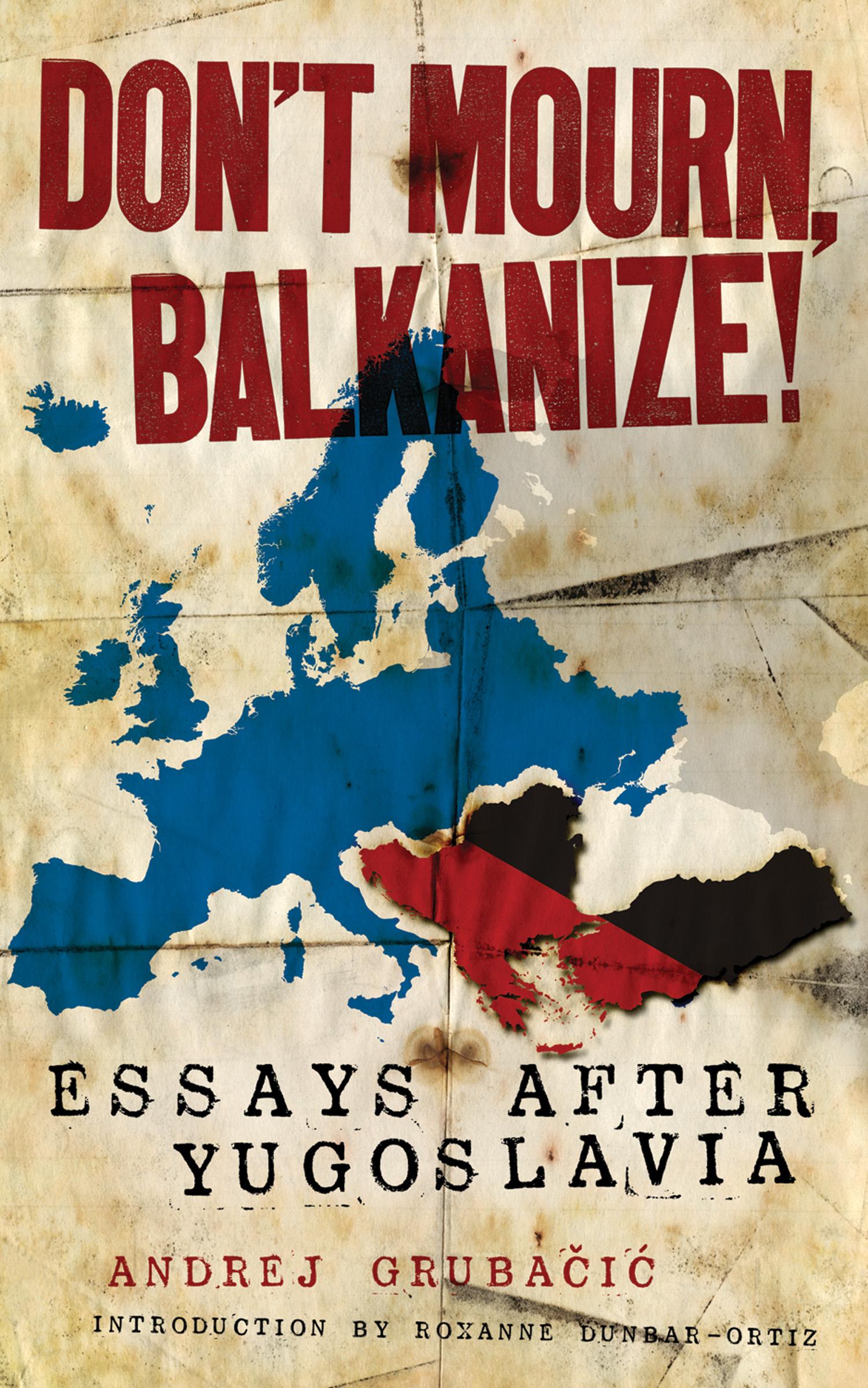
Don’t Mourn, Balkanize! is the first book written from the radical left perspective on the topic of Yugoslav space after the dismantling of the country. In this collection of essays, commentaries, and interviews, written between 2002 and 2010, Andrej Grubačić speaks about the politics of balkanization—about the trial of Slobodan Milosevic, the assassination of Prime Minister Zoran Djindjic, neoliberal structural adjustment, humanitarian intervention, supervised independence of Kosovo, occupation of Bosnia, and other episodes of Power which he situates in the long historical context of colonialism, conquest, and intervention.
But he also tells the story of the balkanization of politics, of the Balkans seen from below. A space of bogumils—those medieval heretics who fought against Crusades and churches—and a place of anti-Ottoman resistance; a home to hajduks and klefti, pirates and rebels; a refuge of feminists and socialists, of antifascists and partisans; of new social movements of occupied and recovered factories; a place of dreamers of all sorts struggling both against provincial “peninsularity” as well as against occupations, foreign interventions and that process which is now, in a strange inversion of history, often described by that fashionable term, “balkanization.”
For Grubačić, political activist and radical sociologist, Yugoslavia was never just a country—it was an idea. Like the Balkans itself, it was a project of inter-ethnic co-existence, a trans-ethnic and pluricultural space of many diverse worlds. Political ideas of inter-ethnic cooperation and mutual aid as we had known them in Yugoslavia were destroyed by the beginning of the 1990s—disappeared in the combined madness of ethno-nationalist hysteria and humanitarian imperialism. This remarkable collection chronicles political experiences of the author who is himself a Yugoslav, a man without a country; but also, as an anarchist, a man without a state. This book is an important reading for those on the Left who are struggling to understand the intertwined legacy of inter-ethnic conflict and inter-ethnic solidarity in contemporary, post-Yugoslav history.
Before Memmo my notes were scattered across PDFs. Now a workspace pulls everything into one place — I see exactly what's still left to study.
Memmo's summaries are gold before exams. I don't have to re-read 800 pages two weeks before — just the important parts.
The AI chat has saved me the night before an exam more than once. I just keep asking until I get it — no waiting on a study group to reply.
The quizzes hit exactly what I need to know. Memmo tracks what I get stuck on — so I only practice what's worth it.
Flashcards with spaced repetition are magic. Memmo knows when I'm about to forget something and brings it back.
The AI podcasts are my favorite. I listen on my way to school and get a recap without sitting at a computer.

Handbok i kvalitativa metoder
281 kr

Hållbar utveckling: en introduktion för ingenjörer och andra problemlösare
334 kr

Brymans Samhällsvetenskapliga metoder
390 kr

Projektledning
491 kr

Den orättvisa hälsan: om socioekonomiska skillnader i hälsa och livslängd
326 kr

Vetenskapsteori för nybörjare
196 kr

Organizational Leadership
429 kr

På väg mot läraryrket
172 kr

Det sociala livet i skolan: Socialpsykologiska perspektiv
253 kr

Betygsättningens didaktik
151 kr

Personality
402 kr

Studying Leadership
404 kr

Managing Innovation
477 kr

Introduktion till samhällsvetenskaplig metod
347 kr

The Psychology of Sex and Gender
698 kr

Evidens och kunskap för socialt arbete
207 kr

Introduction to Leadership
605 kr