
Before Memmo my notes were scattered across PDFs. Now a workspace pulls everything into one place — I see exactly what's still left to study.
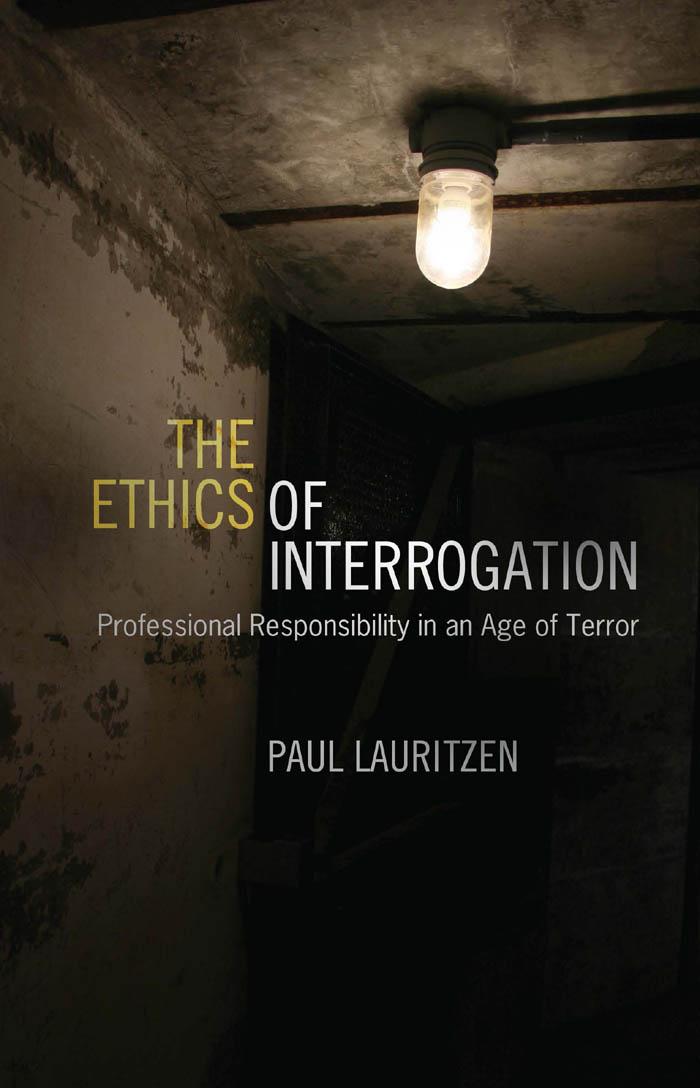
Can harsh interrogation techniques and torture ever be morally justified for a nation at war or under the threat of imminent attack? In the aftermath of the September 11, 2001, terrorist strikes, the United States and other liberal democracies were forced to grapple once again with the issue of balancing national security concerns against the protection of individual civil and political rights. This question was particularly poignant when US forces took prisoners in Afghanistan and Iraq who arguably had information about additional attacks. In this volume, ethicist Paul Lauritzen takes on ethical debates about counterterrorism techniques that are increasingly central to US foreign policy and discusses the ramifications for the future of interrogation.
Lauritzen examines how doctors, lawyers, psychologists, military officers, and other professionals addressed the issue of the appropriate limits in interrogating detainees. In the case of each of these professions, a vigorous debate ensued about whether the interrogation policy developed by the Bush administration violated codes of ethics governing professional practice. These codes are critical, according to Lauritzen, because they provide resources for democracies and professionals seeking to balance concerns about safety with civil liberties, while also shaping the character of those within these professional guilds.
This volume argues that some of the techniques used at Guantánamo Bay and elsewhere were morally impermissible; nevertheless, the healthy debates that raged among professionals provide hope that we may safeguard human rights and the rule of law more effectively in the future.
Before Memmo my notes were scattered across PDFs. Now a workspace pulls everything into one place — I see exactly what's still left to study.
Memmo's summaries are gold before exams. I don't have to re-read 800 pages two weeks before — just the important parts.
The AI chat has saved me the night before an exam more than once. I just keep asking until I get it — no waiting on a study group to reply.
The quizzes hit exactly what I need to know. Memmo tracks what I get stuck on — so I only practice what's worth it.
Flashcards with spaced repetition are magic. Memmo knows when I'm about to forget something and brings it back.
The AI podcasts are my favorite. I listen on my way to school and get a recap without sitting at a computer.

Handbok i kvalitativa metoder
281 kr

Hållbar utveckling: en introduktion för ingenjörer och andra problemlösare
334 kr

Brymans Samhällsvetenskapliga metoder
390 kr

Projektledning
491 kr

Den orättvisa hälsan: om socioekonomiska skillnader i hälsa och livslängd
326 kr

Vetenskapsteori för nybörjare
196 kr

Organizational Leadership
429 kr

På väg mot läraryrket
172 kr

Det sociala livet i skolan: Socialpsykologiska perspektiv
253 kr

Betygsättningens didaktik
151 kr

Personality
402 kr

Studying Leadership
404 kr

Managing Innovation
477 kr

Introduktion till samhällsvetenskaplig metod
347 kr

The Psychology of Sex and Gender
698 kr

Evidens och kunskap för socialt arbete
207 kr

Introduction to Leadership
605 kr