
Before Memmo my notes were scattered across PDFs. Now a workspace pulls everything into one place — I see exactly what's still left to study.
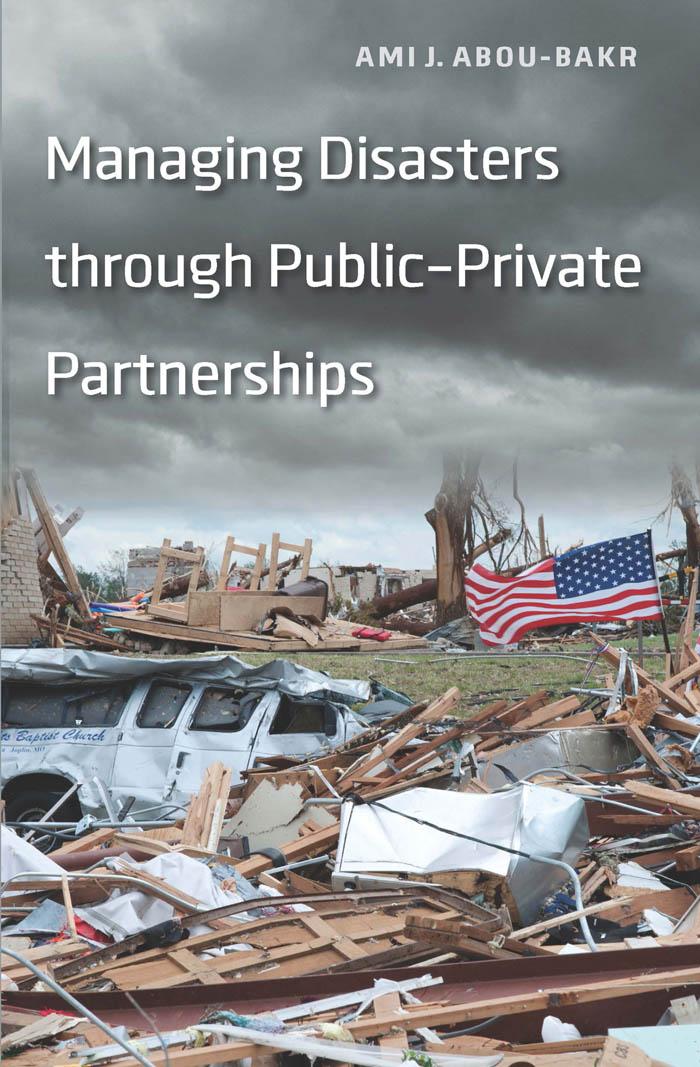
The terrorist attacks of September 11, 2001, and Hurricane Katrina in August 2005, generated a great deal of discussion in public policy and disaster management circles about the importance of increasing national resilience to rebound from catastrophic events. Since the majority of physical and virtual networks that the United States relies upon are owned and operated by the private sector, a consensus has emerged that public-private partnerships (PPPs) are a crucial aspect of an effective resilience strategy. Significant barriers to cooperation persist, however, despite acknowledgment that public–private collaboration for managing disasters would be mutually beneficial.
Managing Disasters through Public–Private Partnerships constitutes the first in-depth exploration of PPPs as tools of disaster mitigation, preparedness, response, and resilience in the United States. The author assesses the viability of PPPs at the federal level and explains why attempts to develop these partnerships have largely fallen short. The book assesses the recent history and current state of PPPs in the United States, with particular emphasis on the lessons of 9/11 and Katrina, and discusses two of the most significant PPPs in US history, the Federal Reserve System and the War Industries Board from World War I. The author develops two original frameworks to compare different kinds of PPPs and analyzes the critical factors that make them successes or failures, pointing toward ways to improve collaboration in the future.
This book should be of interest to researchers and students in public policy, public administration, disaster management, infrastructure protection, and security; practitioners who work on public–private partnerships; and corporate as well as government emergency management professionals and specialists.
Before Memmo my notes were scattered across PDFs. Now a workspace pulls everything into one place — I see exactly what's still left to study.
Memmo's summaries are gold before exams. I don't have to re-read 800 pages two weeks before — just the important parts.
The AI chat has saved me the night before an exam more than once. I just keep asking until I get it — no waiting on a study group to reply.
The quizzes hit exactly what I need to know. Memmo tracks what I get stuck on — so I only practice what's worth it.
Flashcards with spaced repetition are magic. Memmo knows when I'm about to forget something and brings it back.
The AI podcasts are my favorite. I listen on my way to school and get a recap without sitting at a computer.

Handbok i kvalitativa metoder
281 kr

Hållbar utveckling: en introduktion för ingenjörer och andra problemlösare
334 kr

Brymans Samhällsvetenskapliga metoder
390 kr

Projektledning
491 kr

Den orättvisa hälsan: om socioekonomiska skillnader i hälsa och livslängd
326 kr

Vetenskapsteori för nybörjare
196 kr

Organizational Leadership
429 kr

På väg mot läraryrket
172 kr

Det sociala livet i skolan: Socialpsykologiska perspektiv
253 kr

Betygsättningens didaktik
151 kr

Personality
402 kr

Studying Leadership
404 kr

Managing Innovation
477 kr

Introduktion till samhällsvetenskaplig metod
347 kr

The Psychology of Sex and Gender
698 kr

Evidens och kunskap för socialt arbete
207 kr

Introduction to Leadership
605 kr