
Before Memmo my notes were scattered across PDFs. Now a workspace pulls everything into one place — I see exactly what's still left to study.
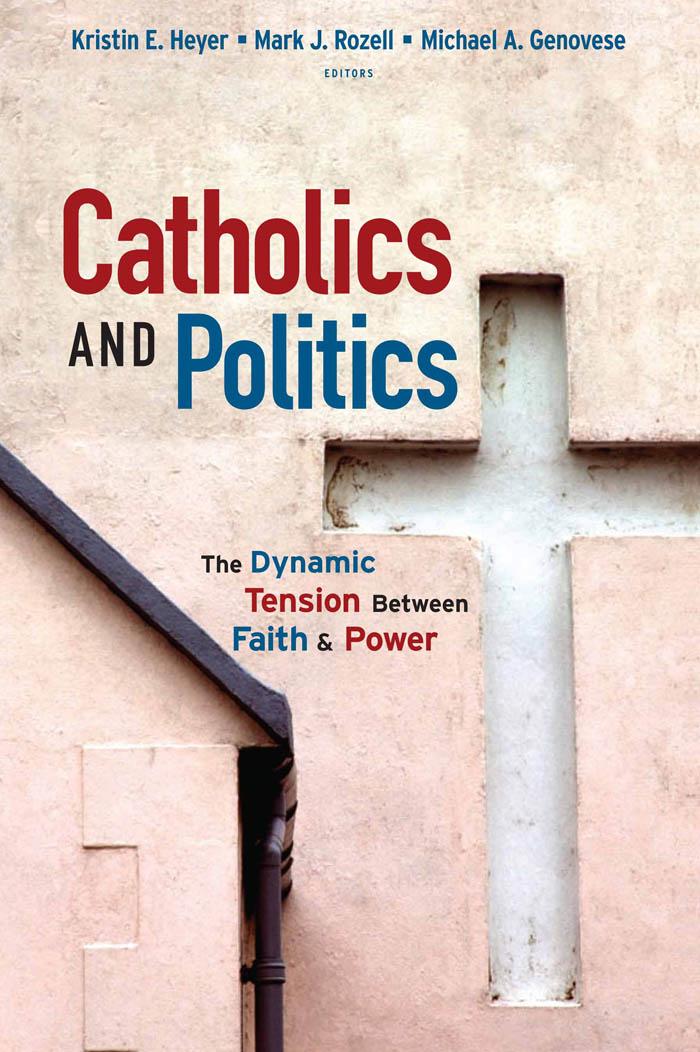
Catholic political identity and engagement defy categorization. The complexities of political realities and the human nature of such institutions as church and government often produce a more fractured reality than the pure unity depicted in doctrine. Yet, in 2003 under the leadership of then-prefect Joseph Cardinal Ratzinger (now Pope Benedict XVI), the Congregation for the Doctrine of the Faith issued a "Doctrinal Note on Some Questions Regarding the Participation of Catholics in Political Life." The note explicitly asserts, "The Christian faith is an integral unity, and thus it is incoherent to isolate some particular element to the detriment of the whole of Catholic doctrine. A political commitment to a single isolated aspect of the Church's social doctrine does not exhaust one's responsibility toward the common good." Catholics and Politics takes up the political and theological significance of this "integral unity," the universal scope of Catholic concern that can make for strange political bedfellows, confound predictable voting patterns, and leave the church poised to critique narrowly partisan agendas across the spectrum.
Catholics and Politics depicts the ambivalent character of Catholics' mainstream "arrival" in the U.S. over the past forty years, integrating social scientific, historical and moral accounts of persistent tensions between faith and power. Divided into four parts—Catholic Leaders in U.S. Politics; The Catholic Public; Catholics and the Federal Government; and International Policy and the Vatican—it describes the implications of Catholic universalism for voting patterns, international policymaking, and partisan alliances. The book reveals complex intersections of Catholicism and politics and the new opportunities for influence and risks of cooptation of political power produced by these shifts. Contributors include political scientists, ethicists, and theologians. The book will be of interest to scholars in political science, religious studies, and Christian ethics and all lay Catholics interested in gaining a deeper understanding of the tensions that can exist between church doctrine and partisan politics.
Before Memmo my notes were scattered across PDFs. Now a workspace pulls everything into one place — I see exactly what's still left to study.
Memmo's summaries are gold before exams. I don't have to re-read 800 pages two weeks before — just the important parts.
The AI chat has saved me the night before an exam more than once. I just keep asking until I get it — no waiting on a study group to reply.
The quizzes hit exactly what I need to know. Memmo tracks what I get stuck on — so I only practice what's worth it.
Flashcards with spaced repetition are magic. Memmo knows when I'm about to forget something and brings it back.
The AI podcasts are my favorite. I listen on my way to school and get a recap without sitting at a computer.

Handbok i kvalitativa metoder
281 kr

Hållbar utveckling: en introduktion för ingenjörer och andra problemlösare
334 kr

Brymans Samhällsvetenskapliga metoder
390 kr

Projektledning
491 kr

Den orättvisa hälsan: om socioekonomiska skillnader i hälsa och livslängd
326 kr

Vetenskapsteori för nybörjare
196 kr

Organizational Leadership
429 kr

På väg mot läraryrket
172 kr

Det sociala livet i skolan: Socialpsykologiska perspektiv
253 kr

Betygsättningens didaktik
151 kr

Personality
402 kr

Studying Leadership
404 kr

Managing Innovation
477 kr

Introduktion till samhällsvetenskaplig metod
347 kr

The Psychology of Sex and Gender
698 kr

Evidens och kunskap för socialt arbete
207 kr

Introduction to Leadership
605 kr