
Before Memmo my notes were scattered across PDFs. Now a workspace pulls everything into one place — I see exactly what's still left to study.
Cultural factions are an intrinsic part of the fabric of American politics. But does this mean that there is no room for compromise when groups hold radically different viewpoints on major issues? Not necessarily. For example, in a June 2003 Time/CNN poll, 49% of respondents identified themselves as pro-choice and 46% identified as pro-life. But in the same poll, 81% indicated that abortion should be "always legal" or "sometimes legal," suggesting that "pro-life" and "pro-choice" are not discrete positions but allow room for compromise.
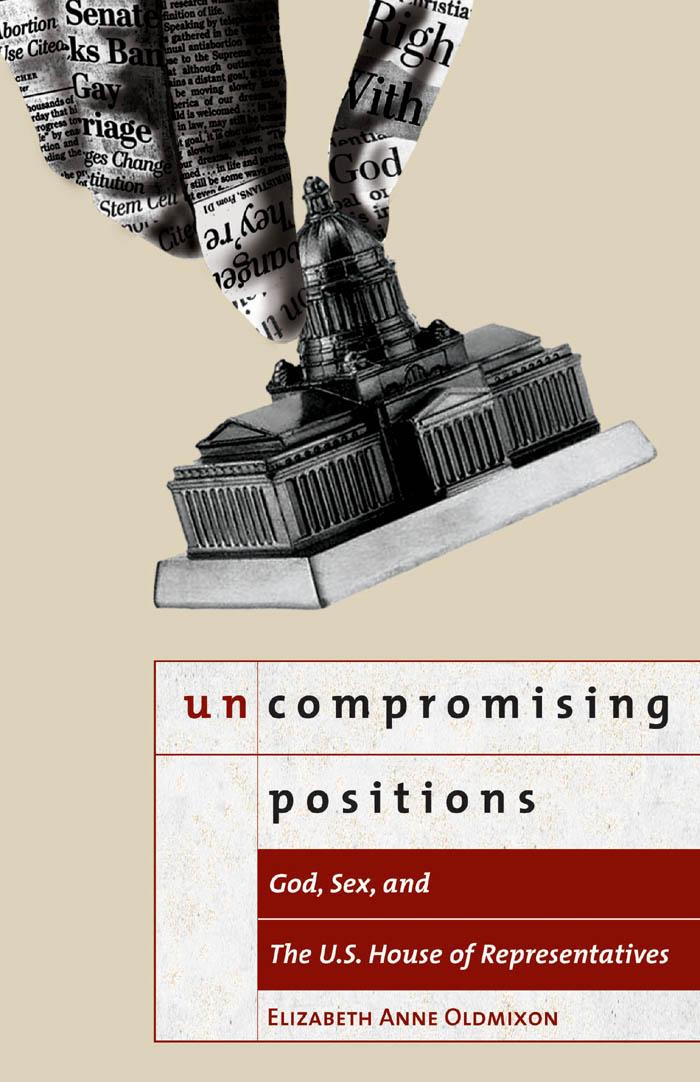
How do legislators legislate policy conflicts that are defined in explicitly cultural terms such as abortion, gay marriage, and school prayer? American political institutions are frequently challenged by the significant conflict between those who embrace religious traditionalism and those who embrace progressive cultural norms. Uncompromising Positions: God, Sex, and the U.S. House of Representatives investigates the politics of that conflict as it is manifested in the proceedings of the U.S. House of Representatives. Oldmixon traces the development of these two distinct cultures in contemporary American politics and discusses the decision-making and leadership tactics used by legislators to respond to this division of values. She argues that cultural conflict produces an absolutist politics that draws on religious values not amenable to compromise politics. One possible strategy to address the problem is to build bipartisan coalitions. Yet, interviews with House staffers and House members, as well as roll calls, all demonstrate that ideologically driven politicians sacrifice compromise and stability to achieve short-term political gain. Noting polls that show Americans tend to support compromise positions, Oldmixon calls on House members to put aside short-term political gain, take their direction from the example of the American public, and focus on finding viable solutions to public policy—not zealous ideology.
Before Memmo my notes were scattered across PDFs. Now a workspace pulls everything into one place — I see exactly what's still left to study.
Memmo's summaries are gold before exams. I don't have to re-read 800 pages two weeks before — just the important parts.
The AI chat has saved me the night before an exam more than once. I just keep asking until I get it — no waiting on a study group to reply.
The quizzes hit exactly what I need to know. Memmo tracks what I get stuck on — so I only practice what's worth it.
Flashcards with spaced repetition are magic. Memmo knows when I'm about to forget something and brings it back.
The AI podcasts are my favorite. I listen on my way to school and get a recap without sitting at a computer.

Handbok i kvalitativa metoder
281 kr

Hållbar utveckling: en introduktion för ingenjörer och andra problemlösare
334 kr

Brymans Samhällsvetenskapliga metoder
390 kr

Projektledning
491 kr

Den orättvisa hälsan: om socioekonomiska skillnader i hälsa och livslängd
326 kr

Organizational Leadership
429 kr

Vetenskapsteori för nybörjare
196 kr

På väg mot läraryrket
172 kr

Det sociala livet i skolan: Socialpsykologiska perspektiv
253 kr

Betygsättningens didaktik
151 kr

Personality
402 kr

Studying Leadership
404 kr

Managing Innovation
477 kr

Introduktion till samhällsvetenskaplig metod
347 kr

The Psychology of Sex and Gender
698 kr

Evidens och kunskap för socialt arbete
207 kr

Introduction to Leadership
605 kr