
Before Memmo my notes were scattered across PDFs. Now a workspace pulls everything into one place — I see exactly what's still left to study.
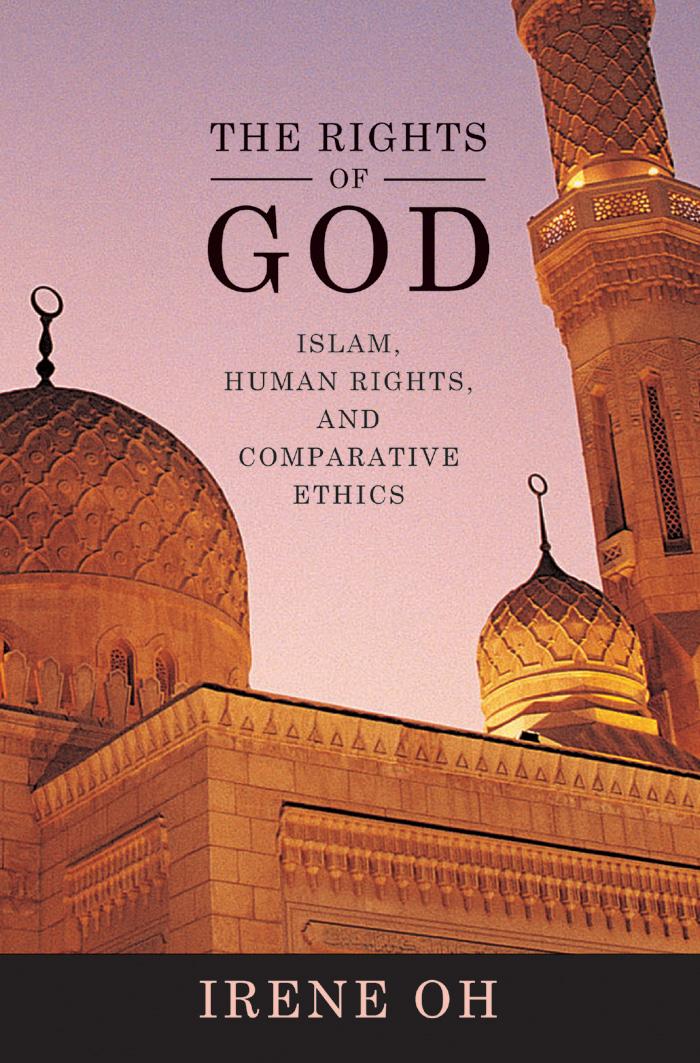
Promoting Islam as a defender of human rights is laden with difficulties. Advocates of human rights will readily point out numerous humanitarian failures carried out in the name of Islam. In The Rights of God, Irene Oh looks at human rights and Islam as a religious issue rather than a political or legal one and draws on three revered Islamic scholars to offer a broad range of perspectives that challenge our assumptions about the role of religion in human rights.
The theoretical shift from the conception of morality based in natural duty and law to one of rights has created tensions that hinder a fruitful exchange between human rights theorists and religious thinkers. Does the static identification of human rights with lists of specific rights, such as those found in the Universal Declaration of Human Rights, make sense given the cultural, historical, and religious diversity of the societies in which these rights are to be respected and implemented? In examining human rights issues of the contemporary Islamic world, Oh illustrates how the value of religious scholarship cannot be overestimated.
Oh analyzes the commentaries of Abul A'la Maududi, Sayyid Qutb, and Abdolkarim Soroush—all prominent and often controversial Islamic thinkers—on the topics of political participation, religious toleration, and freedom of conscience. While Maududi and Qutb represent traditional Islam, and Soroush a more reform and Western-friendly approach, all three contend that Islam is indeed capable of accommodating and advocating human rights.
Whereas disentangling politics and culture from religion is never easy, Oh shows that the attempt must be made in order to understand and overcome the historical obstacles that prevent genuine dialogue from taking place across religious and cultural boundaries.
Before Memmo my notes were scattered across PDFs. Now a workspace pulls everything into one place — I see exactly what's still left to study.
Memmo's summaries are gold before exams. I don't have to re-read 800 pages two weeks before — just the important parts.
The AI chat has saved me the night before an exam more than once. I just keep asking until I get it — no waiting on a study group to reply.
The quizzes hit exactly what I need to know. Memmo tracks what I get stuck on — so I only practice what's worth it.
Flashcards with spaced repetition are magic. Memmo knows when I'm about to forget something and brings it back.
The AI podcasts are my favorite. I listen on my way to school and get a recap without sitting at a computer.

Handbok i kvalitativa metoder
281 kr

Hållbar utveckling: en introduktion för ingenjörer och andra problemlösare
334 kr

Brymans Samhällsvetenskapliga metoder
390 kr

Projektledning
491 kr

Den orättvisa hälsan: om socioekonomiska skillnader i hälsa och livslängd
326 kr

Vetenskapsteori för nybörjare
196 kr

Organizational Leadership
429 kr

På väg mot läraryrket
172 kr

Det sociala livet i skolan: Socialpsykologiska perspektiv
253 kr

Betygsättningens didaktik
151 kr

Personality
402 kr

Studying Leadership
404 kr

Managing Innovation
477 kr

Introduktion till samhällsvetenskaplig metod
347 kr

The Psychology of Sex and Gender
698 kr

Evidens och kunskap för socialt arbete
207 kr

Introduction to Leadership
605 kr