
Before Memmo my notes were scattered across PDFs. Now a workspace pulls everything into one place — I see exactly what's still left to study.
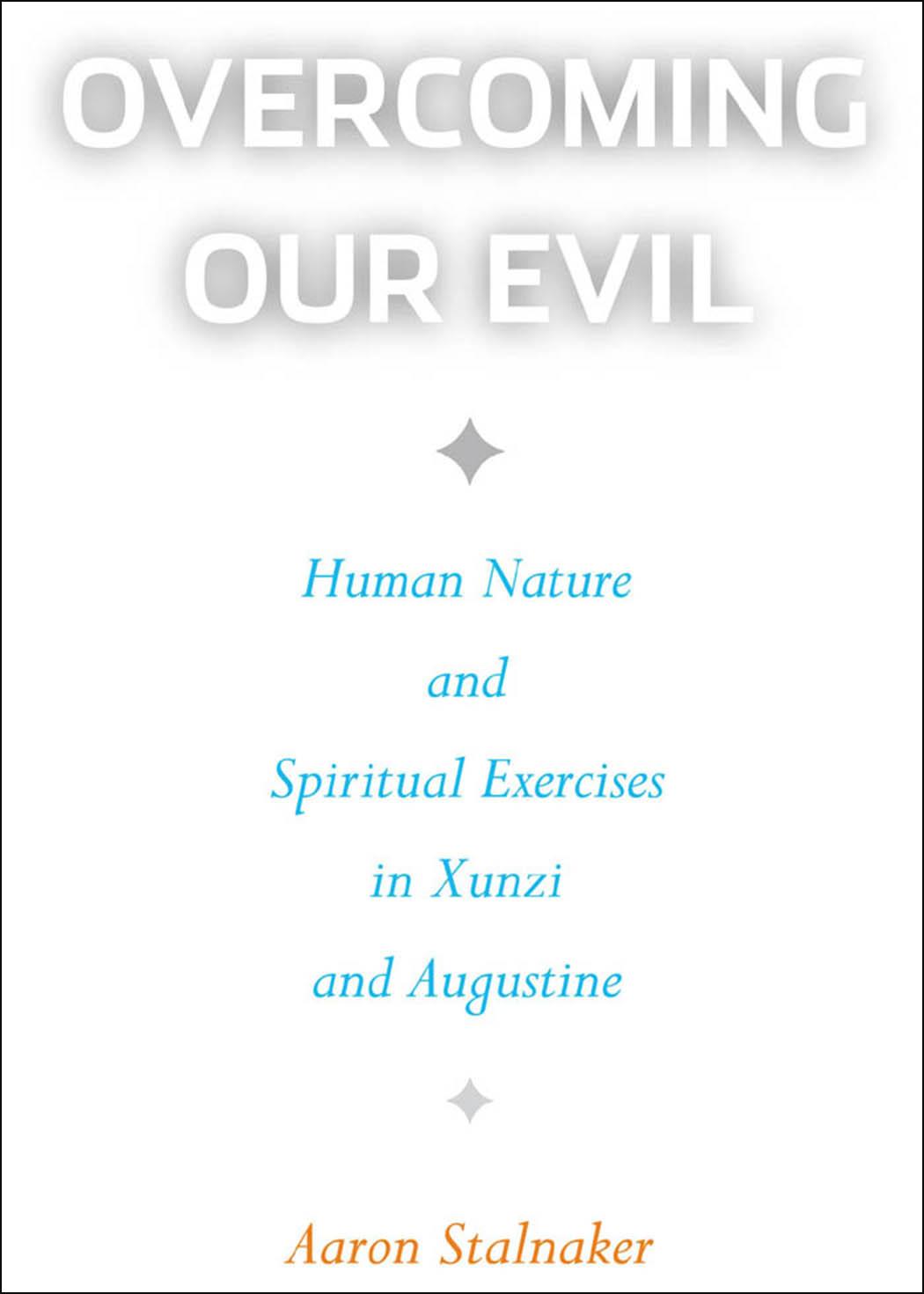
Can people ever really change? Do they ever become more ethical, and if so, how? Overcoming Our Evil focuses on the way ethical and religious commitments are conceived and nurtured through the methodical practices that Pierre Hadot has called "spiritual exercises." These practices engage thought, imagination, and sensibility, and have a significant ethical component, yet aim for a broader transformation of the whole personality. Going beyond recent philosophical and historical work that has focused on ancient Greco-Roman philosophy, Stalnaker broadens ethical inquiry into spiritual exercises by examining East Asian as well as classical Christian sources, and taking religious and seemingly "aesthetic" practices such as prayer, ritual, and music more seriously as objects of study.
More specifically, Overcoming Our Evil examines and compares the thought and practice of the early Christian Augustine of Hippo, and the early Confucian Xunzi. Both have sophisticated and insightful accounts of spiritual exercises, and both make such ethical work central to their religious thought and practice. Yet to understand the two thinkers' recommendations for cultivating virtue we must first understand some important differences. Here Stalnaker disentangles the competing aspects of Augustine and Xunxi's ideas of "human nature." His groundbreaking comparison of their ethical vocabularies also drives a substantive analysis of fundamental issues in moral psychology, especially regarding emotion and the complex idea of "the will," to examine how our dispositions to feel, think, and act might be slowly transformed over time. The comparison meticulously constructs vivid portraits of both thinkers demonstrating where they connect and where they diverge, making the case that both have been misunderstood and misinterpreted. In throwing light on these seemingly disparate ancient figures in unexpected ways, Stalnaker redirects recent debate regarding practices of personal formation, and more clearly exposes the intellectual and political issues involved in the retrieval of "classic" ethical sources in diverse contemporary societies, illuminating a path toward a contemporary understanding of difference.
Before Memmo my notes were scattered across PDFs. Now a workspace pulls everything into one place — I see exactly what's still left to study.
Memmo's summaries are gold before exams. I don't have to re-read 800 pages two weeks before — just the important parts.
The AI chat has saved me the night before an exam more than once. I just keep asking until I get it — no waiting on a study group to reply.
The quizzes hit exactly what I need to know. Memmo tracks what I get stuck on — so I only practice what's worth it.
Flashcards with spaced repetition are magic. Memmo knows when I'm about to forget something and brings it back.
The AI podcasts are my favorite. I listen on my way to school and get a recap without sitting at a computer.

Handbok i kvalitativa metoder
281 kr

Hållbar utveckling: en introduktion för ingenjörer och andra problemlösare
334 kr

Brymans Samhällsvetenskapliga metoder
390 kr

Projektledning
491 kr

Den orättvisa hälsan: om socioekonomiska skillnader i hälsa och livslängd
326 kr

Organizational Leadership
429 kr

Vetenskapsteori för nybörjare
196 kr

På väg mot läraryrket
172 kr

Det sociala livet i skolan: Socialpsykologiska perspektiv
253 kr

Betygsättningens didaktik
151 kr

Personality
402 kr

Studying Leadership
404 kr

Managing Innovation
477 kr

Introduktion till samhällsvetenskaplig metod
347 kr

The Psychology of Sex and Gender
698 kr

Evidens och kunskap för socialt arbete
207 kr

Introduction to Leadership
605 kr