
Before Memmo my notes were scattered across PDFs. Now a workspace pulls everything into one place — I see exactly what's still left to study.
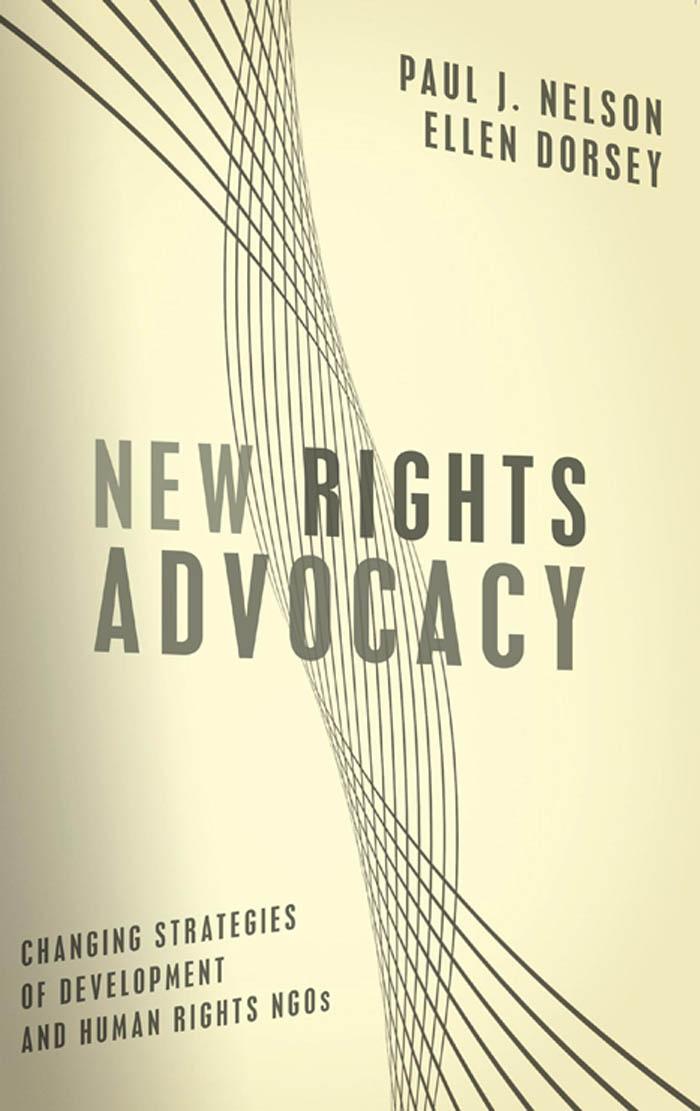
After World War II dozens of non-governmental organizations (NGOs) emerged on the global scene, committed to improving the lives of the world's most vulnerable people. Some focused on protecting human rights; some were dedicated to development, aimed at satisfying basic economic needs. Both approaches had distinctive methods, missions, and emphases. In the 1980s and 90s, however, the dividing line began to blur.
In the first book to track the growing intersection and even overlap of human rights and development NGOs, Paul Nelson and Ellen Dorsey introduce a concept they call "new rights advocacy." New rights advocacy has at its core three main trends: the embrace of human rights-based approaches by influential development NGOs, the adoption of active economic and social rights agendas by major international human rights NGOs, and the surge of work on economic and social policy through a human rights lens by specialized human rights NGOs and social movement campaigns.
Nelson and Dorsey draw on rich case studies of internationally well-known individual NGOs such as Amnesty International, Human Rights Watch, Oxfam, CARE, ActionAid, and Save the Children, and employ perspectives from fields of human rights, international relations, the sociology of social movements and of complex organizations, and development theory, in order to better understand the changes occurring within NGOs.
In questioning current trends using new theoretical frameworks, this book breaks new ground in the evolution of human rights-development interaction. The way in which NGOs are reinventing themselves has great potential for success—or possibly failure—and profound implications for a world in which the enormous gap between the wealthiest and poorest poses a persistent challenge to both development and human rights.
Before Memmo my notes were scattered across PDFs. Now a workspace pulls everything into one place — I see exactly what's still left to study.
Memmo's summaries are gold before exams. I don't have to re-read 800 pages two weeks before — just the important parts.
The AI chat has saved me the night before an exam more than once. I just keep asking until I get it — no waiting on a study group to reply.
The quizzes hit exactly what I need to know. Memmo tracks what I get stuck on — so I only practice what's worth it.
Flashcards with spaced repetition are magic. Memmo knows when I'm about to forget something and brings it back.
The AI podcasts are my favorite. I listen on my way to school and get a recap without sitting at a computer.

Handbok i kvalitativa metoder
281 kr

Hållbar utveckling: en introduktion för ingenjörer och andra problemlösare
334 kr

Brymans Samhällsvetenskapliga metoder
390 kr

Projektledning
491 kr

Den orättvisa hälsan: om socioekonomiska skillnader i hälsa och livslängd
326 kr

Vetenskapsteori för nybörjare
196 kr

Organizational Leadership
429 kr

På väg mot läraryrket
172 kr

Det sociala livet i skolan: Socialpsykologiska perspektiv
253 kr

Betygsättningens didaktik
151 kr

Personality
402 kr

Studying Leadership
404 kr

Managing Innovation
477 kr

Introduktion till samhällsvetenskaplig metod
347 kr

The Psychology of Sex and Gender
698 kr

Evidens och kunskap för socialt arbete
207 kr

Introduction to Leadership
605 kr