
Before Memmo my notes were scattered across PDFs. Now a workspace pulls everything into one place — I see exactly what's still left to study.
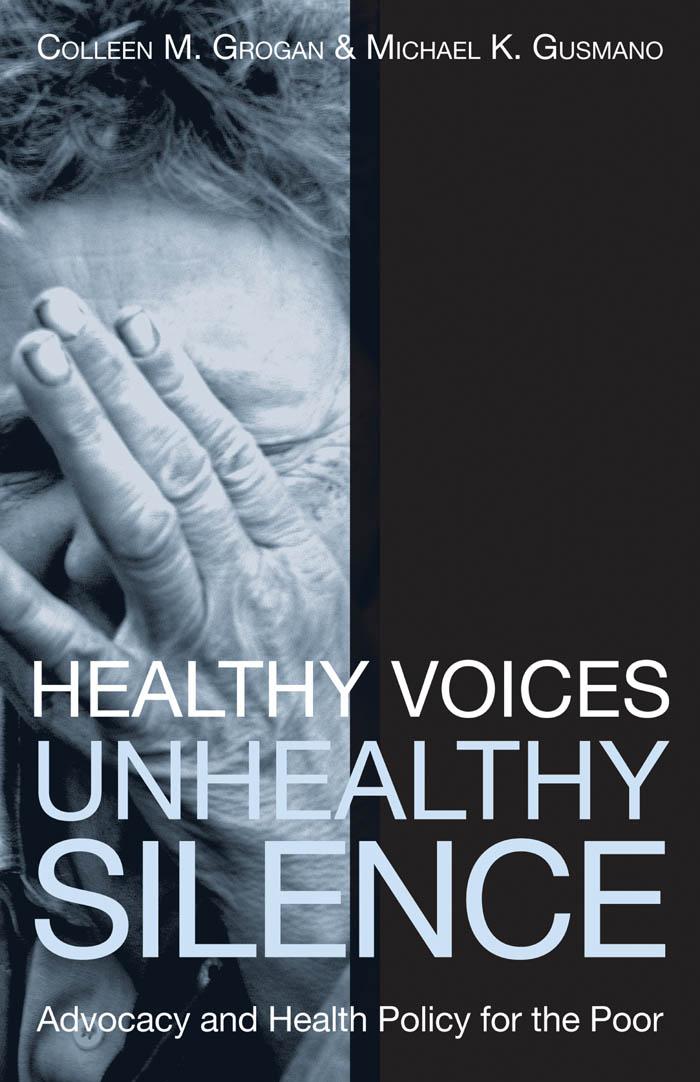
Public silence in policymaking can be deafening. When advocates for a disadvantaged group decline to speak up, not only are their concerns not recorded or acted upon, but also the collective strength of the unspoken argument is lessened—a situation that undermines the workings of deliberative democracy by reflecting only the concerns of more powerful interests.
But why do so many advocates remain silent on key issues they care about and how does that silence contribute to narrowly defined policies? What can individuals and organizations do to amplify their privately expressed concerns for policy change?
In Healthy Voices, Unhealthy Silence, Colleen M. Grogan and Michael K. Gusmano address these questions through the lens of state-level health care advocacy for the poor. They examine how representatives for the poor participate in an advisory board process by tying together existing studies; extensive interviews with key players; and an in-depth, first-hand look at the Connecticut Medicaid advisory board's deliberations during the managed care debate. Drawing on the concepts of deliberative democracy, agenda setting, and nonprofit advocacy, Grogan and Gusmano reveal the reasons behind advocates' often unexpected silence on major issues, assess how capable nonprofits are at affecting policy debates, and provide prescriptive advice for creating a participatory process that adequately addresses the health care concerns of the poor and dispossessed.
Though exploring specifically state-level health care advocacy for the poor, the lessons Grogan and Gusmano offer here are transferable across issue areas and levels of government. Public policy scholars, advocacy organizations, government workers, and students of government administration will be well-served by this significant study.
Before Memmo my notes were scattered across PDFs. Now a workspace pulls everything into one place — I see exactly what's still left to study.
Memmo's summaries are gold before exams. I don't have to re-read 800 pages two weeks before — just the important parts.
The AI chat has saved me the night before an exam more than once. I just keep asking until I get it — no waiting on a study group to reply.
The quizzes hit exactly what I need to know. Memmo tracks what I get stuck on — so I only practice what's worth it.
Flashcards with spaced repetition are magic. Memmo knows when I'm about to forget something and brings it back.
The AI podcasts are my favorite. I listen on my way to school and get a recap without sitting at a computer.

Handbok i kvalitativa metoder
281 kr

Hållbar utveckling: en introduktion för ingenjörer och andra problemlösare
334 kr

Brymans Samhällsvetenskapliga metoder
390 kr

Projektledning
491 kr

Den orättvisa hälsan: om socioekonomiska skillnader i hälsa och livslängd
326 kr

Vetenskapsteori för nybörjare
196 kr

Organizational Leadership
429 kr

På väg mot läraryrket
172 kr

Det sociala livet i skolan: Socialpsykologiska perspektiv
253 kr

Betygsättningens didaktik
151 kr

Personality
402 kr

Studying Leadership
404 kr

Managing Innovation
477 kr

Introduktion till samhällsvetenskaplig metod
347 kr

The Psychology of Sex and Gender
698 kr

Evidens och kunskap för socialt arbete
207 kr

Introduction to Leadership
605 kr