
Before Memmo my notes were scattered across PDFs. Now a workspace pulls everything into one place — I see exactly what's still left to study.
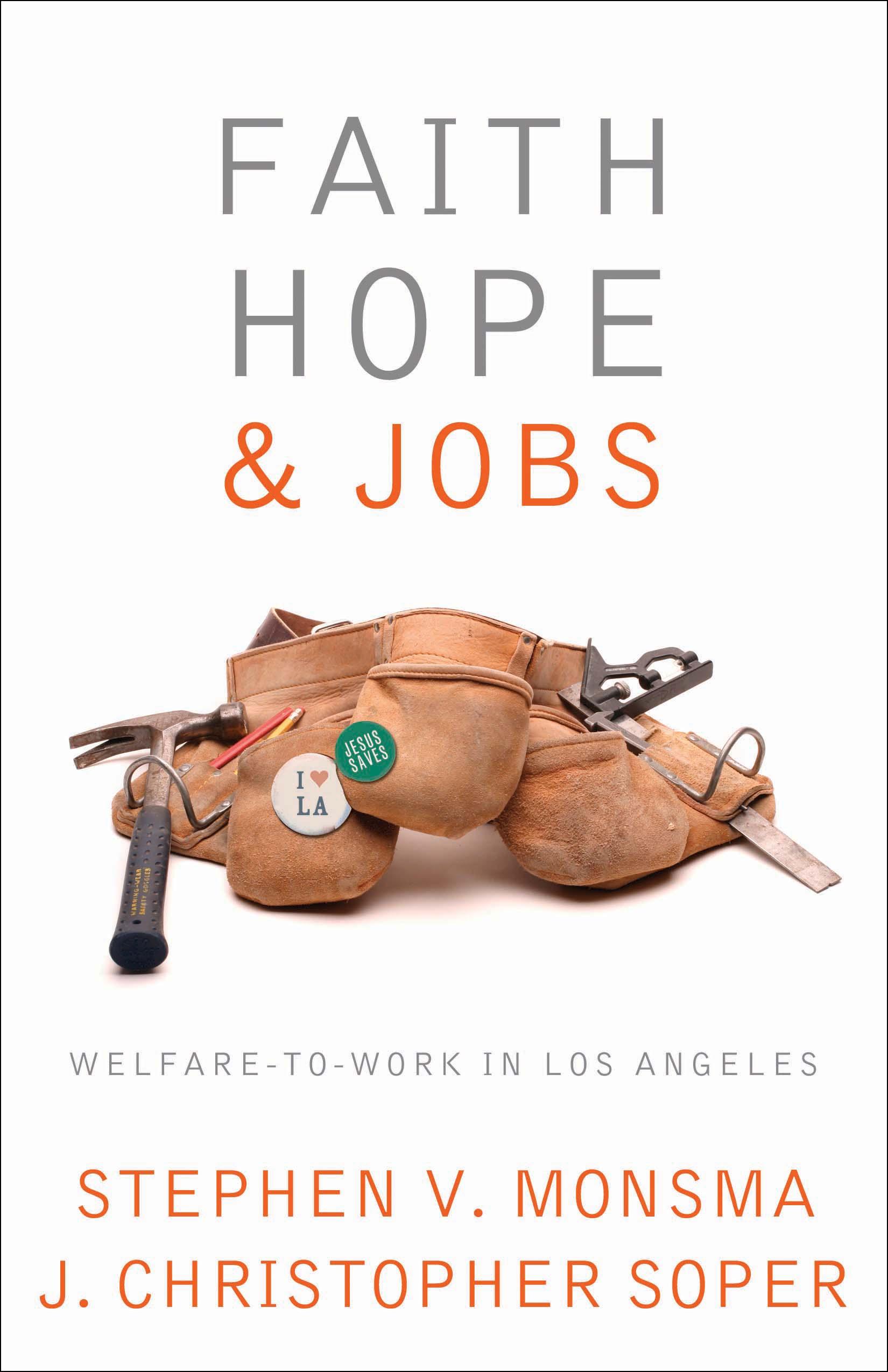
A front-burner issue on the public policy agenda today is the increased use of partnerships between government and nongovernmental entities, including faith-based social service organizations. In the wake of President Bush's faith-based initiative, many are still wondering about the effectiveness of these faith-based organizations in providing services to those in need, and whether they provide better outcomes than more traditional government, secular nonprofit, and for-profit organizations. In Faith, Hope, and Jobs, Stephen V. Monsma and J. Christopher Soper study the effectiveness of 17 different welfare-to-work programs in Los Angeles County—a county in which the U.S. government spends 14% of its entire welfare budget—and offer groundbreaking insight into understanding what works and what doesn't.
Monsma and Soper examine client assessment of the programs, their progress in developing attitudes and resources important for finding self-supporting employment, and their experience in finding actual employment. The study reveals that the clients of the more explicitly faith-based programs did best in gaining in social capital and were highly positive in evaluating the religious components of their programs. For-profit programs tended to do the best in terms of their clients finding employment. Overall, the religiously active respondents tended to experience better outcomes than those who were not religiously active but surprisingly, the religiously active and non-active tended to do equally well in faith-based programs.
Faith, Hope, and Jobs concludes with three sets of concrete recommendations for public policymakers, social service program managers, and researchers.
Before Memmo my notes were scattered across PDFs. Now a workspace pulls everything into one place — I see exactly what's still left to study.
Memmo's summaries are gold before exams. I don't have to re-read 800 pages two weeks before — just the important parts.
The AI chat has saved me the night before an exam more than once. I just keep asking until I get it — no waiting on a study group to reply.
The quizzes hit exactly what I need to know. Memmo tracks what I get stuck on — so I only practice what's worth it.
Flashcards with spaced repetition are magic. Memmo knows when I'm about to forget something and brings it back.
The AI podcasts are my favorite. I listen on my way to school and get a recap without sitting at a computer.

Handbok i kvalitativa metoder
281 kr

Hållbar utveckling: en introduktion för ingenjörer och andra problemlösare
334 kr

Brymans Samhällsvetenskapliga metoder
390 kr

Projektledning
491 kr

Den orättvisa hälsan: om socioekonomiska skillnader i hälsa och livslängd
326 kr

Vetenskapsteori för nybörjare
196 kr

Organizational Leadership
429 kr

På väg mot läraryrket
172 kr

Det sociala livet i skolan: Socialpsykologiska perspektiv
253 kr

Betygsättningens didaktik
151 kr

Personality
402 kr

Studying Leadership
404 kr

Managing Innovation
477 kr

Introduktion till samhällsvetenskaplig metod
347 kr

The Psychology of Sex and Gender
698 kr

Evidens och kunskap för socialt arbete
207 kr

Introduction to Leadership
605 kr