
Before Memmo my notes were scattered across PDFs. Now a workspace pulls everything into one place — I see exactly what's still left to study.
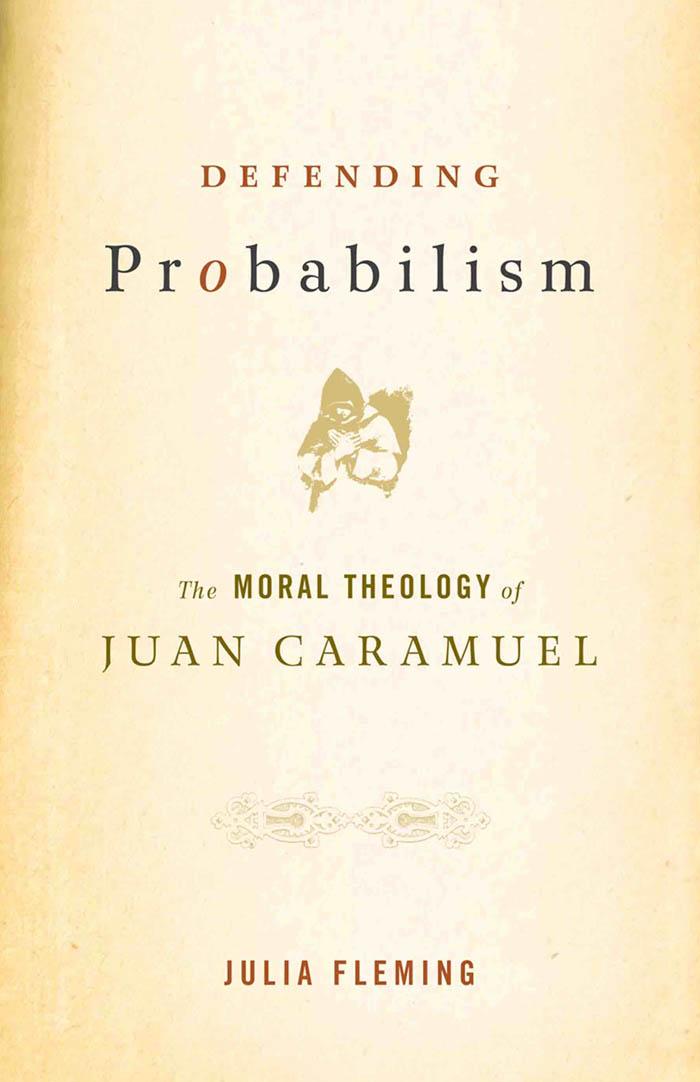
Through the centuries, at the heart of Catholic moral theology is a fundamental question: How do we behave responsibly in the face of moral uncertainty? Attempts to resolve problems of everyday life led to the growth of a variety of moral systems, one of which emerged in the early 17th century and was known as "probabilism." This method of solving difficult moral cases allowed the believer to rely upon a view that was judged defensible in terms of its arguments or the authorities behind it, even if the opposite opinion was supported by stronger arguments or more authorities. The theologian Juan Caramuel, a Spanish Cistercian monk whom Alphonso Liguori famously characterized as "the prince of laxists," has been regarded as one of the more extreme—and notorious—proponents of probabilism. As the only full-length English study of Caramuel's theological method, Defending Probabilism seeks to reappraise Caramuel's legacy, claiming that his model of moral thinking, if better understood, can actually be of help to the Church today.
Considered one of the most erudite theologians of his age, a scientist and scholar who published works on everything from astronomy and architecture to printing and Gregorian chant, Caramuel strove throughout his life to understand probabilism's theological and philosophical foundations as part of his broader analysis of the nature of human knowledge.
In applying Caramuel's legacy to our own time, Defending Probabilism calls for a reconsideration of the value of provisional moral knowledge. Fleming's study shows that history matters, and that to attain any position on moral certitude is a difficult and painstaking process.
Before Memmo my notes were scattered across PDFs. Now a workspace pulls everything into one place — I see exactly what's still left to study.
Memmo's summaries are gold before exams. I don't have to re-read 800 pages two weeks before — just the important parts.
The AI chat has saved me the night before an exam more than once. I just keep asking until I get it — no waiting on a study group to reply.
The quizzes hit exactly what I need to know. Memmo tracks what I get stuck on — so I only practice what's worth it.
Flashcards with spaced repetition are magic. Memmo knows when I'm about to forget something and brings it back.
The AI podcasts are my favorite. I listen on my way to school and get a recap without sitting at a computer.

Handbok i kvalitativa metoder
281 kr

Hållbar utveckling: en introduktion för ingenjörer och andra problemlösare
334 kr

Brymans Samhällsvetenskapliga metoder
390 kr

Projektledning
491 kr

Den orättvisa hälsan: om socioekonomiska skillnader i hälsa och livslängd
326 kr

Organizational Leadership
429 kr

Vetenskapsteori för nybörjare
196 kr

På väg mot läraryrket
172 kr

Det sociala livet i skolan: Socialpsykologiska perspektiv
253 kr

Betygsättningens didaktik
151 kr

Personality
402 kr

Studying Leadership
404 kr

Managing Innovation
477 kr

Introduktion till samhällsvetenskaplig metod
347 kr

The Psychology of Sex and Gender
698 kr

Evidens och kunskap för socialt arbete
207 kr

Introduction to Leadership
605 kr