
Before Memmo my notes were scattered across PDFs. Now a workspace pulls everything into one place — I see exactly what's still left to study.
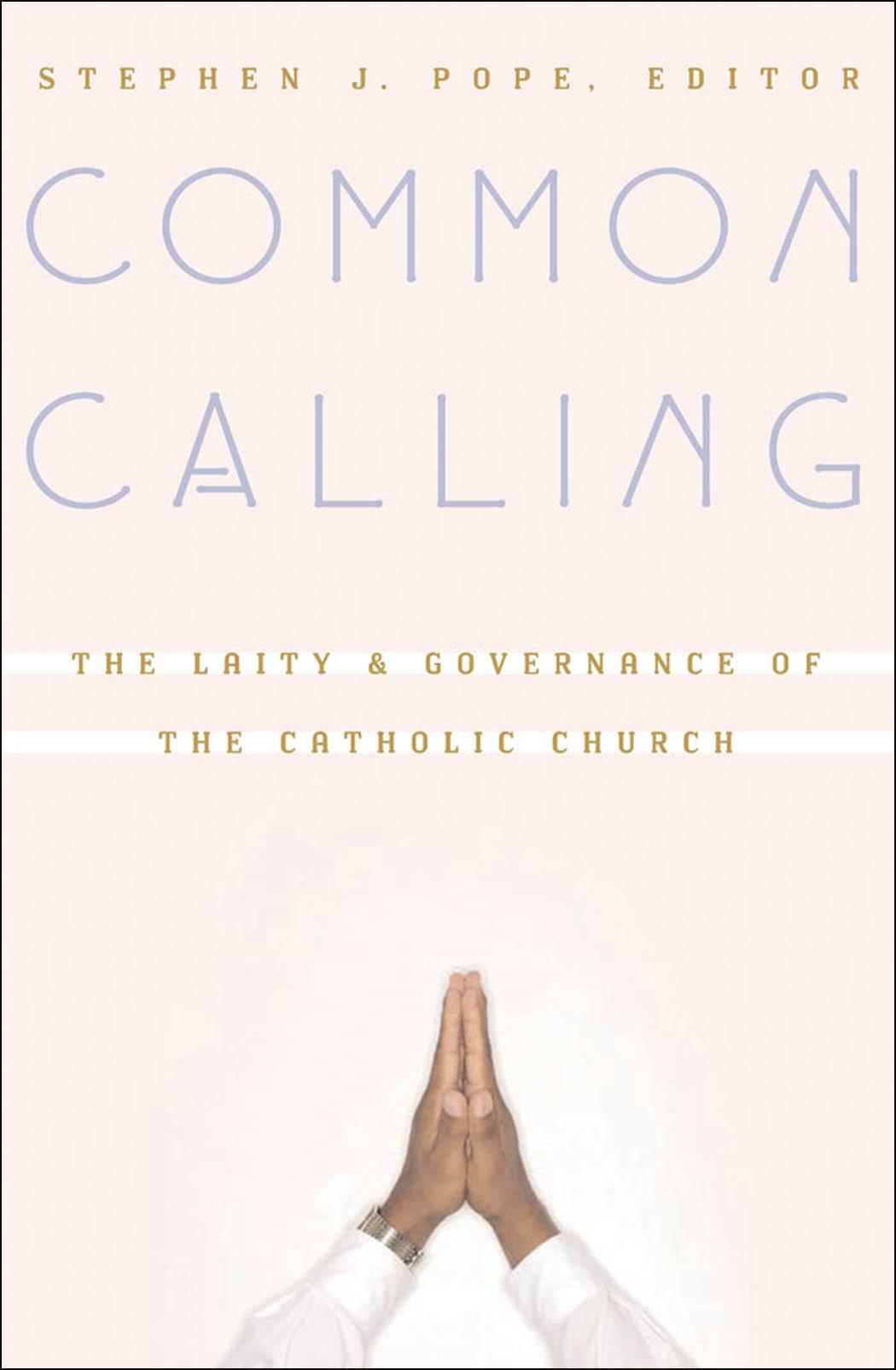
The sexual abuse scandal in the Catholic Church has been exacerbated in the minds of many by the dismal response of church leadership. Uncovered along with the abuse of power were decisions that were not only made in secrecy, but which also magnified the powerlessness of the people of the church to have any say in its governance. Accordingly, many have left the church, many have withheld funding—others have vowed to work for change, as witnessed by the phenomenal growth of Voice of the Faithful. Common Calling is indeed a call—for change, for inclusion, and a place at the table for the laity when it comes to the governance of the church.
By first providing compelling historical precedents of the roles and status of the laity as it functioned during the first millennium, Common Calling compares and contrasts those to the place of the laity today. It is this crossroad—between the past and the possible future of the Catholic Church—where the distinguished contributors to this volume gather in the hope and expectation of change. They examine the distinction between laity and clergy in regard to the power of church governance, and explore the theological interpretation of clergy-laity relations and governance in the teachings of the Second Vatican Council. They look at how church officials interpret the role of the laity today and address the weaknesses in that model. Finally, they speak clearly in outlining the ways governance may be improved, and how—by emphasizing dialogue, participation, gender equality, and loyalty—the role of the laity can be enhanced.
Speaking as active believers and academic specialists, all of the contributors assert that the church must evolve in the 21st century. They represent a variety of disciplines, including systematic theology, sacramental theology, canon law, political science, moral theology, pastoral theology, and management. The book also includes an essay by James Post, cofounder of the Catholic lay movement Voice of the Faithful, the organization that was in part responsible for the resignation of Boston's Cardinal Bernard Law. Common Calling looks to a future of transparency in the Catholic Church that, with an invested laity, will help to prevent any further abuse—especially the abuse of power.
Before Memmo my notes were scattered across PDFs. Now a workspace pulls everything into one place — I see exactly what's still left to study.
Memmo's summaries are gold before exams. I don't have to re-read 800 pages two weeks before — just the important parts.
The AI chat has saved me the night before an exam more than once. I just keep asking until I get it — no waiting on a study group to reply.
The quizzes hit exactly what I need to know. Memmo tracks what I get stuck on — so I only practice what's worth it.
Flashcards with spaced repetition are magic. Memmo knows when I'm about to forget something and brings it back.
The AI podcasts are my favorite. I listen on my way to school and get a recap without sitting at a computer.

Handbok i kvalitativa metoder
281 kr

Hållbar utveckling: en introduktion för ingenjörer och andra problemlösare
334 kr

Brymans Samhällsvetenskapliga metoder
390 kr

Projektledning
491 kr

Den orättvisa hälsan: om socioekonomiska skillnader i hälsa och livslängd
326 kr

Organizational Leadership
429 kr

Vetenskapsteori för nybörjare
196 kr

På väg mot läraryrket
172 kr

Det sociala livet i skolan: Socialpsykologiska perspektiv
253 kr

Betygsättningens didaktik
151 kr

Personality
402 kr

Studying Leadership
404 kr

Managing Innovation
477 kr

Introduktion till samhällsvetenskaplig metod
347 kr

The Psychology of Sex and Gender
698 kr

Evidens och kunskap för socialt arbete
207 kr

Introduction to Leadership
605 kr