
Before Memmo my notes were scattered across PDFs. Now a workspace pulls everything into one place — I see exactly what's still left to study.
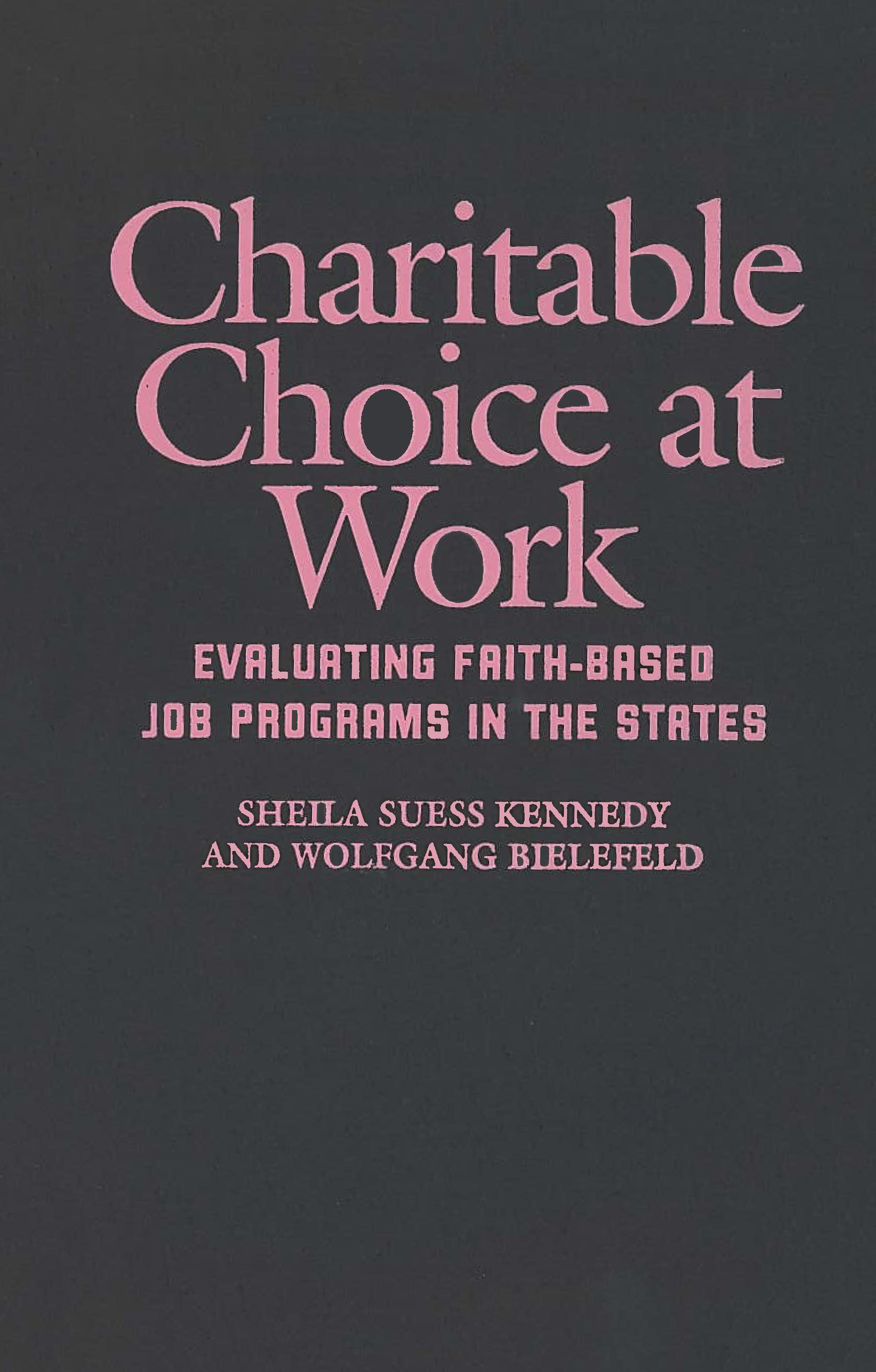
Too often, say its critics, U.S. domestic policy is founded on ideology rather than evidence. Take "Charitable Choice": legislation enacted with the assumption that faith-based organizations can offer the best assistance to the needy at the lowest cost. The Charitable Choice provision of the 1996 Welfare Reform Act—buttressed by President Bush's Faith-Based Initiative of 2000—encouraged religious organizations, including congregations, to bid on government contracts to provide social services. But in neither year was data available to prove or disprove the effectiveness of such an approach.
Charitable Choice at Work fills this gap with a comprehensive look at the evidence for and against faith-based initiatives. Sheila Suess Kennedy and Wolfgang Bielefeld review the movement's historical context along with legal analysis of constitutional concerns including privatization, federalism, and separation of church and state. Using both qualitative and, where possible, statistical data, the authors analyze the performance of job placement programs in three states with a representative range of religious, political, and demographic traits—Massachusetts, Indiana, and North Carolina. Throughout, they focus on measurable outcomes as they compare non-faith-based with faith-based organizations, nonprofits with for-profits, and the logistics of contracting before and after Charitable Choice.
Among their findings: in states where such information is available, the composition of social service contractor pools has changed very little. Reflecting their varied political cultures, states have funded programs differently. Faith-based organizations have not been eager to seek government contracts, perhaps wary of additional legal restraints and reporting burdens.
The authors conclude that faith-based organizations appear no more effective than secular organizations at government-funded social service provision, that there has been no dramatic change in the social welfare landscape since Charitable Choice, and that the constitutional concerns of its detractors may be valid. This empirical study penetrates the fog of the culture wars, moving past controversy over the role of religion in public life to offer pragmatic suggestions for policymakers and organizations who must decide how best to assist the needy.
Before Memmo my notes were scattered across PDFs. Now a workspace pulls everything into one place — I see exactly what's still left to study.
Memmo's summaries are gold before exams. I don't have to re-read 800 pages two weeks before — just the important parts.
The AI chat has saved me the night before an exam more than once. I just keep asking until I get it — no waiting on a study group to reply.
The quizzes hit exactly what I need to know. Memmo tracks what I get stuck on — so I only practice what's worth it.
Flashcards with spaced repetition are magic. Memmo knows when I'm about to forget something and brings it back.
The AI podcasts are my favorite. I listen on my way to school and get a recap without sitting at a computer.

Handbok i kvalitativa metoder
281 kr

Hållbar utveckling: en introduktion för ingenjörer och andra problemlösare
334 kr

Brymans Samhällsvetenskapliga metoder
390 kr

Projektledning
491 kr

Den orättvisa hälsan: om socioekonomiska skillnader i hälsa och livslängd
326 kr

Organizational Leadership
429 kr

Vetenskapsteori för nybörjare
196 kr

På väg mot läraryrket
172 kr

Det sociala livet i skolan: Socialpsykologiska perspektiv
253 kr

Betygsättningens didaktik
151 kr

Personality
402 kr

Studying Leadership
404 kr

Managing Innovation
477 kr

Introduktion till samhällsvetenskaplig metod
347 kr

The Psychology of Sex and Gender
698 kr

Evidens och kunskap för socialt arbete
207 kr

Introduction to Leadership
605 kr