
Before Memmo my notes were scattered across PDFs. Now a workspace pulls everything into one place — I see exactly what's still left to study.
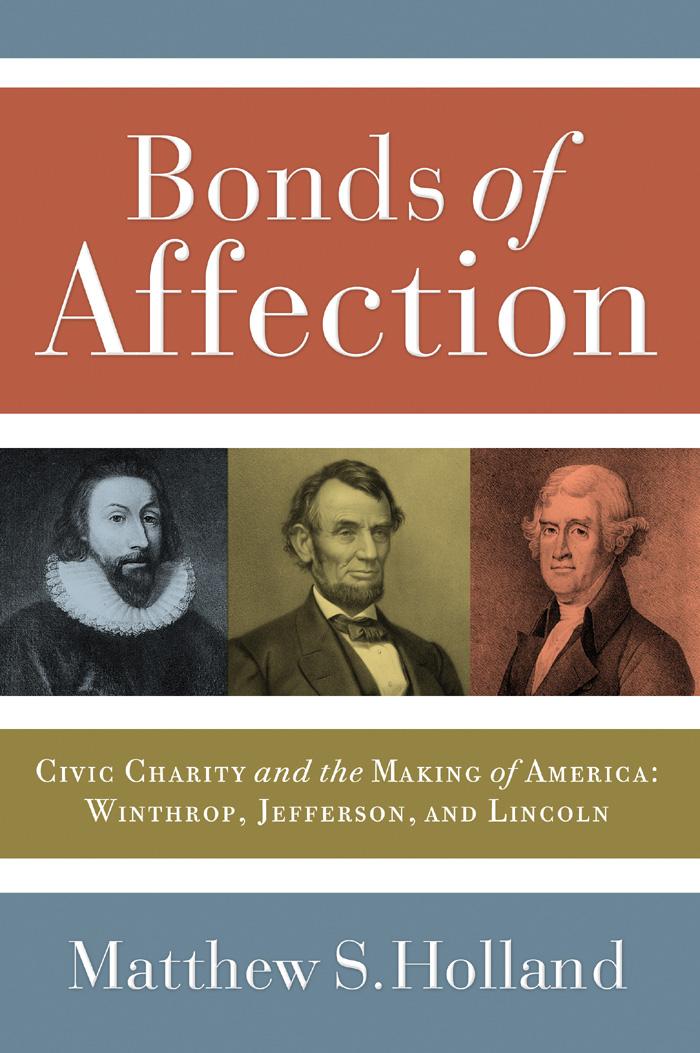
Notions of Christian love, or charity, strongly shaped the political thought of John Winthrop, Thomas Jefferson, and Abraham Lincoln as each presided over a foundational moment in the development of American democracy. Matthew Holland examines how each figure interpreted and appropriated charity, revealing both the problems and possibilities of making it a political ideal.
Holland first looks at early American literature and seminal speeches by Winthrop to show how the Puritan theology of this famed 17th century governor of the Massachusetts Colony (he who first envisioned America as a "City upon a Hill") galvanized an impressive sense of self-rule and a community of care in the early republic, even as its harsher aspects made something like Jefferson's Enlightenment faith in liberal democracy a welcome development . Holland then shows that between Jefferson's early rough draft of the Declaration of Independence and his First Inaugural Jefferson came to see some notion of charity as a necessary complement to modern political liberty.
However, Holland argues, it was Lincoln and his ingenious blend of Puritan and democratic insights who best fulfilled the promise of this nation's "bonds of affection." With his recognition of the imperfections of both North and South, his humility in the face of God's judgment on the Civil War, and his insistence on "charity for all," including the defeated Confederacy, Lincoln personified the possibilities of religious love turned civic virtue.
Weaving a rich tapestry of insights from political science and literature and American religious history and political theory, Bonds of Affection is a major contribution to the study of American political identity. Matthew Holland makes plain that civic charity, while commonly rejected as irrelevant or even harmful to political engagement, has been integral to our national character.
The book includes the full texts of Winthrop's speech "A Model of Christian Charity"; Jefferson's rough draft of the Declaration and his First Inaugural; and Lincoln's Second Inaugural.
Before Memmo my notes were scattered across PDFs. Now a workspace pulls everything into one place — I see exactly what's still left to study.
Memmo's summaries are gold before exams. I don't have to re-read 800 pages two weeks before — just the important parts.
The AI chat has saved me the night before an exam more than once. I just keep asking until I get it — no waiting on a study group to reply.
The quizzes hit exactly what I need to know. Memmo tracks what I get stuck on — so I only practice what's worth it.
Flashcards with spaced repetition are magic. Memmo knows when I'm about to forget something and brings it back.
The AI podcasts are my favorite. I listen on my way to school and get a recap without sitting at a computer.

Handbok i kvalitativa metoder
281 kr

Hållbar utveckling: en introduktion för ingenjörer och andra problemlösare
334 kr

Brymans Samhällsvetenskapliga metoder
390 kr

Projektledning
491 kr

Den orättvisa hälsan: om socioekonomiska skillnader i hälsa och livslängd
326 kr

Organizational Leadership
429 kr

Vetenskapsteori för nybörjare
196 kr

På väg mot läraryrket
172 kr

Det sociala livet i skolan: Socialpsykologiska perspektiv
253 kr

Betygsättningens didaktik
151 kr

Personality
402 kr

Studying Leadership
404 kr

Managing Innovation
477 kr

Introduktion till samhällsvetenskaplig metod
347 kr

The Psychology of Sex and Gender
698 kr

Evidens och kunskap för socialt arbete
207 kr

Introduction to Leadership
605 kr