
Before Memmo my notes were scattered across PDFs. Now a workspace pulls everything into one place — I see exactly what's still left to study.
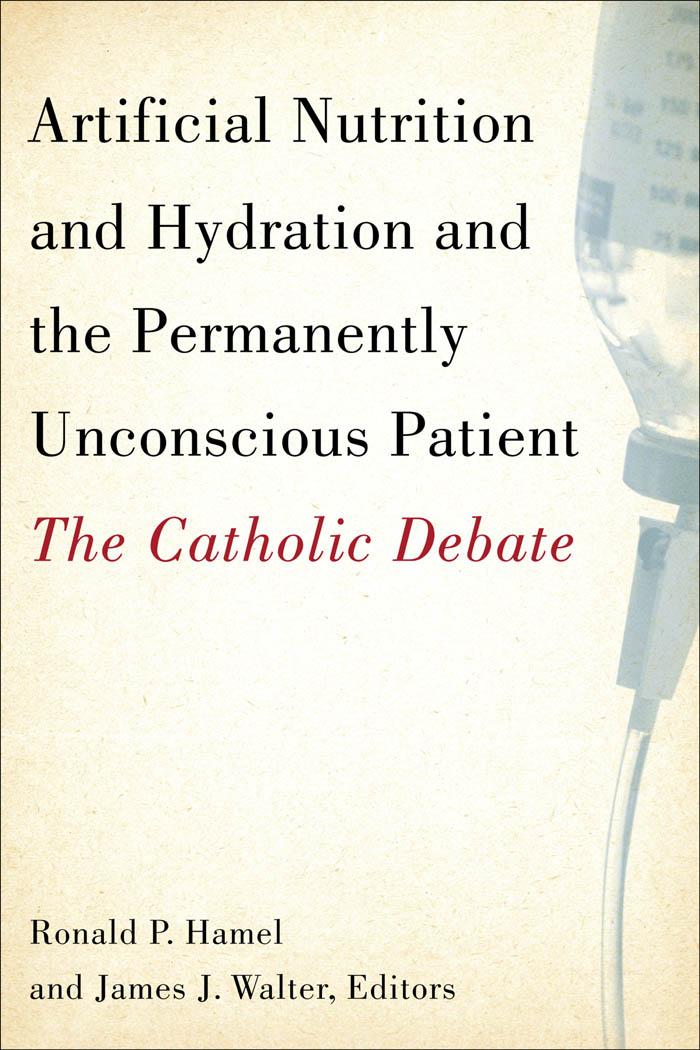
During the past few decades, high-profile cases like that of Terry Schiavo have fueled the public debate over forgoing or withdrawing artificial nutrition and hydration from patients in a persistent vegetative state (PVS). These cases, whether involving adults or young children, have forced many to begin thinking in a measured and careful way about the moral legitimacy of allowing patients to die. Can families forgo or withdraw artificial hydration and nutrition from their loved ones when no hope of recovery seems possible?
Many Catholics know that Catholic moral theology has formulated a well-developed and well-reasoned position on this and other end-of-life issues, one that distinguishes between "ordinary" and "extraordinary" treatment. But recent events have caused uncertainty and confusion and even acrimony among the faithful. In his 2004 allocution, Pope John Paul II proposed that artificial nutrition and hydration is a form of basic care, thus suggesting that the provision of such care to patients neurologically incapable of feeding themselves should be considered a moral obligation. The pope's address, which seemed to have offered a new development to decades of Catholic health care ethics, sparked a contentious debate among the faithful over how best to treat permanently unconscious patients within the tenets of Catholic morality.
In this comprehensive and balanced volume, Ronald Hamel and James Walter present twenty-one essays and articles, contributed by physicians, clergy, theologians, and ethicists, to reflect the spectrum of perspectives on the issues that define the Catholic debate. Organized into six parts, each with its own introduction, the essays offer clinical information on PVS and feeding tubes; discussions on the Catholic moral tradition and how it might be changing; ecclesiastical and pastoral statements on forgoing or withdrawing nutrition and hydration; theological and ethical analyses on the issue; commentary on Pope John Paul II's 2004 allocution; and the theological commentary, court decisions, and public policy resulting from the Clarence Herbert and Claire Conroy legal cases.
A valuable resource for students and scholars, this teachable volume invites theological dialogue and ethical discussion on one of the most contested issues in the church today.
Before Memmo my notes were scattered across PDFs. Now a workspace pulls everything into one place — I see exactly what's still left to study.
Memmo's summaries are gold before exams. I don't have to re-read 800 pages two weeks before — just the important parts.
The AI chat has saved me the night before an exam more than once. I just keep asking until I get it — no waiting on a study group to reply.
The quizzes hit exactly what I need to know. Memmo tracks what I get stuck on — so I only practice what's worth it.
Flashcards with spaced repetition are magic. Memmo knows when I'm about to forget something and brings it back.
The AI podcasts are my favorite. I listen on my way to school and get a recap without sitting at a computer.

Handbok i kvalitativa metoder
281 kr

Hållbar utveckling: en introduktion för ingenjörer och andra problemlösare
334 kr

Brymans Samhällsvetenskapliga metoder
390 kr

Projektledning
491 kr

Den orättvisa hälsan: om socioekonomiska skillnader i hälsa och livslängd
326 kr

Vetenskapsteori för nybörjare
196 kr

Organizational Leadership
429 kr

På väg mot läraryrket
172 kr

Det sociala livet i skolan: Socialpsykologiska perspektiv
253 kr

Betygsättningens didaktik
151 kr

Personality
402 kr

Studying Leadership
404 kr

Managing Innovation
477 kr

Introduktion till samhällsvetenskaplig metod
347 kr

The Psychology of Sex and Gender
698 kr

Evidens och kunskap för socialt arbete
207 kr

Introduction to Leadership
605 kr