
Before Memmo my notes were scattered across PDFs. Now a workspace pulls everything into one place — I see exactly what's still left to study.
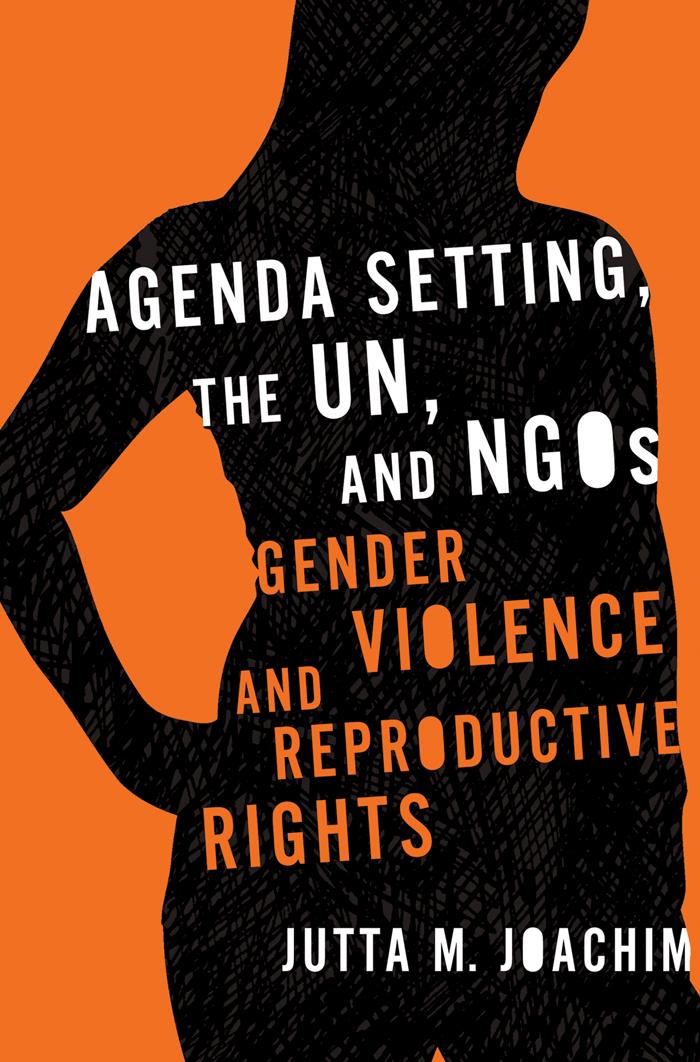
In the mid-1990s, when the United Nations adopted positions affirming a woman's right to be free from bodily harm and to control her own reproductive health, it was both a coup for the international women's rights movement and an instructive moment for nongovernmental organizations (NGOs) seeking to influence UN decision making.
Prior to the UN General Assembly's 1993 Declaration on the Elimination of All Forms of Violence against Women and the 1994 decision by the UN's Conference on Population and Development to vault women's reproductive rights and health to the forefront of its global population growth management program, there was little consensus among governments as to what constituted violence against women and how much control a woman should have over reproduction. Jutta Joachim tells the story of how, in the years leading up to these decisions, women's organizations got savvy—framing the issues strategically, seizing political opportunities in the international environment, and taking advantage of mobilizing structures—and overcame the cultural opposition of many UN-member states to broadly define the two issues and ultimately cement women's rights as an international cause.
Joachim's deft examination of the documents, proceedings, and actions of the UN and women's advocacy NGOs—supplemented by interviews with key players from concerned parties, and her own participant-observation—reveals flaws in state-centered international relations theories as applied to UN policy, details the tactics and methods that NGOs can employ in order to push rights issues onto the UN agenda, and offers insights into the factors that affect NGO influence. In so doing, Agenda Setting, the UN, and NGOs departs from conventional international relations theory by drawing on social movement literature to illustrate how rights groups can motivate change at the international level.
Before Memmo my notes were scattered across PDFs. Now a workspace pulls everything into one place — I see exactly what's still left to study.
Memmo's summaries are gold before exams. I don't have to re-read 800 pages two weeks before — just the important parts.
The AI chat has saved me the night before an exam more than once. I just keep asking until I get it — no waiting on a study group to reply.
The quizzes hit exactly what I need to know. Memmo tracks what I get stuck on — so I only practice what's worth it.
Flashcards with spaced repetition are magic. Memmo knows when I'm about to forget something and brings it back.
The AI podcasts are my favorite. I listen on my way to school and get a recap without sitting at a computer.

Handbok i kvalitativa metoder
281 kr

Hållbar utveckling: en introduktion för ingenjörer och andra problemlösare
334 kr

Brymans Samhällsvetenskapliga metoder
390 kr

Projektledning
491 kr

Den orättvisa hälsan: om socioekonomiska skillnader i hälsa och livslängd
326 kr

Organizational Leadership
429 kr

Vetenskapsteori för nybörjare
196 kr

På väg mot läraryrket
172 kr

Det sociala livet i skolan: Socialpsykologiska perspektiv
253 kr

Betygsättningens didaktik
151 kr

Personality
402 kr

Studying Leadership
404 kr

Managing Innovation
477 kr

Introduktion till samhällsvetenskaplig metod
347 kr

The Psychology of Sex and Gender
698 kr

Evidens och kunskap för socialt arbete
207 kr

Introduction to Leadership
605 kr