
Always with you
Your book, on every device. Pick up right where you left off.
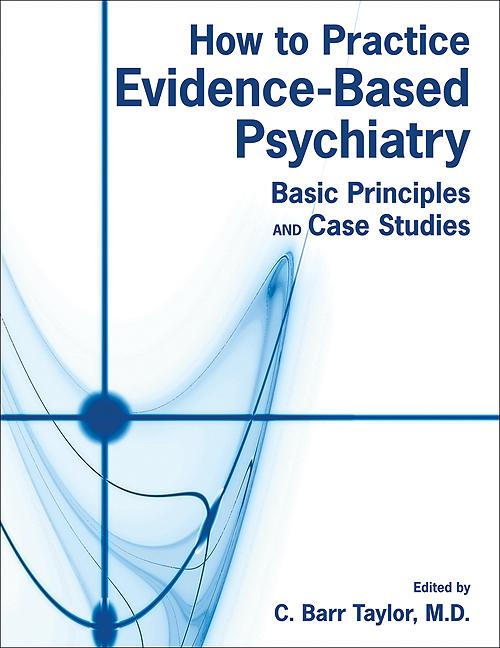
The use of evidence-based guidelines and algorithms is widely encouraged in modern psychiatric settings, yet many practitioners find it challenging to apply and incorporate the latest evidence-based psychosocial and biological interventions. Now, practitioners have an outstanding new resource at their fingertips. How to Practice Evidence-Based Psychiatry: Basic Principles and Case Studies accomplishes two goals: it explains the methods and philosophy of evidence-based psychiatry, and it describes ways in which psychiatrists and other mental health specialists can incorporate evidence-based psychiatry into their clinical practices. Uniquely relevant to psychiatric clinicians, this is the only book on evidence-based medicine specific to the field of psychiatry that addresses integrated psychopharmacology and psychotherapies.
This new book first provides an expansion on the popular text the Concise Guide to Evidence-Based Psychiatry, updating the sections on clinical trials, the teaching of evidence-based medicine, and the effective treatment of patients with complex comorbid conditions. It then allows experts from a variety of specialty areas and practice settings to describe how they incorporate the latest evidence and outcome studies into interesting and inspiring cases of their own.
The book starts with the assumption that clinicians must adapt guidelines, algorithms, other sources of evidence, and the interpretation of this evidence to each individual patient. It describes basic statistical concepts in an easily understood format and offers separate chapters devoted to systematic reviews and meta-analyses, clinical practice guidelines, diagnostic tests, surveys of disease frequency, and prognosis and psychometric measurement. It also presents an easily relatable discussion of many of the major issues of evidence-based psychiatry, such as use of the "Five-Step" evidence-based medicine model. The first section can be used both as an introduction to the topic and a ready reference for researching the literature and appraising evidence. The second section includes relevant case examples of major psychiatric disorders, and the third presents case examples from diverse treatment settings. In these sections, 24 contributing clinicians from a variety of practice settings discuss situations in which they followed aspects of evidence-based care. The text includes tables and charts throughout the text, including algorithms, guidelines, and examples of simple, therapist-devised measures of progress, further enhance learning, retention, and clinical practice.
How to Practice Evidence-Based Psychiatry: Basic Principles and Case Studies is a valuable new tool that will help residents, practicing psychiatrists, and other mental health workers find the most useful and relevant information to inform and improve their everyday practices.
Your book, on every device. Pick up right where you left off.
Search the whole book. No more flipping through chapters.
Highlight and scribble in the margin. It's all saved and searchable.
Rent by the semester. Skip the hunt for second-hand copies.

I found all the books I needed for my course on Memmo

A few people in my class recommended renting the book from you – so I gave it a try. Reading it digitally was super convenient, and way cheaper than buying a physical copy.

I just uploaded my documents and created AI-quizzes in minutes. It's amazing.

I like the flashcards the most, perfect for learning concepts or formulas.

Memmo is my go-to for all my study needs.

It's crazy that the AI tools are free!
I found all the books I needed for my course on Memmo
A few people in my class recommended renting the book from you – so I gave it a try. Reading it digitally was super convenient, and way cheaper than buying a physical copy.
I just uploaded my documents and created AI-quizzes in minutes. It's amazing.
I like the flashcards the most, perfect for learning concepts or formulas.
Memmo is my go-to for all my study needs.
It's crazy that the AI tools are free!
Go digital. Study anywhere, save money, and skip the heavy lifting.

Handbok i kvalitativa metoder
281 kr

Hållbar utveckling: en introduktion för ingenjörer och andra problemlösare
334 kr

Brymans Samhällsvetenskapliga metoder
390 kr

Projektledning
491 kr

Den orättvisa hälsan: om socioekonomiska skillnader i hälsa och livslängd
326 kr

Organizational Leadership
429 kr

Vetenskapsteori för nybörjare
196 kr

Det sociala livet i skolan: Socialpsykologiska perspektiv
253 kr

På väg mot läraryrket
172 kr

Betygsättningens didaktik
151 kr

Personality
402 kr

Studying Leadership
404 kr

Managing Innovation
477 kr

Introduktion till samhällsvetenskaplig metod
347 kr

The Psychology of Sex and Gender
698 kr

Introduction to Leadership
605 kr

Strategic Market Management
635 kr